
Abstract
The next generation of observatories, including the Extremely Large Telescope and the proposed Habitable Worlds Observatory, are expected to significantly advance the characterization of rocky, Earth-like exoplanets and may enable observations of their reflected and polarized light. Such measurements contain rich information about planetary atmospheres and surfaces. Interpreting these observations requires detailed radiative transfer modeling. This lecture introduces radiative transfer simulations for Earth-like planets - characterized by rocky surfaces and comparatively optically thin atmospheres - using the Monte Carlo method. The model is validated using Earthshine observations, which provide an opportunity to study the integrated light of Earth as it would appear when observed from large distances. The results demonstrate that polarization measurements can reveal key properties of planetary clouds and surface types.
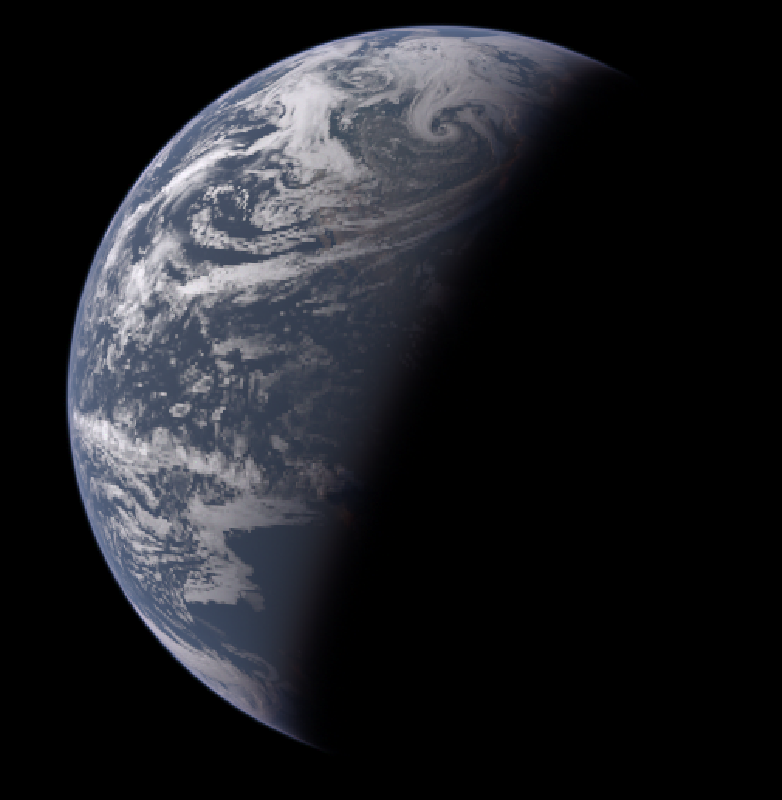
Reference: Influence of aerosols, clouds, and sunglint on polarization spectra of Earthshine Link: http://dx.doi.org/10.1051/0004-6361/201629948
Speaker

© C. Emde
Dr. Claudia Emde
Scientist, Radiative Transfer Modeling Expert
Rayference, Brussels
Belgium
Research Interests:
Radiative transfer model development | Monte Carlo radiative transfer simulation | Polarization | Cloud and aerosol remote sensing | Exoplanets