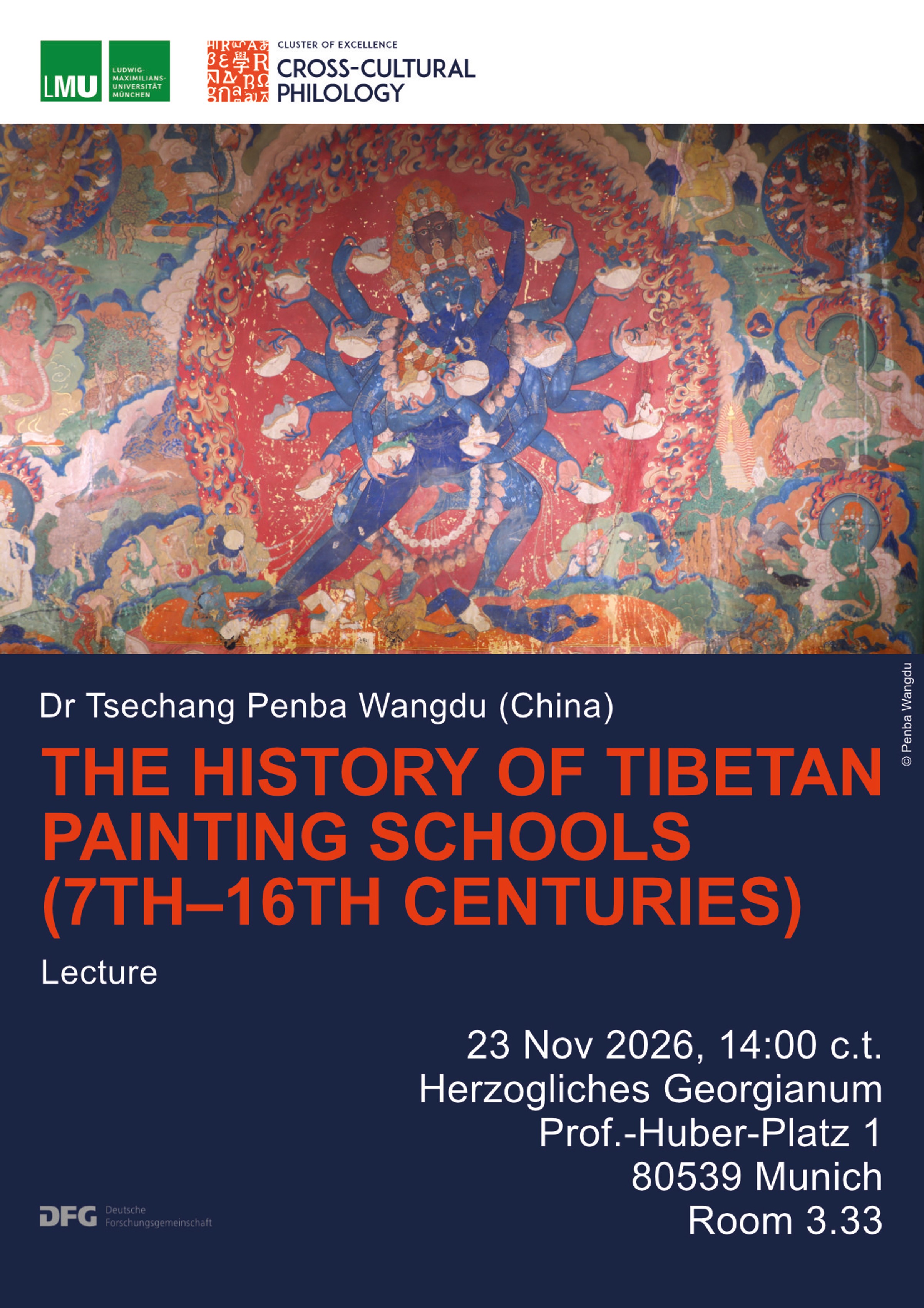
The History of Tibetan Painting Schools (7th–16th Centuries)
Tracing the Evolution of Tibetan Buddhist Art Across Centuries, Cultures and Artistic Traditions
This talk offers a historical overview of Tibetan painting traditions from the seventh to the sixteenth century, with a particular focus on the development of Tibetan Buddhist art. It traces the emergence and evolution of these traditions in connection with the spread of Buddhism and the establishment of major religious centres.
These include some of Tibet’s earliest Buddhist temples, such as the Jokhang, Ramoche, and Tradruk, as well as monasteries founded during the early spread of Buddhism, including Samye, Ondo Tashi Peme Gönpel, and Karchung. It also examines monasteries established during the subsequent revival of Buddhism, such as Tholing, Drathang, Pelkhor Chöde, Tashilhünpo, and Gongkar Chöde.
Royal palaces, including the Potala Palace, also played an important role as centres of artistic production and patronage. The development of these centres provided an important context for the emergence of nine major Tibetan painting traditions. These encompassed indigenous Tibetan styles, influences from Chinese, Indian, and Nepalese painting, and the later-established Khyentse and Menri schools.
The talk explores the historical origins of these traditions, the artists associated with their establishment, their distinctive stylistic characteristics, and some of their most representative works.