
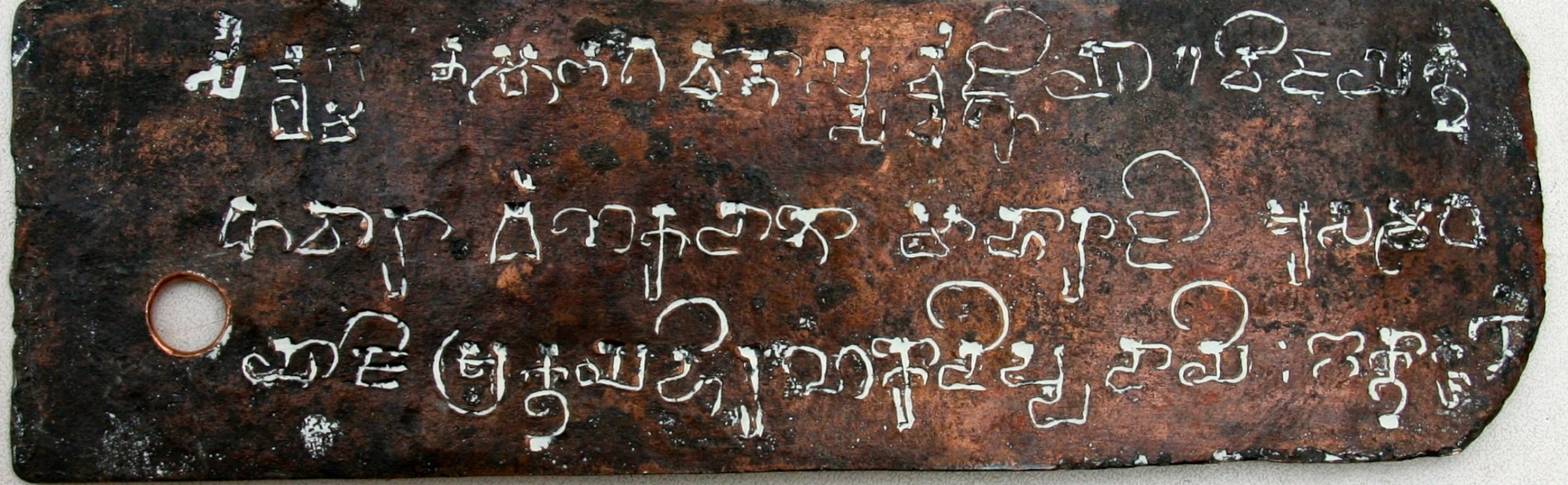
© Photo taken with the courtesy of the Telangana State Archaeology Museum
- Language:
- Type of Prakrit (intermediate language between Sanskrit and the modern Indian languages)
- Place of origin:
- India (East India: Andhra Pradesh)
- Time of origin:
- late 3rd c. CE.
- Transcription:
- siddham· || namo bhagavatos sarvvajñāyā || vijayakkhaṁdhāvārā dhaṁṇakaḍāto māhārājā asamedhayājiakkhayahiraṁṇakoḍippadāyiḥ ikkhākūṇaṁ raṁño sirī-ehavalacāntamūlavaṁmmā aṇavetī ettha pithuṁḍe sābhittāṇehi mahāvihārasa avaraddāre cātusāle amhehi kāritaṁ etassa ya khaṇḍaplate pullasaṇṭhappasa cātusāle āgaṁtukavatthavvāṇa pavvayitāṇaṁ vissāmaṇatthaṁ raño ehalavatthamāṇavatthavehi pavvayitehi avaraddāraseliyehi aryyayakkhapamuhehi aṇuṭṭhiya sāsanaṁ kāritaṁ
- Translation:
- Success! Homage to the Blessed One, the Omniscient One! From the victorious royal headquarters, from Dhaṇṇakaḍa, the glorious King Ehavalacāntamūlavamma of the Ikṣvākus, the Great King, performer of the horse sacrifice, giver of inexhaustible tens of millions of (pieces of) gold, gives (the following) order:
“Here in Pithuṇḍa we caused to be made a quadrangular compound at the western gate of the Great Monastery. For the repair of its broken and shattered (parts), for the repose of renunciants who (will) arrive and who (presently) reside in the quadrangular compound, the (following) royal order was issued, to be carried out by the Avaraddāraseliya renunciants residing in the plot of King Ehavala, headed by Aryayakkha:”
Additional Information:
So begins the inscription on a late third-century CE copper plate found in the village of Patagandigudem in modern Andhra Pradesh. Written in Brāhmī script (the mother of the numerous modern Indian scripts) and a variety of Prakrit (the intermediate languages between Sanskrit and most modern Indian languages), it is the earliest example of an important genre of Indian inscriptions: royal grants of land on copper plates. The epigraph sheds crucial light on the otherwise shadowy intricacies of the administrative structures of both state and Buddhist institutions in ancient India. It also contains valuable information on early Indian religious practices, such as highlighting the fluidity of religious identity: The record begins with a dedication to the Buddha and the donation is to a Buddhist monastery while the king also signifies his adherence to orthodox Brahmanical (“Hindu”) beliefs with the epithet “performer of the horse sacrifice”, one of the most important of the sacrifices prescribed in the Vedas (the oldest and most sacred of the Brahmanical texts). The study of this and the thousands of other early Indian inscriptions requires a highly specialized skillset and countless hours of squinting at images, searching for epigraphic and literary parallels, and weighing all possibilities of interpretation. However, such tedious work is vital to better understand a major player in the world of classical antiquity, one whose importance is often underappreciated in Western circles.
Click here to get back to game!