AI and literature: Prose ex machina
Literary scholar Julian Schröter discusses the rapid progress in automated text production, the future of authorship – and the possibility of a niche market for AI-free works.

Literary scholar Julian Schröter discusses the rapid progress in automated text production, the future of authorship – and the possibility of a niche market for AI-free works.
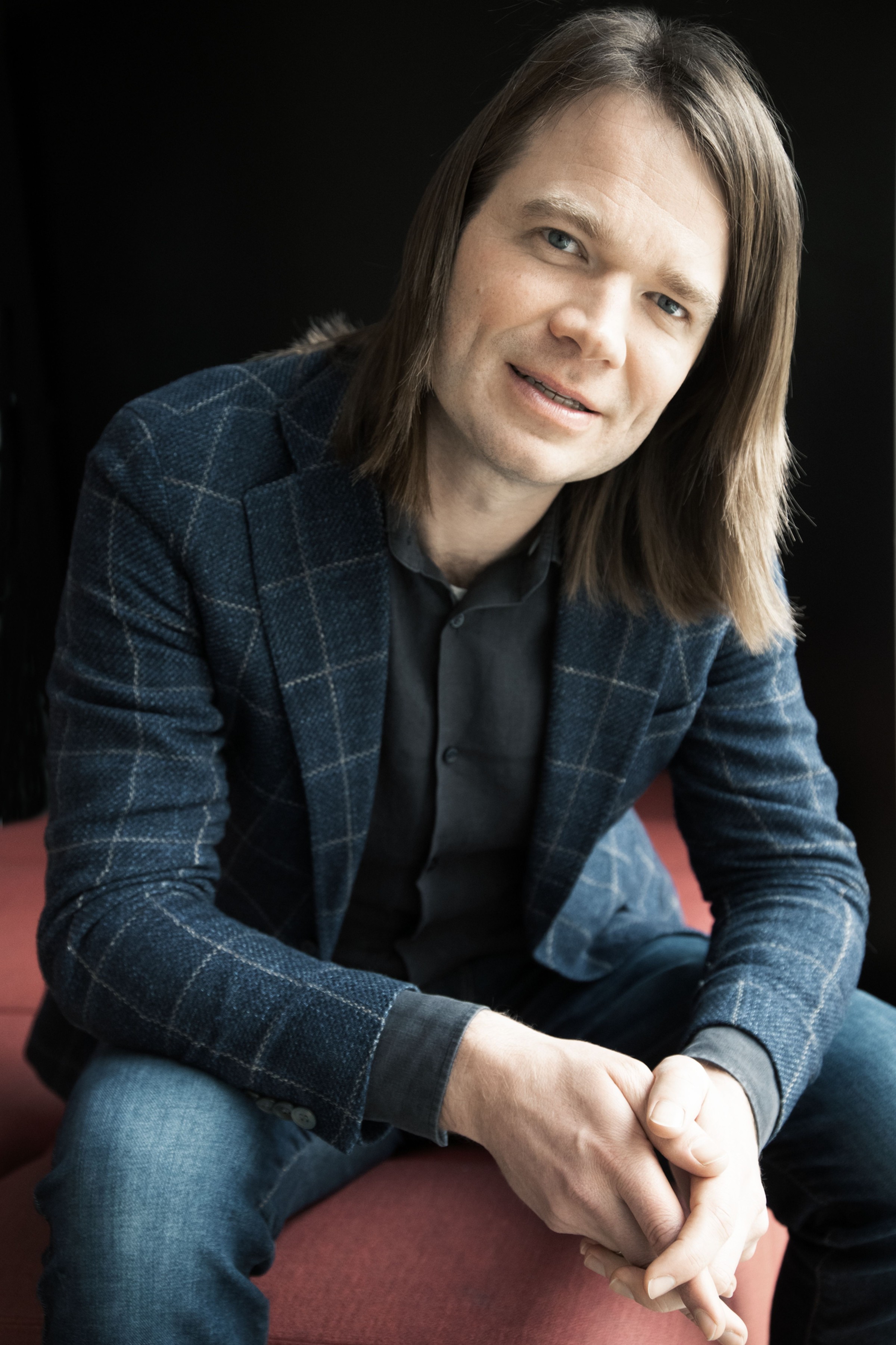
"Our concept of art and literature is – at least to some extent – still shaped by a notion of the genius of authorship that is over 200 years old," says Julian Schröter..
© LMU / Manu TheobaldIt is not often that Japanese literature makes waves in Germany. Yet writer Rie Qudan and the novel she penned last year did cause a stir. Not because readers here found the book to be so compelling, it must be said: The work had not yet even been published in German. No, it was because the author, on receiving Japan’s most prestigious literature prize for the volume, openly admitted that she had also used texts from ChatGPT during her writing process. What response did this confession trigger?
Julian Schröter: The whole thing is not really that new. Even in the German language space, literary authors such as Juan S. Guse and Hannes Bajohr were already experimenting with AI in 2022. It seems to me that the fuss about the use of AI tends to be born of a more general fear.
The fear that machines might, so to speak, launch an assault on what is good, true and beautiful?
Our concept of art and literature is – at least to some extent – still shaped by a notion of the genius of authorship that is over 200 years old. Even merely working with cuttings, anything that is not from the author themselves, can spark off a scandal. Unlike accusations of plagiarism, however, the issue is not about individual cases of overly generous collage composition: Given the frantic pace of progress in artificial intelligence, it seems that the conventional concept of authorship itself is being called into question. The fact that AI is becoming an aspect of authorship has long been obvious to some extent. The challenge to our society is how to deal with this realization.
Rie Qudan defended herself with the argument that she had only ‘asked AI for advice’ for a short passage of the novel in which an AI is actually speaking to help her better simulate the simulation of literature. Case closed. But could the AI used by Qudan also have been able to produce lengthier passages that would be accepted as proper literature?
First, we must address the normative question: Is that allowable? Generally speaking, high-quality literature is expected to deliver something that is genuinely new, original, creative. And because language models are essentially stochastic machines aligned with human expectation, they initially churn out recombined versions of what has already been learned, even though one might get the impression of something new and original. The other part of the answer would be empirical rather than normative: Could an artificially generated literary product pass as high-quality literature? I will be excited to see how experiments along these lines pan out.
Julian Schröter
What criteria do we have with which to define literary appeal?
Last year, an experiment with English poetry hit the headlines. It was found that many readers often see AI-generated poetry as more beautiful in literary terms than works genuinely written by humans. Not only since the modern era, poetry penned by humans frequently presupposes a broad range of knowledge and is not immediately comprehensible. My reading of the study findings is that many readers of AI-generated poems prefer them because they were more readily accessible and easier to understand.

What influence does artificial intelligence have on literature, popular fiction, and the book market?
© IMAGO / Zoonar / Êrik LattweinAnd prose?
As far as fiction is concerned, it is important to distinguish between form – the how of the narrative – and content, i.e. the storyline or the what of the narrative. How plausible and coherent are the characters? How interesting is the plot? How well-thought-through? How original is the story, and how unexpected – but still plausible – are subsequent events? These are all matters that concern the content or the story, and that, I believe, are of importance to broad literary tastes that are not confined solely to high-end literature. They are equally valid for light fiction.
And then you have the how of the narrative and the question of whether a work is original and new in its style and the way it is told. One might think that developing the plot is the easier task, and that coming up with formal, narrative innovations is more complex. But I am coming to suspect that the truth is the other way round: Developing good, plausible plots and telling them in an appealing manner is tremendously difficult. On the other hand, AI is already pretty good at simulating a tone of voice.
Broadly speaking, large language models (LLMs) merely put together sequences of words on the basis of probability. Building on this principle, development has already made huge strides forward at a very rapid pace. Let us be blunt: Can AI already write books that, with a little touching up, might sell well?
A colleague of mine from Berkeley recently conducted experiments along these lines, working with relatively short stories and simple plots such as variations on the story of Pygmalion, in which a man falls in love with an automaton that he has invented. The stories were schematic and often boring. On the whole, they were not convincing. Yet technological development is so hard to predict that I would be very wary of saying things might still be like this in a year’s time.
Julian Schröter
Initially, the models even had a hard time keeping an eye on the start of the text when winding it up. Has that problem been resolved?
One big difference between artificial intelligence and human intelligence is that the former ultimately has no personal identity, so everything that has once been forgotten is literally gone. Another important point is this: Language models are not good at simulating human, affective, emotional reactions. We need to be clear about the fact that they themselves do not feel tension or excitement. Accordingly, language models that are used to spot exciting passages in fiction do not express their own perception of excitement: They merely reproduce patterns of language with which such perceptions are, if you like, rationalized via the agency of language. I believe this is also one of the reasons why LLMs are still not good at captivating readers with genuinely gripping stories.

According to Schröter, language models are not good at simulating human, affective, emotional reactions. "We need to be clear about the fact that they themselves do not feel tension or excitement."
© LMU / Manu TheobaldWith regard to esthetic phenomena, I think it would be interesting in the future to train AI more rigorously not just to process language in general, but also to focus on specific psychological behavioral patterns. In my view, it would be worth a try seeing whether that makes the models into better storytellers that can better anticipate readers’ expectations. I find it fascinating that such changes and improvements will again and again give rise to the same old question: How long can we argue that AI-generated stories cannot show genuine empathy or demonstrate genuine imagination, and that generative AI does not really possess any creativity because it has neither conscious awareness nor reason?
The argument that AI lacks creativity and originality, and that that is why it cannot produce high-quality prose, is also a popular view for those seeking to placate worried literature buffs…
Positing this kind of anthropological difference nourishes the illusion that the market for serious literature is effectively protected. To me, it is conceivable that the entire book market – including serious, high-end literature – will benefit from AI to such a degree that it will be perfectly normal to use AI assistants everywhere. That would lead to a situation where we understand authorship, too, as a collaborative venture between humans and AI. That said, I think a certain split is likely: A large proportion of the book market will enter a symbiotic phase. Alongside it, a small, purist, high-end literature market could become established – with a ‘guaranteed AI-free’ seal as its marketing strategy.
As a luxury good, so to speak? Like a well-made, slightly rough-around-the-edges record in the Spotify universe?
That will happen if it becomes a kind of distinctive feature, as is the case with vinyl: I read human-only literature because it is an expression of either education or esthetic taste. Just like French sociologist Pierre Bourdieu noted, analyzing what makes the ‘fine distinctions’ – from a shelf full of classics to a knowledge of how to hold your fork properly.
Julian Schröter
So, bookshelves will once again become cultural capital…
Precisely – although I would stress that we are talking here about possible scenarios, not definite forecasts. The bookshelves to which you refer should not be filled only with books that were published before 2022 and are therefore guaranteed to be AI-free. We should also think of intellectual bookshelves filled with post-2025 publications, containing books in which one human spirit communicates with another human spirit.
Books from a niche market that is repeatedly stirred up by AI for those who are fed up of mainstream uniformity?
As a reader, I also hope that new and unusual, original literature will appear, and that there will be a market for it. At the moment, a little practice is all it takes to easily recognize the average AI ‘sound’ and, in the realms of literary and esthetic experience, to quickly have your fill of it.

“A large proportion of the book market will enter a symbiotic phase,” says Schröter. “Alongside it, a small, purist, high-end literature market could become established – with a ‘guaranteed AI-free’ seal as its marketing strategy.”
© IMAGO / STAR MEDIAYou also use AI in your capacity as a literary scholar – not only for text production, but also to analyze generated texts. What are you trying to achieve?
Two main questions interest me: I look at dime novels – especially crime thrillers, for example. That alone is a huge scope of material that you could never hope to read. Quantitative text analysis in this field is therefore very fruitful, all the more so because we can also apply it for the purposes of social historical analysis. Using large language models, we can analyze literary history – the evolution of and shifts in esthetic writing techniques in their social and cultural context.
Were dime thrillers so successful in the 1910s through the 1930s, and then again in the 1950s through the 1970s, because they all used the same model of crime literature? Or, on the contrary, was it because they reflected a diverse array of crime thriller models? If we first use AI-assisted corpus linguistic analysis to answer this question, we can then apply conventional statistical methods to inquire about the social and media history causes and background factors behind the success of the crime novel – a success story that is likely now coming to its end.
And the second question?
What does it actually mean to say that AI can ‘understand’ literature? We recently used two poems to investigate this issue. One – Hölderlin’s The Middle of Life – had undoubtedly been seen by language models during their training; the other was a completely unknown verse. We were able to demonstrate that the models were astonishingly well able to grasp semantic relations, including metaphorical contexts, figurative dimensions in poetry. In contrast, six months ago the models still failed to complete very simple tasks such as identifying a poem’s meter or rhyming schemes.
Julian Schröter
Ultimately, this all leads us to the question of what understanding actually is and how we should define it conceptually. Are we talking about what our counterpart – be it human or machine – presents as an ability to comprehend? About nothing more than behavior that can be recognized as mechanical in the case of the machine? Or are we saying that ‘genuine’ understanding exists only if it is somehow represented in my conscious awareness or can be linked to my wider knowledge of the world? I find it interesting to observe how AI backs our concepts of meaning, understanding and creativity into a corner, and how we react linguistically to this pressure. What matters to me is the observation of semantic change – effectively in real time.
Let’s do a quick reality check: What can publishers, who roll out literature, already do with AI today?
Publishers do indeed have huge potential to deploy AI as an assistant, not least because large language models are already very good at summarizing texts. That makes it possible to review manuscripts, produce all kinds of secondary material, evaluate readers’ comments and analyze markets and target groups. AI can also be useful in pricing, i.e. with flexible, algorithm-driven pricing for e-books, for example, as well as in assisting with marketing strategies, illustration and cover design.

"Based on acknowledging AI as a cultural technology, we could also embrace the question of how AI support and human creativity can converge in a compelling synthesis," says Schröter.
© LMU / Manu TheobaldTo mark this year’s Thomas Mann anniversary, paperbacks of his best-known works were republished, albeit with not exactly deep and soulful mid-journey imagery on the covers. The pinnacle of German literature came face to face with a cool, calculating image machine: This crossover should really have fueled a discussion around creativity and art. But what happened instead? There were not a few indications that, on the cover of The Magic Mountain, the AI didn’t even manage to get the legs of the deckchairs right.
Culturally, we have become very adept at diagnosing such faux pas with a sense of gratification in order to soften perceptions of the potential threat posed by a new technology. So, the primary function of this response pattern is probably to ‘contain’ AI. Yet we could also use the opportunity to address some exciting questions: What would happen if we painted over a classical work with stochastically generated content? Would doing so elicit an esthetic echo? Maybe we still lack the concepts and the rules of discourse to seriously engage in such a discussion.
And precisely because what we call advanced cultures tend to avoid such discussions, there is still ample room to develop more in-depth debates about AI as a cultural technology. Based on acknowledging AI as a cultural technology, we could also embrace the question of how AI support and human creativity can converge in a compelling synthesis.
Prof. Dr. Julian Schröter is Professor of Digital Literary Studies at LMU’s Department of German Philology.
Read more articles from LMU's research magazine in the online section and never miss an issue by activating the magazine alert!