Real utopias: wishes that can come true
Rethinking how we live: In her doctoral thesis, Lena Radau is researching alternative housing communities – and wants to build a bridge between utopia and reality.

Rethinking how we live: In her doctoral thesis, Lena Radau is researching alternative housing communities – and wants to build a bridge between utopia and reality.
What might a better world look like? A group of students who have signed up for a course at LMU’s Department of Sociology are addressing this very question. Today, a large Monopoly board is laid out on a table in the middle of the seminar room. Earlier this morning, the seminar participants played Utopoly on the board – a game that was devised to promote utopian thinking.
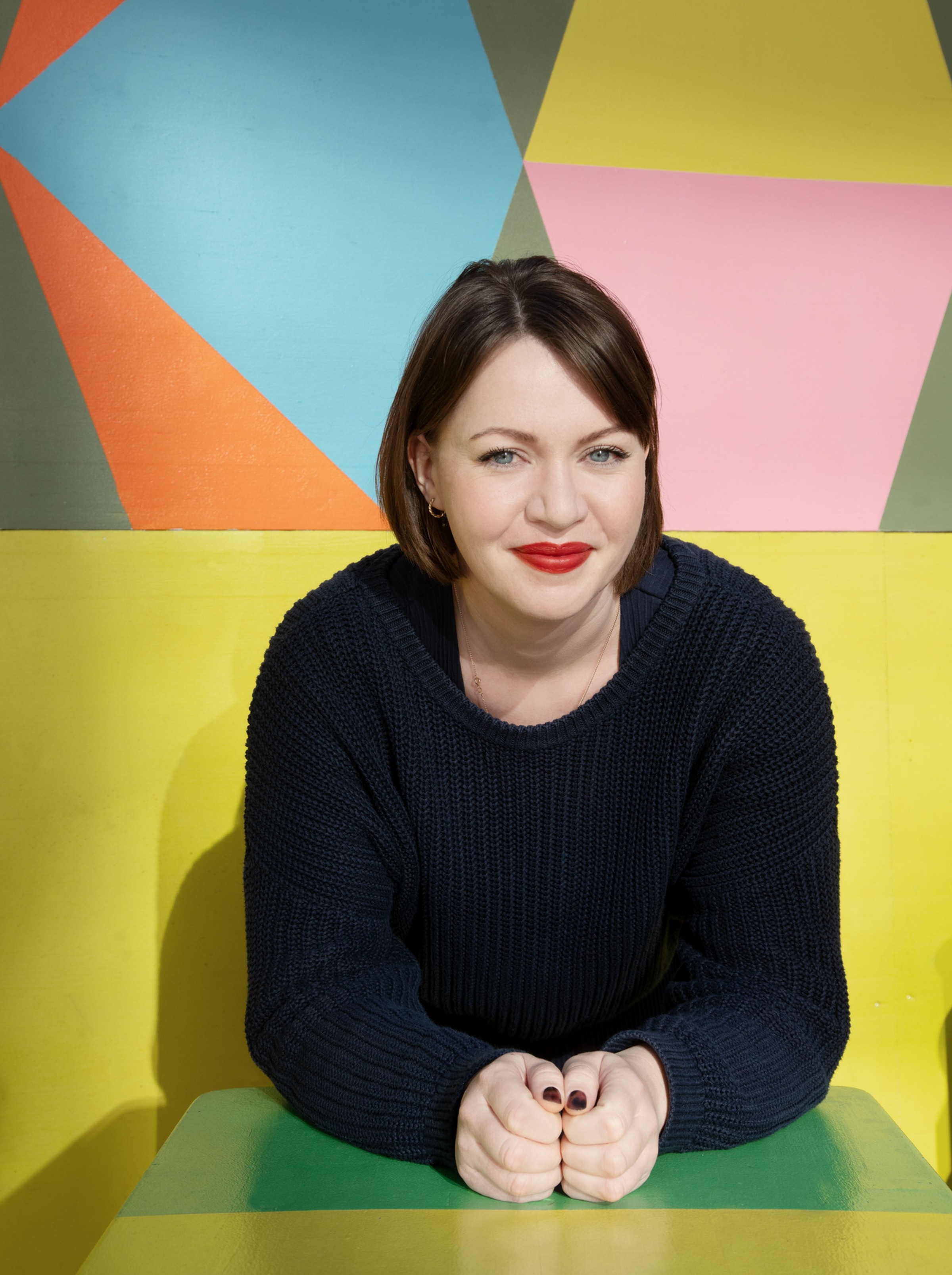
“It’s often difficult to think beyond one’s own everyday experiences, because certain circumstances seem self-evident and incontrovertible to us,” explains Lena Radau, doctoral candidate at LMU’s Chair of Social Inequality and Social Structures. Radau leads the Real Utopias seminar and came up with the corresponding concept.
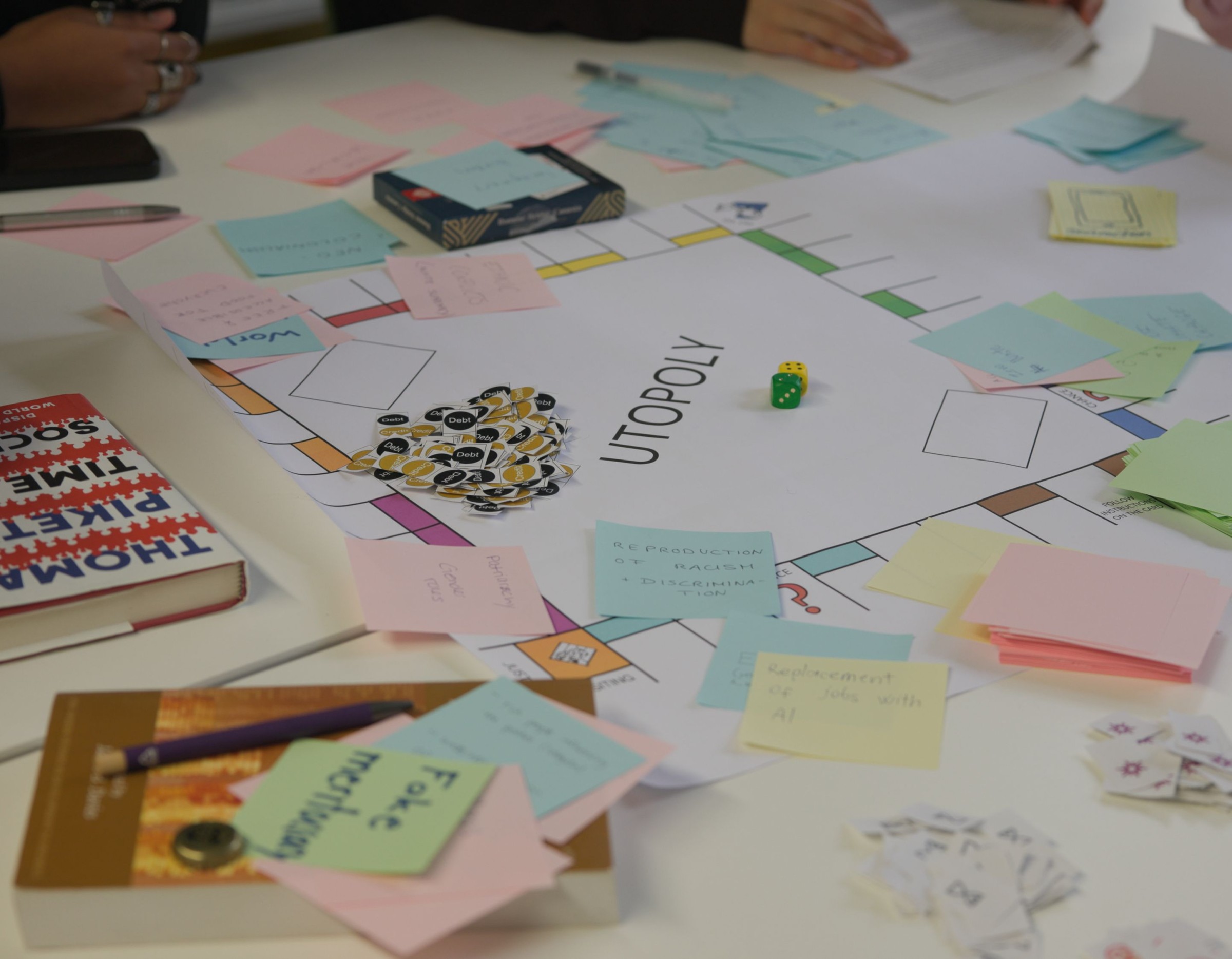
It is not easy to break out of familiar patterns of thinking. To get into utopian thinking, the seminar participants play Utopoly, a game designed specifically for this purpose.
© LMUTo break free of habitual thought patterns, she included Utopoly in the syllabus. The game illustrates the negative effects of social inequality in a playful manner. “Albeit for this purpose, you could just play Monopoly,” observes Radau. After all, the famous board game was originally conceived as a criticism of unbridled capitalism. Utopoly goes beyond this in inviting the players to jointly develop solutions for the identified problems.
The seminar students have gathered in small groups to discuss their visions for the future. This is designed to help them understand and apply the basic principles of so-called real utopian sociology. Real utopias? This sounds paradoxical at first. According to the origin of the word, a utopia is a non-place – a fictional counterpart to reality. Yet real utopias attempt to dissolve the supposedly intractable contradiction between wishful thinking and the real world.
The concept goes back to the American sociologist and critic of capitalism Erik Olin Wright. His thesis is that unbridled capitalism generates increasing inequality, which entails a variety of problems. “In the United States today, we can see what consequences largely unrestricted capitalism can have for democracy and social cohesion,” notes Radau. Moreover, capitalist striving for more and more profit without consideration of social or environmental factors destroys the natural basis of life, Radau continues, as it depends upon unlimited resource consumption.
Lena Radau
The real utopian approach does not limit itself to naming societal ills, but asks: What can we specifically do about them? “When I first looked into real utopian sociology, I was excited by the idea of being able to make the world a better place through my research,” recounts Radau. Wright calls this emancipatory social research. Its goal is not just to describe social problems, but to inspire people to become active and trigger social change.
At the heart of the theory is the principle of human flourishing: Everyone should have the opportunity to develop their potential and determine the lives they want to live – regardless of origin, gender, or social status.
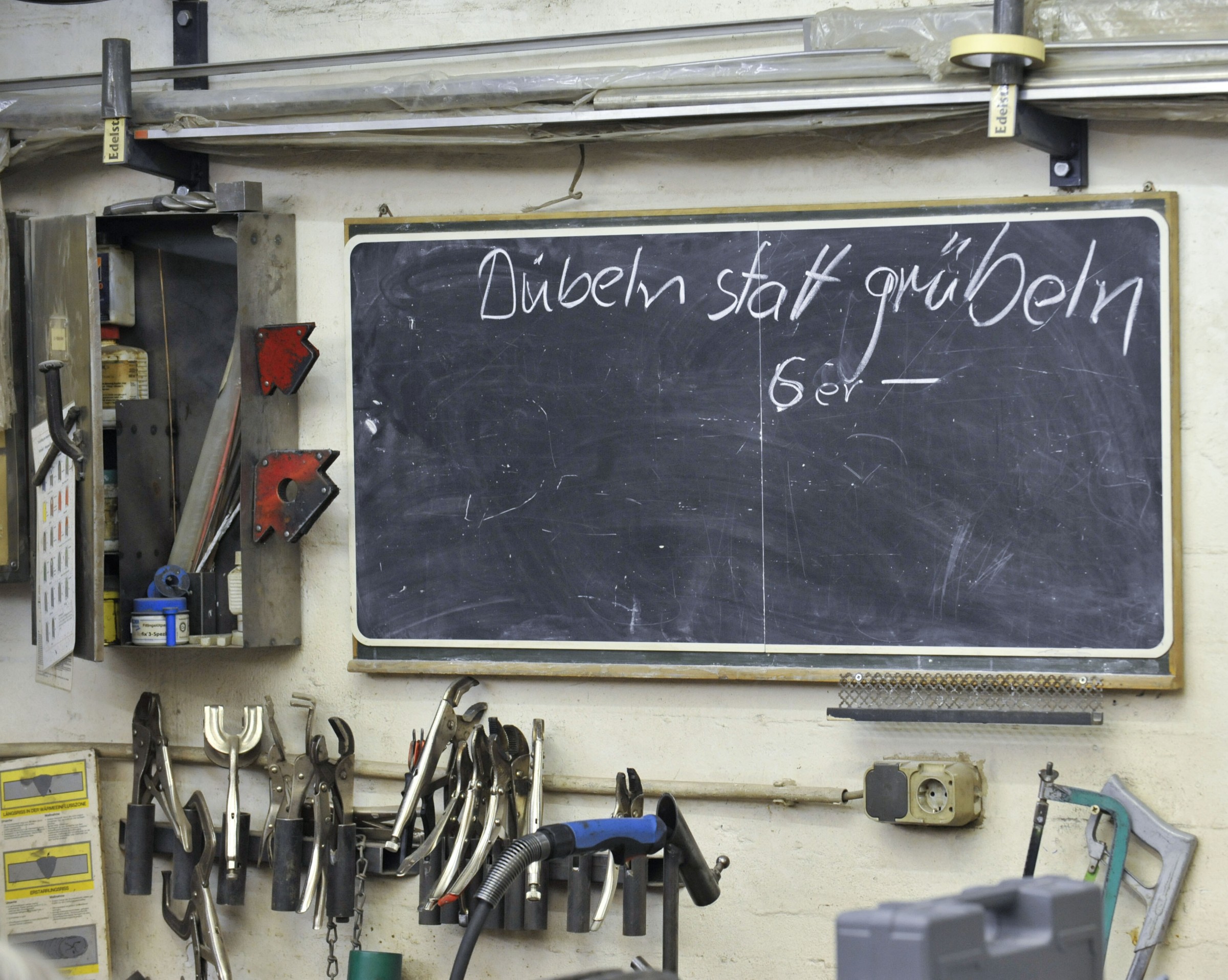
As part of her seminar, Lena Radau organizes excursions to alternative projects in Munich—for example, to the Haus der Eigenarbeit (HEI), a community center with open workshops that supports citizens in becoming productive and realizing their own projects through craftsmanship.
© picture alliance / Sueddeutsche Zeitung Photo | Schellnegger, AlessandraIt works like this: First, you need to make a diagnosis – that is, analyze what is going wrong in the world and why. Then comes the question: How could it be better? Next, you look for concrete examples of things that might sound utopian but which already exist in the real world: cooperative farming, for example, or model schools, or alternative housing communities.
A particularly impressive example is the Mondragón Corporación Cooperativa in Spain – a collectively organized corporation which is wholly owned by its workforce. The federation of worker cooperatives includes 95 companies from various sectors, such as machine engineering, construction, retail, banking, and technology centers. It is the seventh largest Spanish company today. “When I present Mondragón to students at the start of the seminar, they are always surprised and enthusiastic that such a large commercial enterprise actually exists as a real utopia,” says Radau.
If an idea proves to be viable in existing structures, it might have the latent potential to apply to society more generally. The goal of emancipatory sociology is to create hospitable soil for the seeds of real utopian approaches, in which they can grow beyond exotic status and transform societal institutions for good – through things like legislation, political measures, and institutional funding.
One of the areas in which there is an urgent need for change is the housing sector, as Radau is keenly aware: “Housing is a fundamental human need – and a human right.” But the situation in housing markets is fraught. It is particularly extreme in major cities like Munich: “There are too few places to live, rents are high, and even people on average incomes are struggling to find a suitable place to live.”
Lena Radau
In the course of her dissertation, Radau is investigating the subject of housing cooperatives. In Germany, this way of creating housing has existed for over a century – a utopia that has come to pass. Cooperatives even possess a legal framework in this country – the Cooperative Societies Act – and are therefore institutionally grounded. In many other countries, people point to Germany as a shining example in this regard.
“The interesting thing about cooperatives is that they have the potential, due to their democratic structure, to spearhead a transformation,” explains Radau. This makes them classic candidates for real utopian research.
Lena Radau plans to take a closer look at who actually lives in cooperatives in Germany: “My goal is to review the social structure of the members and find out what their motivation was to found a cooperative, what their experience was of the founding process, at what points difficulties may have arisen, and what the cooperative means to them.” She is incorporating representatives from politics and administration into her study in order to understand what experiences they have had with the sponsorship of such projects and what obstacles and opportunities they see.
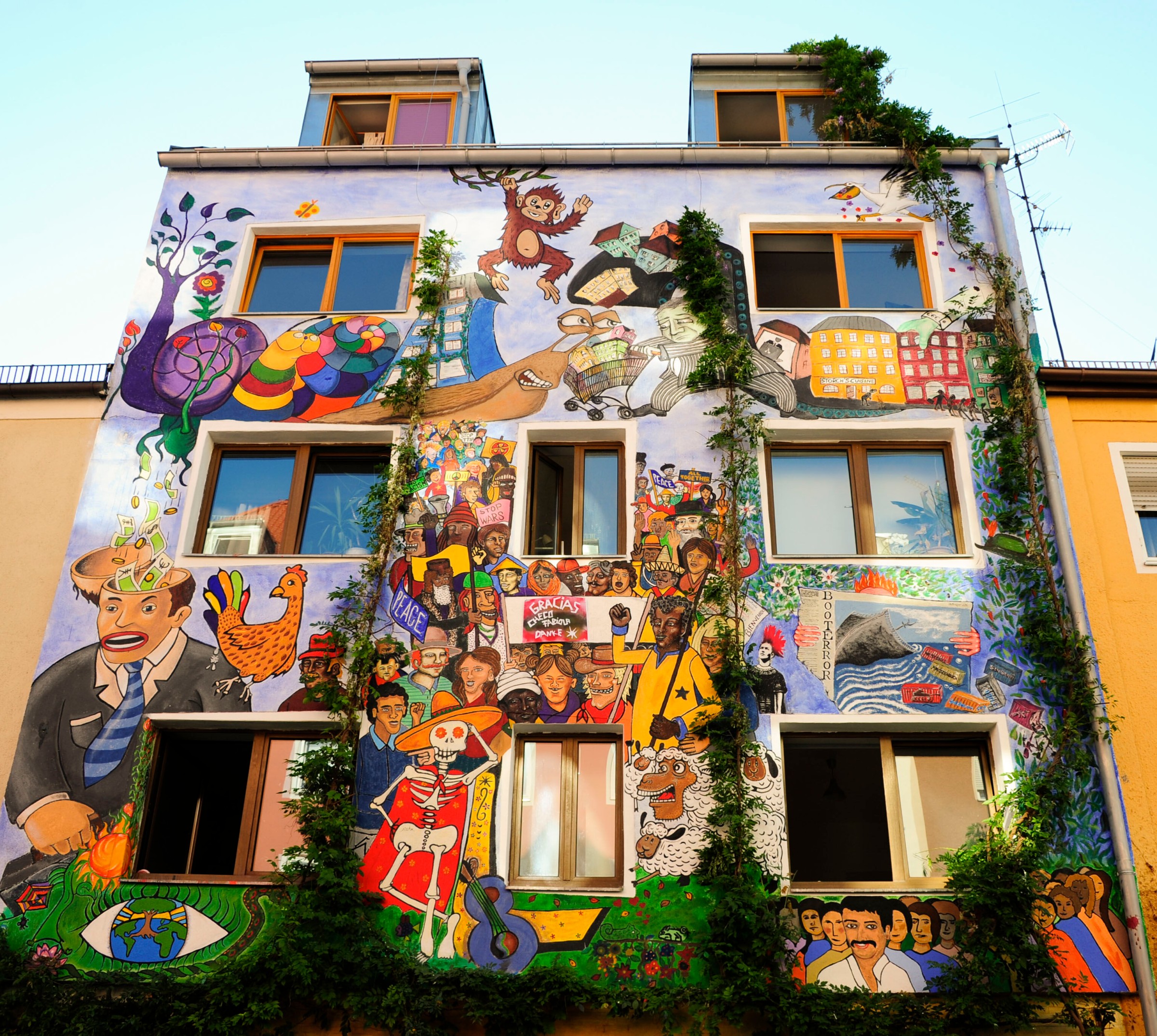
“Ligsalz8” is a housing project in Munich’s Westend district that is self-managed as part of the Mietshäuser-Syndikat. The aim of the Germany-wide initiative is to permanently remove housing from the market so that it can no longer be sold there.
© picture alliance / SZ Photo | Alessandra Schellnegger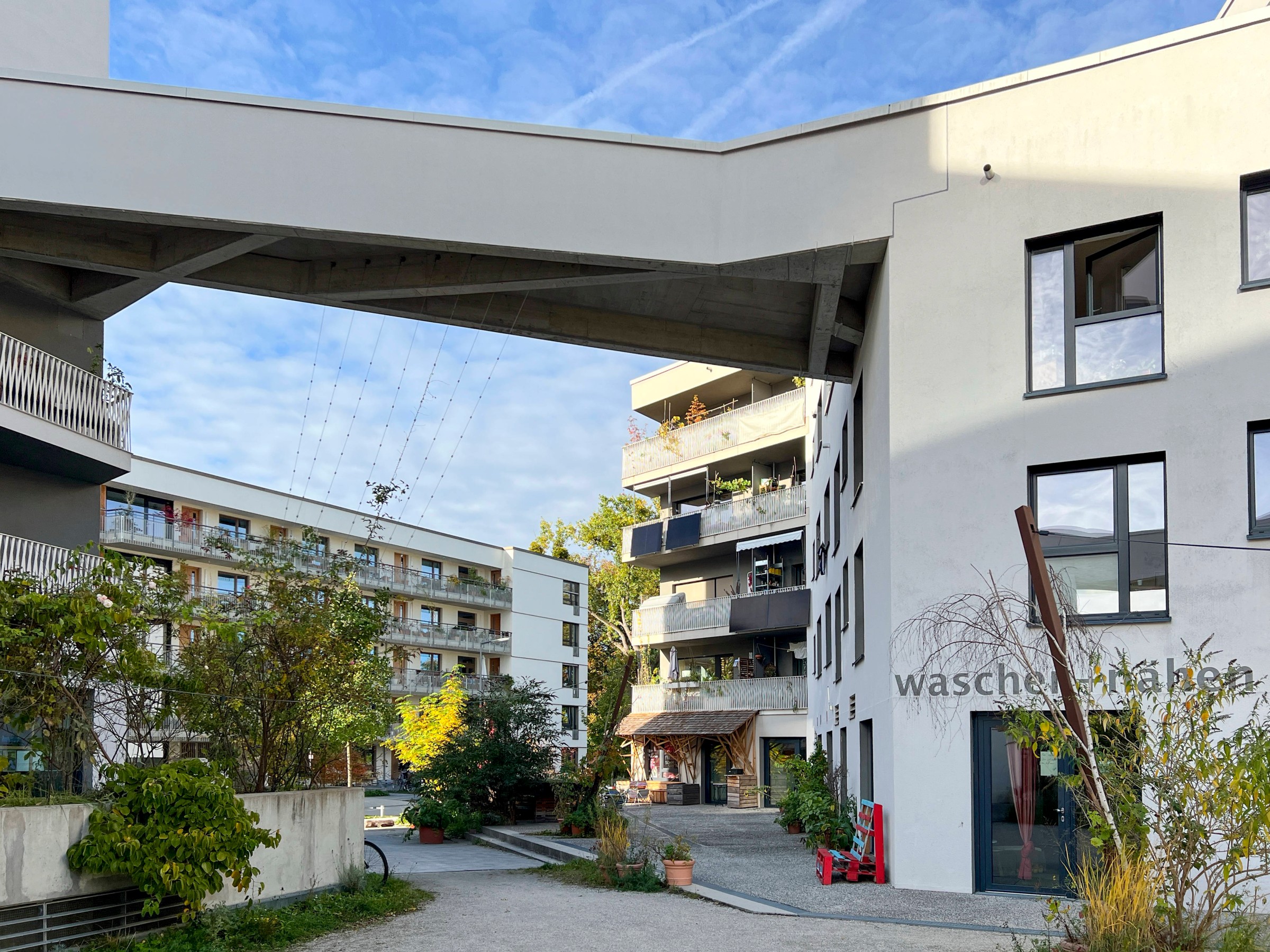
Cooperative building projects such as this residential complex by the Wagnis e.G. cooperative in the north of Munich are given preference by the city when it comes to allocating land and must provide a proportion of social housing in return.
© IMAGO / ecomedia/robert fishman“Founding a cooperative is a costly business,” explains the doctoral student. Investment in new projects can run to several tens of thousands of euros. You have to know how to submit applications, apply for subsidies, and negotiate with public bodies. “All this takes time, money, and know-how.” Radau plans to systematically and empirically assess the perception of cooperatives as the ‘good’ providers of housing, which is the predominant conception in the media, politics, and research. “This is by no means intended as a criticism of existing projects,” she emphasizes. “Rather, I’m looking to further develop the system so that more people can benefit from it. That’s my research interest here.”
The sociologist also tries to design the courses she offers at LMU according to the principles of real utopian sociology. When she teaches Real Utopias, she always starts with the question: What would be your idea of a perfect seminar?
Some wish for lessons outdoors, others want no homework, while others again would like classes to start later so they do not have to get up so early. “These are all valid points, which I try to incorporate in the seminar structure as much as possible. It’s been my experience that this approach works very well.” Often the students learn even more because they can engage with the topics freely and without pressure. And as regards subject-matter, too, students help decide which social ills they want to grapple with.

Emancipatory social research aims to inspire people to become active and initiate social change. Everyone should have the opportunity to develop their potential and determine their own lives.
© LMU / Manu TheobaldLast year, the students were given the opportunity to get active themselves: The course happened to coincide exactly with the applications phase of Munich Budget. This municipal initiative enables citizens to actively participate in shaping the budget for Munich by submitting ideas for urban development. Successful proposals can receive funding of up to 100,000 euros.
“Shortly before the seminar was due to begin, I came across the project and spontaneously integrated it into the course,” recalls Radau. Charles Thallinger was among the students who prepared one of the applications: “We suggested installing holders for deposit bottles on public trash cans, so that people who collect bottles can take them directly from there. I come from Stuttgart, where these holders have been around for a while.”
The deposit bottle holders are a microcosm of everything a real utopia needs: You look for faults in the system, then you look for existing approaches to solving them, and then you try to expand these solutions. “We can dream of a better world and hope it arrives all by itself,” says Lena Radau. “Or we can work with what we have, strengthen and improve existing approaches, and actively move forward, step by step, into a better future.”
Lena Radau is a research associate and doctoral candidate at LMU’s Chair of Social Inequality and Social Structures.
Read more articles from LMU's research magazine in the online section and never miss an issue by activating the magazine alert!