From lecture hall … to the rice paddy
Field research in Thailand: geographer Judith Bopp investigates how organic farming can make smallholders more resilient.


Field research in Thailand: geographer Judith Bopp investigates how organic farming can make smallholders more resilient.
I sit on the kitchen floor with five Thai female farmers. Before us is a large pile of freshly harvested sweet potatoes, still covered with soil and fine ‘slips’ – the rooted sprouts. While we clean and sort the vegetables, we talk about soil quality, the prices the farmers fetch for their produce, and last season’s weather. When our hands are busy and the mood is relaxed, the interview pretty much runs by itself.
I’m a human geographer at LMU’s Rachel Carson Center for Environment and Society. For the past three years, I’ve been working on a research project funded by the German Research Foundation: “Fostering the Health-Nutrition-Ecology Nexus: Organic Farming Practices and Household Resilience in Rural Thailand.” In short, I’m investigating how organic farming makes smallholders more resilient – healthwise, financially, and ecologically.
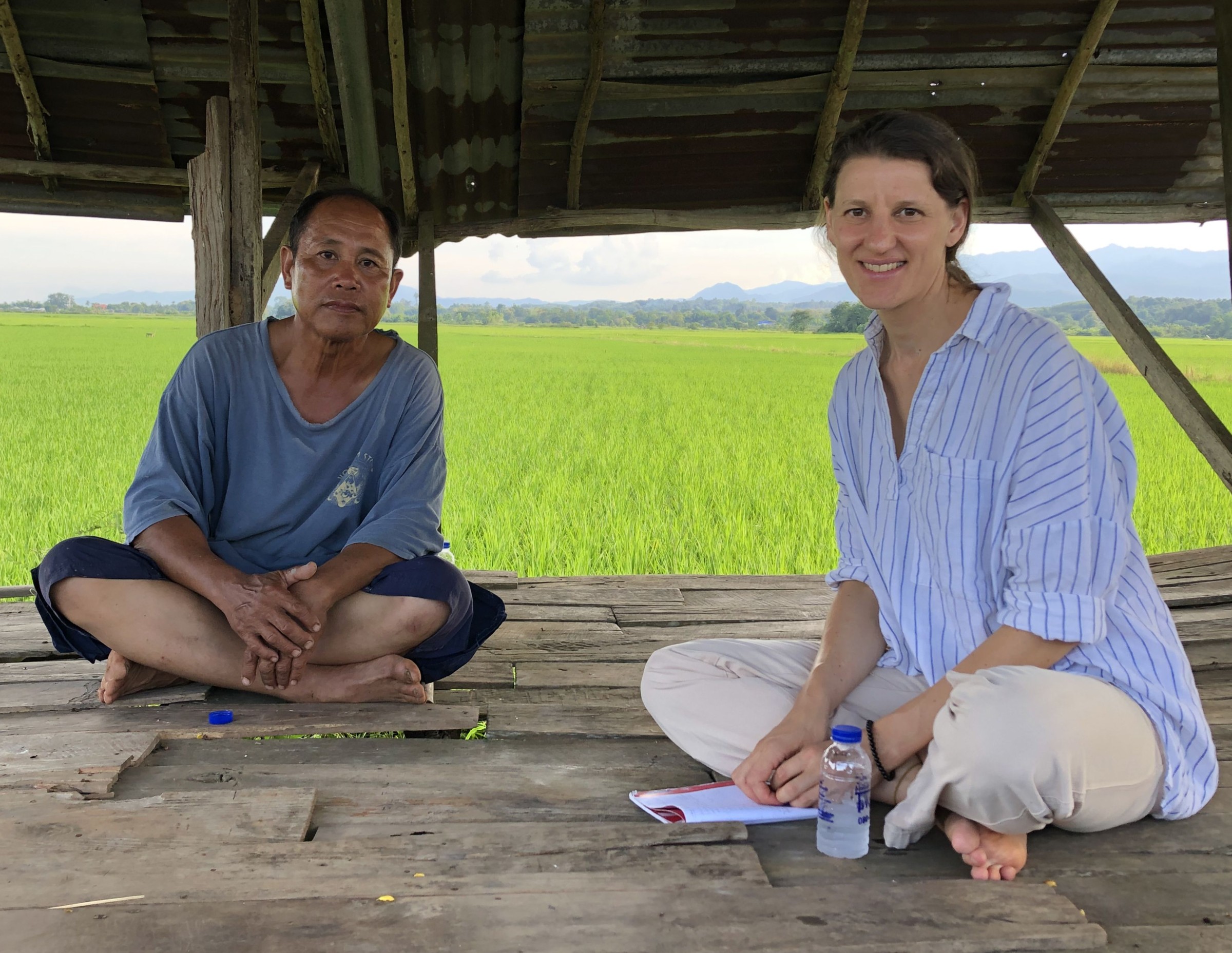
A big part of my fieldwork consists of interviews I conduct with the farmers on-site.
© Judith BoppTo this end, I’m traveling around Thailand for several months in what is my second trip here. Since completing my doctorate, and during it to a lesser extent, I’ve carried out research in India, Bangladesh, and Thailand. My base this time is Bangkok, where I’ve been living with a friend since July. From there, I travel for farm visits and interviews to the agricultural north and northeast of the country, most recently to the Chiang Rai region in particular.
I take my laptop with me everywhere I go, whether by train, bus, or rental car. I prefer to travel the final leg on the back of a moped – like the farmers themselves. Arriving by car would immediately mark me out as a stranger, somebody from outside.
My method is ethnographic: I don’t just conduct interviews – I stay, observe, help out. Equally, I don’t come with a rigid set of questions, rather I start out casually with simple icebreakers: “What are you growing?” or “What was the harvest like?” I introduce myself in Thai and this creates trust – the language course in Munich paid off, although my language skills are unfortunately still limited. That is why I still go with a translator – a person I trust and who is familiar with the subject.
I walk with a farmer through his mango grove. Although the big harvest is long over, a few pieces of fruit are still hanging on the trees. I try one – it’s delightfully sweet and tangy – and ask him about his yields. Because the farmers have little time to spare, chats are often informal – under a tin roof on the edge of a rice paddy, while cooking, or out working in the fields.
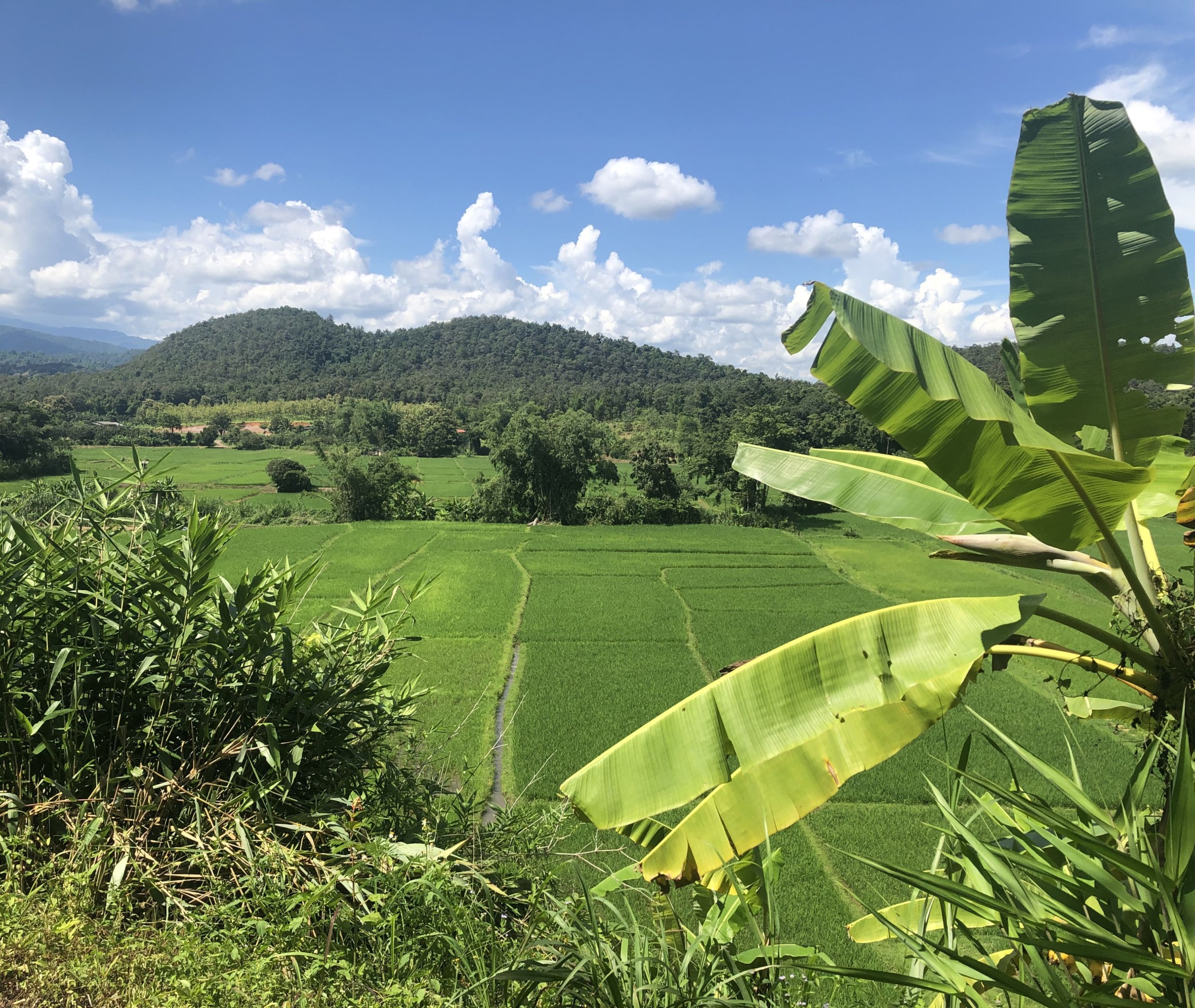
A rice field in Chiang Rai: Rice is usually cultivated twice a year – there are rainy and dry seasons.
© Judith BoppField research – for me that also means to sometimes literally work in a field. In this way, I learn how decisions are made in everyday situations: when somebody uses chemicals and when they switch to organic, how knowledge is shared. I qualitatively evaluate my notes and audio recordings later in order to identify patterns between households.
On this farm, there are fruit and vegetables growing between the rice plants, and there’s a fish pond on the edge. Farmers who embrace diversity instead of monoculture harvest all year round. Families have to buy less food, have a more varied diet, and have reserves in case of emergency. Many farms are growing organically for precisely these reasons. This practice requires knowledge and patience – which pays off for many.
The knowledge about ecological farming practices is there – often traditional, sometimes refreshed by YouTube or TikTok videos. Some farmers have learned to plant rows of rice seedlings further apart to allow air to circulate better, meaning less fungus and fewer crops eaten by pests.
Two neighbors have arrived to help out in the field. Later they will take sacks of fruit and vegetables away with them. A strong sense of community in the village can be another factor that makes households crisis-proof.
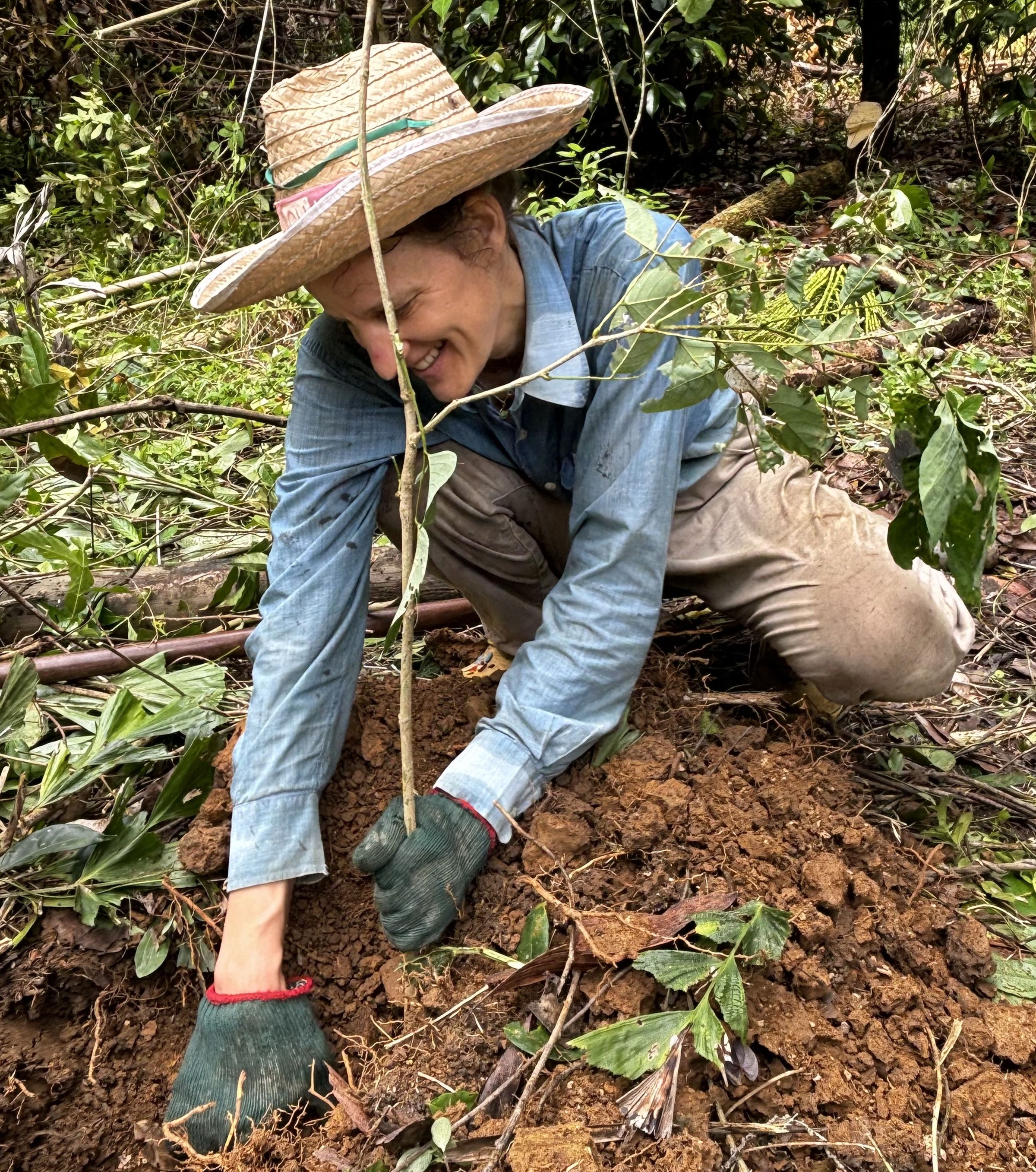
Sometimes I lend a hand myself—like here on a farm that practices agroforestry. The farm owner is converting the former orchard into a forest of native hardwoods. They are a long-term investment, as the wood is expected to generate a good income in 30 years.
© Watcharapol DaengsubhaPeople help each other with the harvest, lend each other money or labor, and share seeds, vegetables, and time. This really stood out during the pandemic, some farmers recall. When markets remained closed and transport routes were not always functional, the households swapped, gifted, and sold among themselves.
At a rice mill on the edge of the village, I meet 15 farmers. The mill owner – a busy mediator between field and market – has invited an expert, who demonstrates how to make organic pesticides. After all, the chemicals used in the fields not only harm the soil and harvest, but also the health of the farmers who spray them.
I myself have witnessed farmers walking over the fields in 35-degree heat, canisters on their backs, and spraying without any protective clothing. Although there are government regulations, controls are rare. Those who can afford hire a drone for the spraying; but others stir the concentrates into water with their bare hands.
Although I don’t collect medical data, I can say from talking to farmers who spray chemical pesticides that they face skin rashes and loss of appetite after working in the fields, and of hearing problems and frequent cases of cancer within their families.
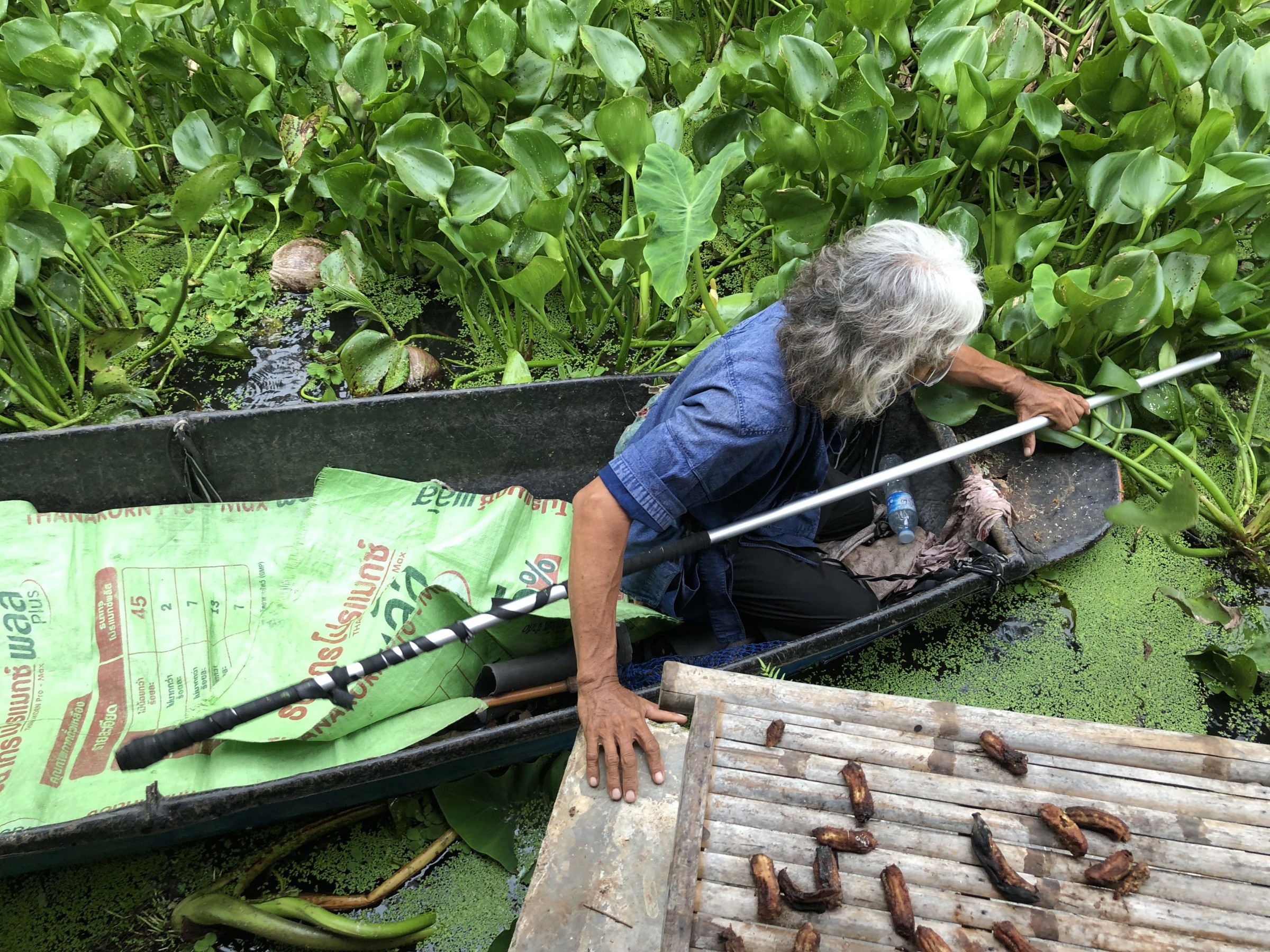
The coconut grove is crossed by boat: as was customary in this region (west of Bangkok) in the past, the farmer cultivates the coconut palms on small embankments between water channels.
© Judith BoppIn the rice mill, we stir banana leaves and herbs into water canisters to produce environmentally friendly pesticides. Of the little bottles we fill, everybody is allowed to take one home. Many of those present openly admit: When it doesn’t rain or a fungus attacks the grain, they revert back to artificial fertilizers or fight insects with chemicals.
Ultimately, it's the harvest that decides whether organic pays off for them or not. In the long term, this is a vicious cycle: Monoculture and too much fertilizer acidify the soil, lower yields, and increase farmers’ debts – creating the need for even more fertilizer.
On an organic farm I visit the next day, by contrast, fish and crabs are swimming in the wet paddy: a clear indicator of clean water free from spray – and another food source for the farm families. At one point, I even see a heron dipping into the field and coming up with a fish.
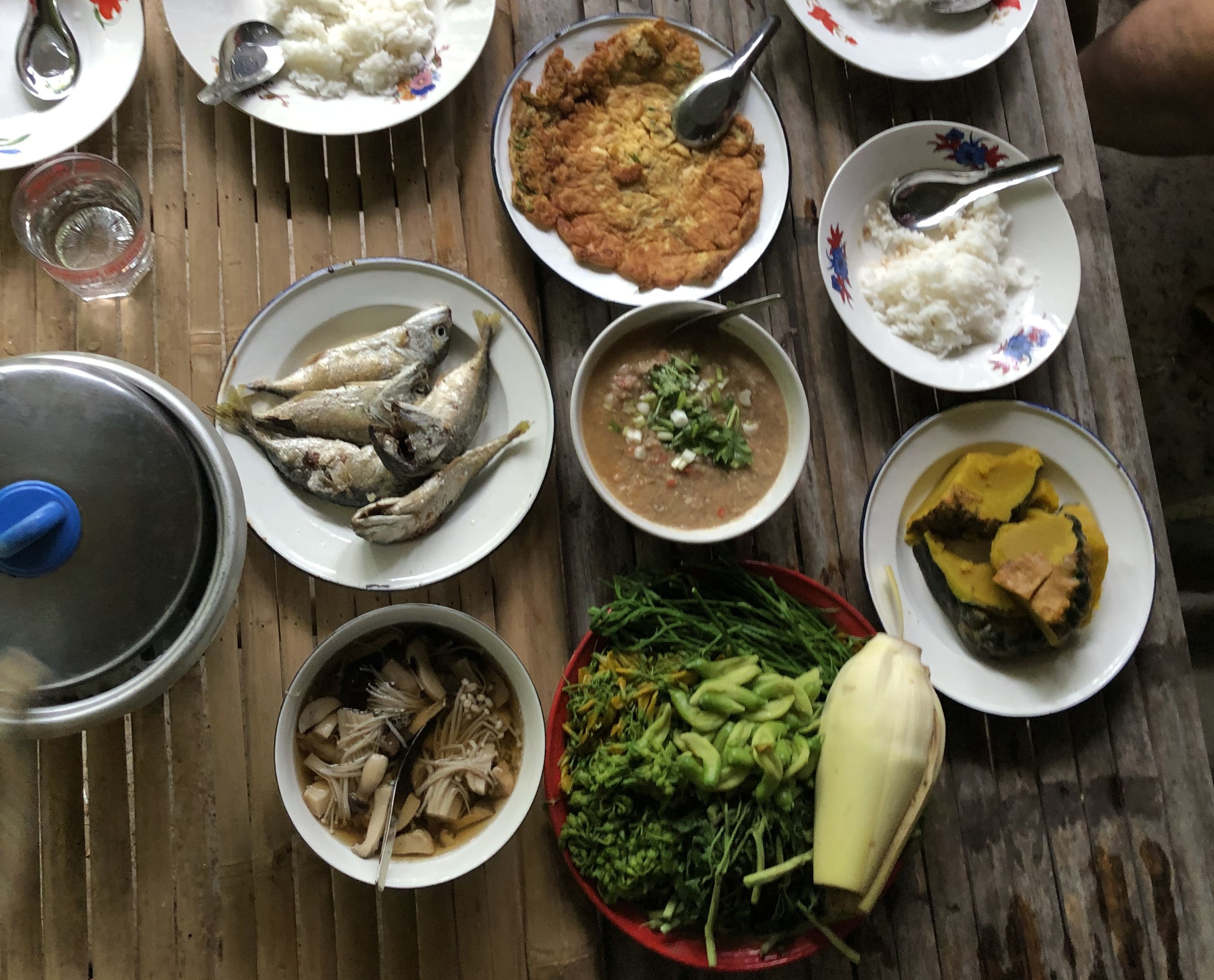
Having a meal together is often part of visiting a farm.
© Judith BoppOn a brief private trip a short while ago, I stayed in a village with traditional wooden houses for a few days. Behind almost every house there’s a rice field for the people’s own use – without chemicals. People cook what the garden provides: two handfuls of spinach fried with fresh garlic – and presto you have a meal. As always, accompanied by … rice.
Rice is usually cultivated twice a year – there are rainy and dry seasons. Now, after the rainy period, the grain is heavy; it will be harvested in October and November. Typical here is the fragrant jasmine rice – or “Hom Mali” as it’s called – but there are also varieties like red and black rice. Or my favorite, the soft, purple “Riceberry.” Sticky rice is particularly popular in the northeast: steamed, rolled into balls by hand, and eaten with savory and sweet dishes alike.
As for me, I eat vegan. That’s not so easy in Thailand, where almost every meal contains fish sauce and crab paste. In Bangkok I know some Buddhist restaurants where all the cooking is plant-based. Elsewhere, if you speak a little bit of Thai, you can order many dishes “without fish sauce, with salt only.” Often, however, I cook for myself, with vegetables from the market or which I take with me from the farms.
When I ask the farmers about crises, they wave it off: “We don’t have them here.” Only when nudged do they talk about downpours that destroy harvests, or about income collapses the year before. But even that they describe more as a challenge than a crisis. Resilience here is also an attitude: continuing, adapting, finding solutions.
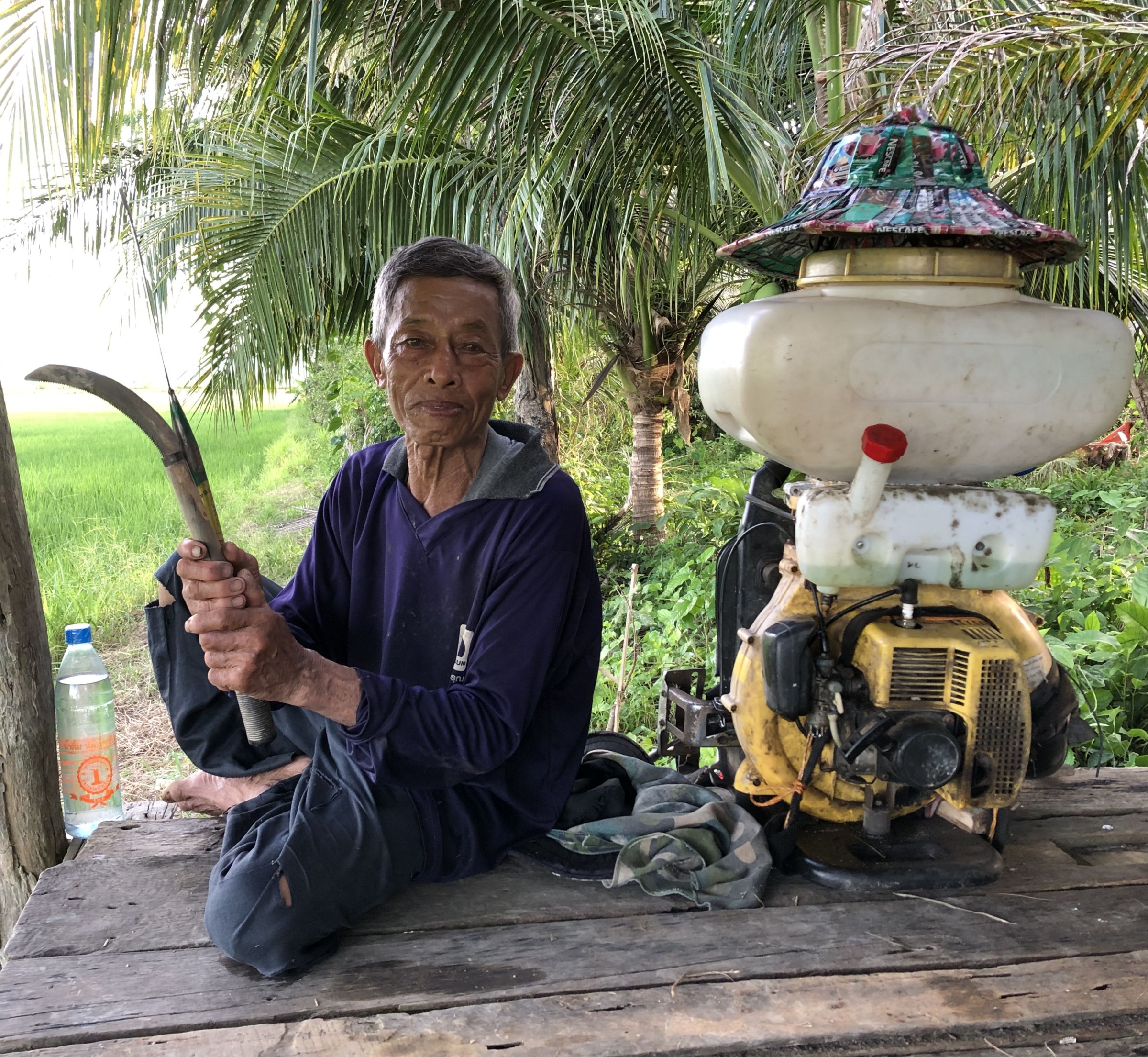
This farmer's spray canister is used for homemade organic pesticides or organic fertilizer.
© Judith BoppThis year I’m spending almost four months in Thailand. I’ve already collected a lot of data, and now I’m writing – an academic paper, smaller pieces, field notes. I want to understand what makes farming households strong: how organic farming, neighborliness, and shared knowledge help them master crises.
This is also about the nexus of health, nutrition, and ecology – and about ideas that can change things in practice. My results are not just for the academic world, but should also benefit local partners.
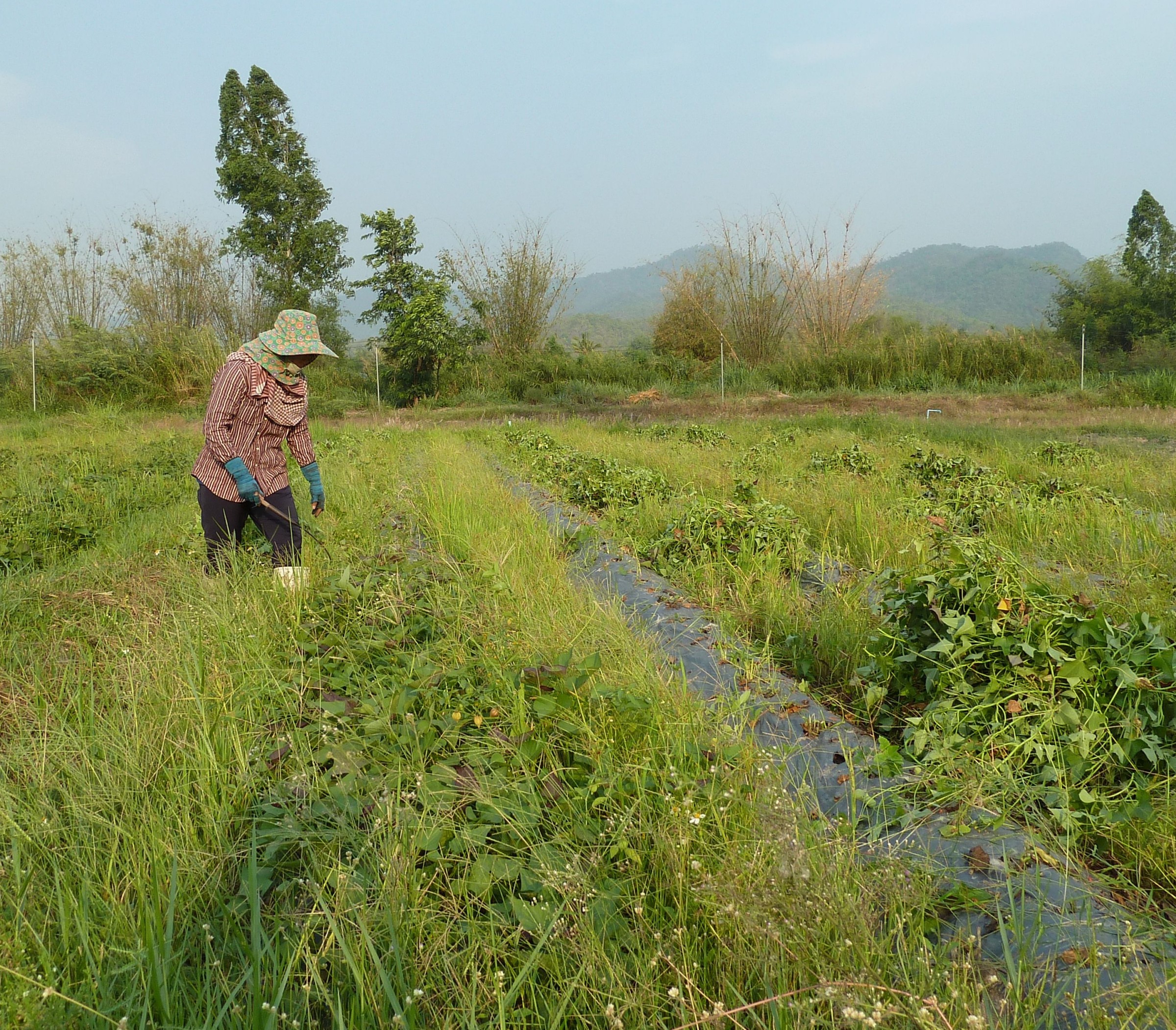
I want to understand what makes farming households strong: how organic farming, neighborliness, and shared knowledge help them master crises.
© Judith BoppNow and then I contact a farmer via Facebook. Social media are tremendously important in Thailand, including for older people – making them a quick and direct way for me to arrange further interviews.
At the same time, I’m preparing a workshop in India along with two colleagues, to which I’ll be traveling with nine Thai farmers. Just organizing the visas is a time-consuming business. But for me, connecting the stakeholders of my research topic with each other and facilitating farmer-to-farmer learning is part and parcel of my academic approach.
At the end of October, I’ll be returning to Munich. I’m looking forward to the in-person discussions with colleagues at the Rachel Carson Center. The subject of Ecolinguistics appeals to me in particular: How do we discuss agriculture? Do we just count soil parameters and machinery – or do we also talk about the relationships between humans, soil, water, health, and neighborliness? I want to get away from technocratic narratives and toward real-life stories.
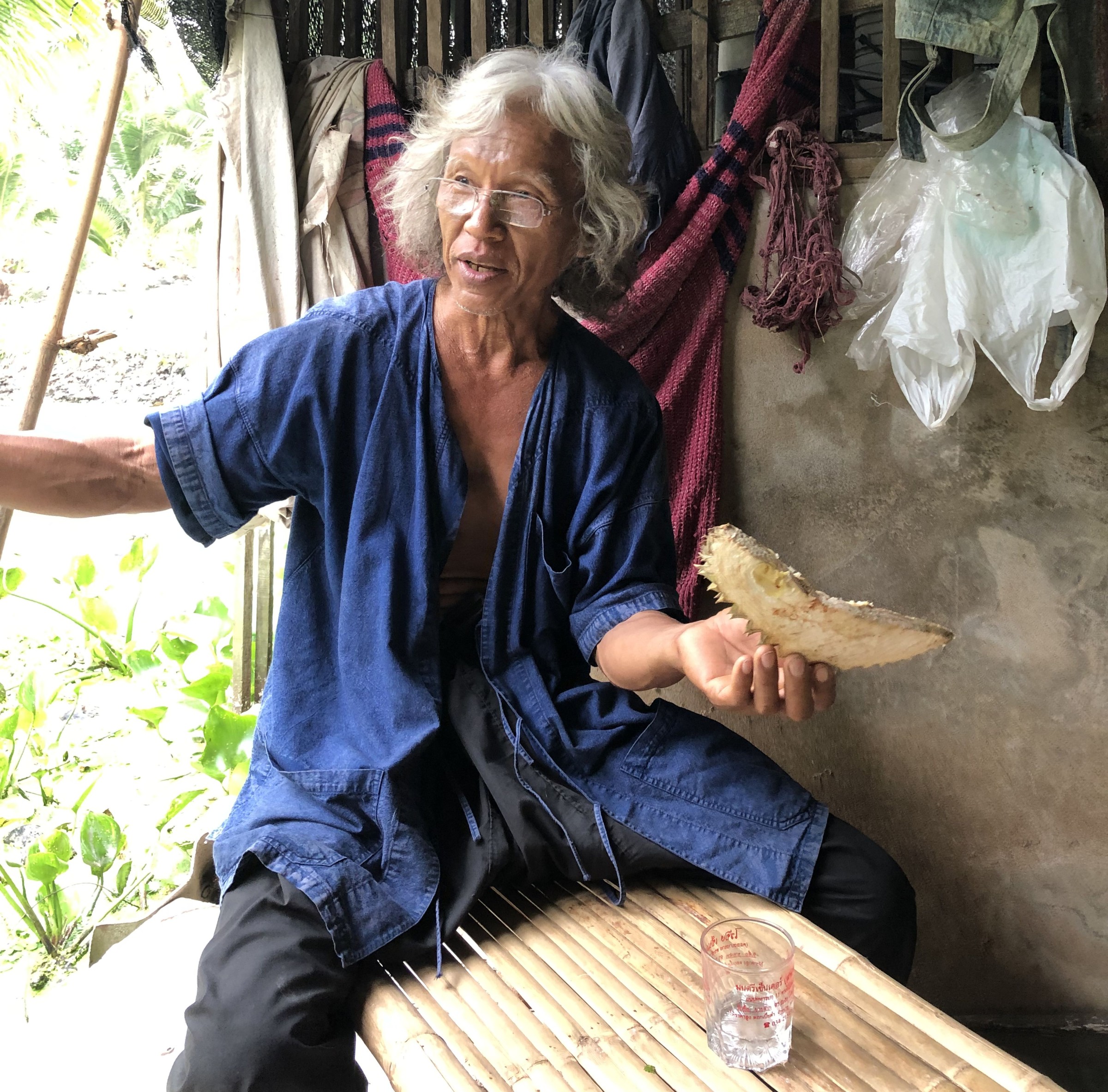
I don’t come with a rigid set of questions, rather I start out casually with simple icebreakers: “What are you growing?” or “What was the harvest like?”
© Judith BoppMy project has funding up until 2026. Three years sound like a long time for a project, but for ethnographic depth it’s quite short. So, what comes next? After years as an applicant, lone researcher, and frequent traveler, I hope I’ll be able to contribute my experience to a fixed research team – where we map out the future together instead of always organizing along parallel lines.
But on this Bangkok evening, I close my laptop. My beloved Riceberry is simmering away in the rice cooker. Tomorrow I might be standing again in a rice paddy. Perhaps I’ll pluck a papaya from a tree – and watch a heron catching fish.
Dr. Judith Bopp is a research fellow at the Rachel Carson Center for Environment and Society at LMU.
Read more articles from LMU's research magazine in the online section and never miss an issue by activating the magazine alert!