News
Life on Saturn’s moon would be possible
28 Sept 2026
Saturn’s icy moon Enceladus might be more supportive of life than was previously thought. An LMU study reveals that microorganisms could survive in its hidden ocean.

28 Sept 2026
Saturn’s icy moon Enceladus might be more supportive of life than was previously thought. An LMU study reveals that microorganisms could survive in its hidden ocean.
From a human perspective, Enceladus is anything but a comfortable place to live: Icy cold, hardly any oxygen, and – below its icy crust - a global subsurface ocean whose water is as corrosive as pipe cleaner. Despite this, Saturn’s moon is one of the few places in our solar system where the conditions for life to emerge could be present. A new study supervised by William Orsi, who is Professor of Geomicrobiology at LMU, now presents experiments showing in specific detail that certain microorganisms could survive there and how they are able to do so.
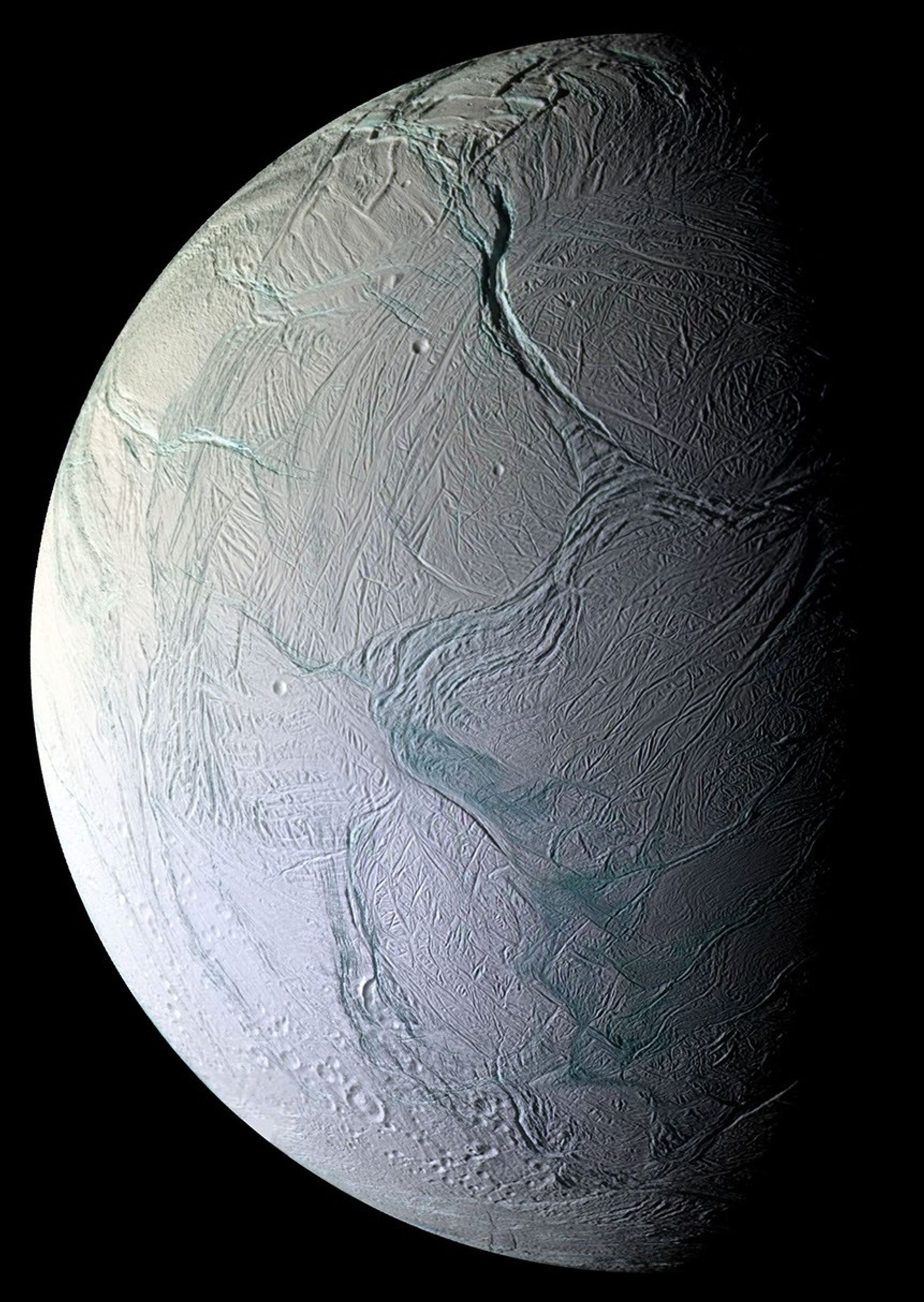
This image of Saturn's moon Enceladus was created from images taken by NASA's Cassini spacecraft, which came within about 25 kilometers of its surface.
© NASA / JPL / Space Science InstituteOrsi’s team recreated the conditions thought to exist on the seafloor of Enceladus in the laboratory and discovered that hydrogen-consuming, methane-producing archaea seem to be able to adapt to this environment previously considered to be deadly for anaerobe archaea.
This evidence could only be produced thanks to collaboration between different disciplines, including geomicrobiology, biochemistry, geochemistry, and planetary science. The study, which involved scientists from LMU as well as the Woods Hole Oceanographic Institution, the University of Regensburg, and Freie Universität Berlin, was recently published in the science journal Science Advances.
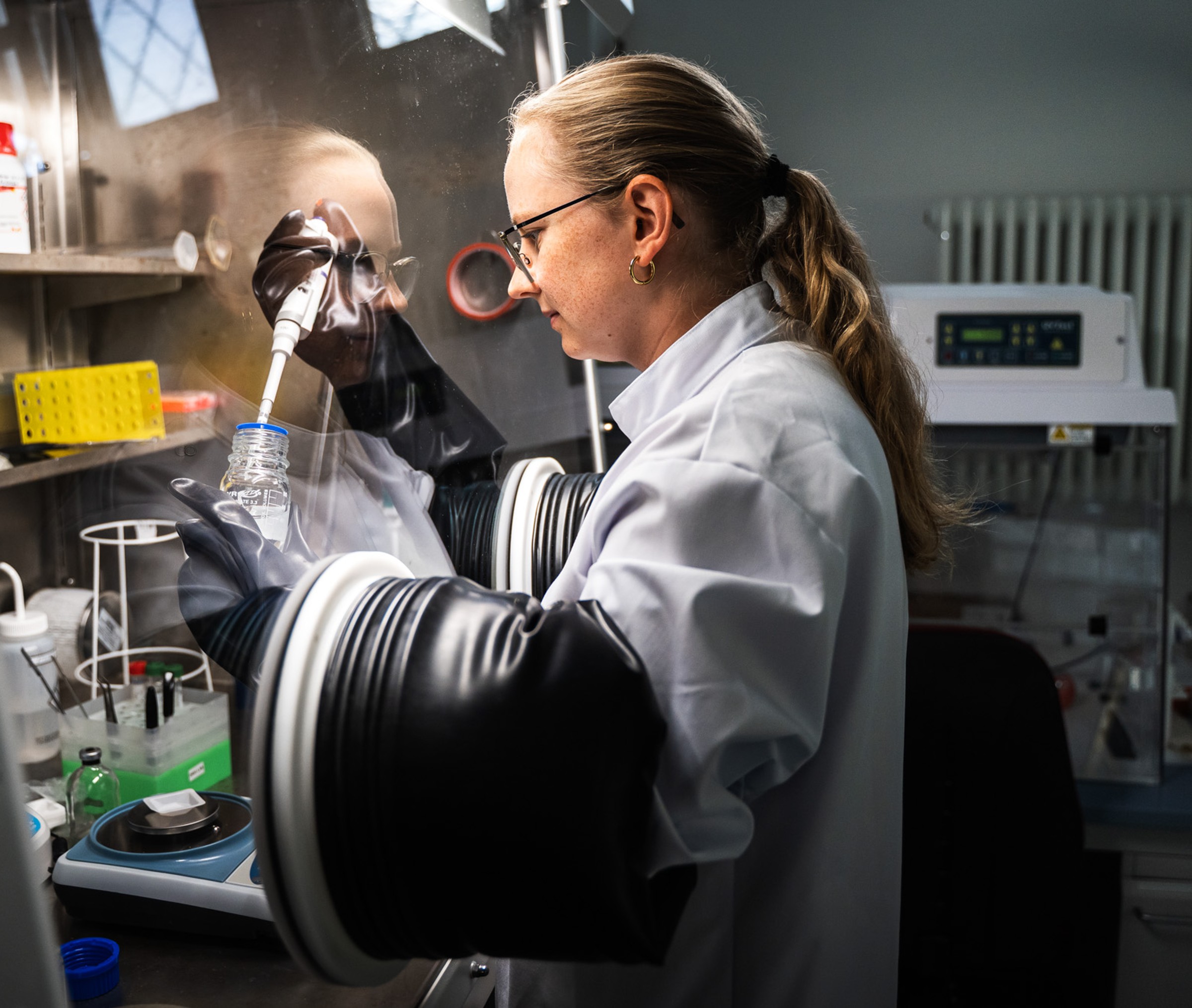
Vanessa Helmbrecht at work in the anoxic chamber, in which the conditions on Enceladus were simulated.
© LMU / Johanna Weber“Enceladus is considered to be one of the most promising places to search for extraterrestrial life,” says Dr. Vanessa Helmbrecht, lead author of the study. “Our experiments show that its unique geochemistry could create conditions that are even more favorable for microbial life than we had previously thought.”
Beneath Enceladus’ thick ice shell lies an ocean of liquid water and a solid core. Data from NASA’s Cassini mission revealed that the moon’s water-rich plumes that regularly shoot up from the ice contain molecular hydrogen, methane, and dissolved minerals – this provides strong evidence of hydrothermal activity on the seabed, and water-rock geochemical reactions, where the rocky core meets the ocean.

Dramatic plumes spray water ice and vapor from many locations along the famed "tiger stripes" near the south pole of Saturn's moon Enceladus.
© NASA / JPL-Caltech / Space Science Institute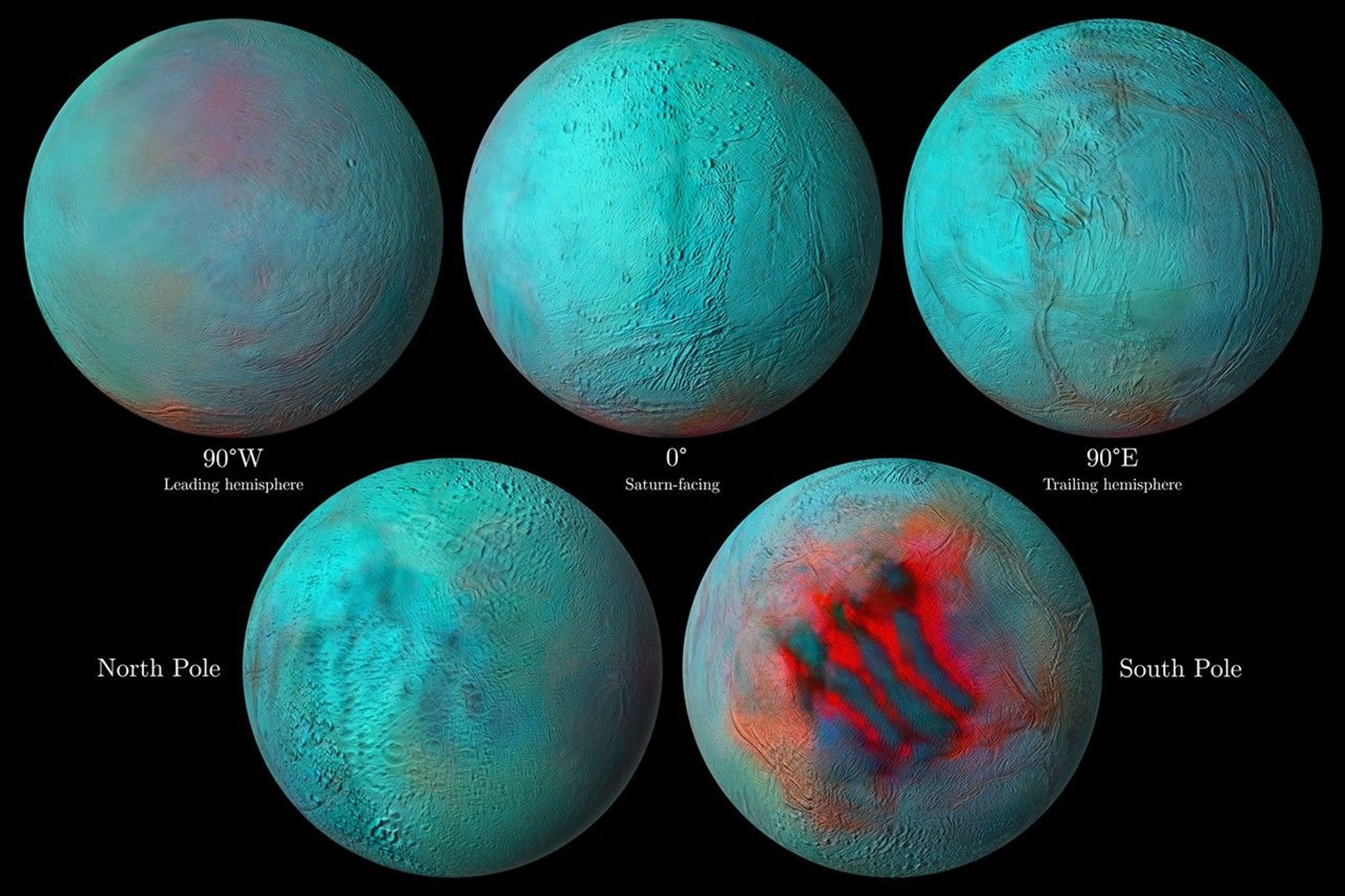
Infrared images show heat generated by cryovolcanic activity, particularly around Enceladus's south pole.
© NASA/JPL-Caltech/University of Arizona/LPG/CNRS/University of Nantes/Space Science InstituteThe researchers used a special anoxic chamber to create similar deep-sea conditions with a very low level of oxygen– a kind of “Enceladus simulant.” The oxygen concentration was extremely low – roughly 10,000 times lower than the level of oxygen in the Earth’s atmosphere. Under these conditions, the researchers used carbonate salts to simulate a hypersaline liquid that replicated both the moon’s alkaline soda ocean and its rocky ocean floor.
They then introduced Methanothermococcus okinawensis, a methane-producing archaeon that normally lives near deep-sea hydrothermal vents on Earth. The metabolic pathway used to by this organism to conserve energy requires only H2 and CO2 gases, and is considered to be one of the most ancestral metabolisms still retained by life on Earth today.
The results were striking: While the organism failed to grow in a conventional laboratory medium at a pH of 10 or 11, in the Enceladus simulant it continued to grow, producing methane using hydrogen generated by water-rock reactions.
One of the biggest challenges for life to potentially exist on Enceladus is the extremely low concentration of carbon dioxide caused by the ocean’s high pH. The team was able to demonstrate that Methanothermococcus okinawensis could adjust to these conditions and use its unique metabolism to scavenge the tiny amounts of available CO2 to continue growing.
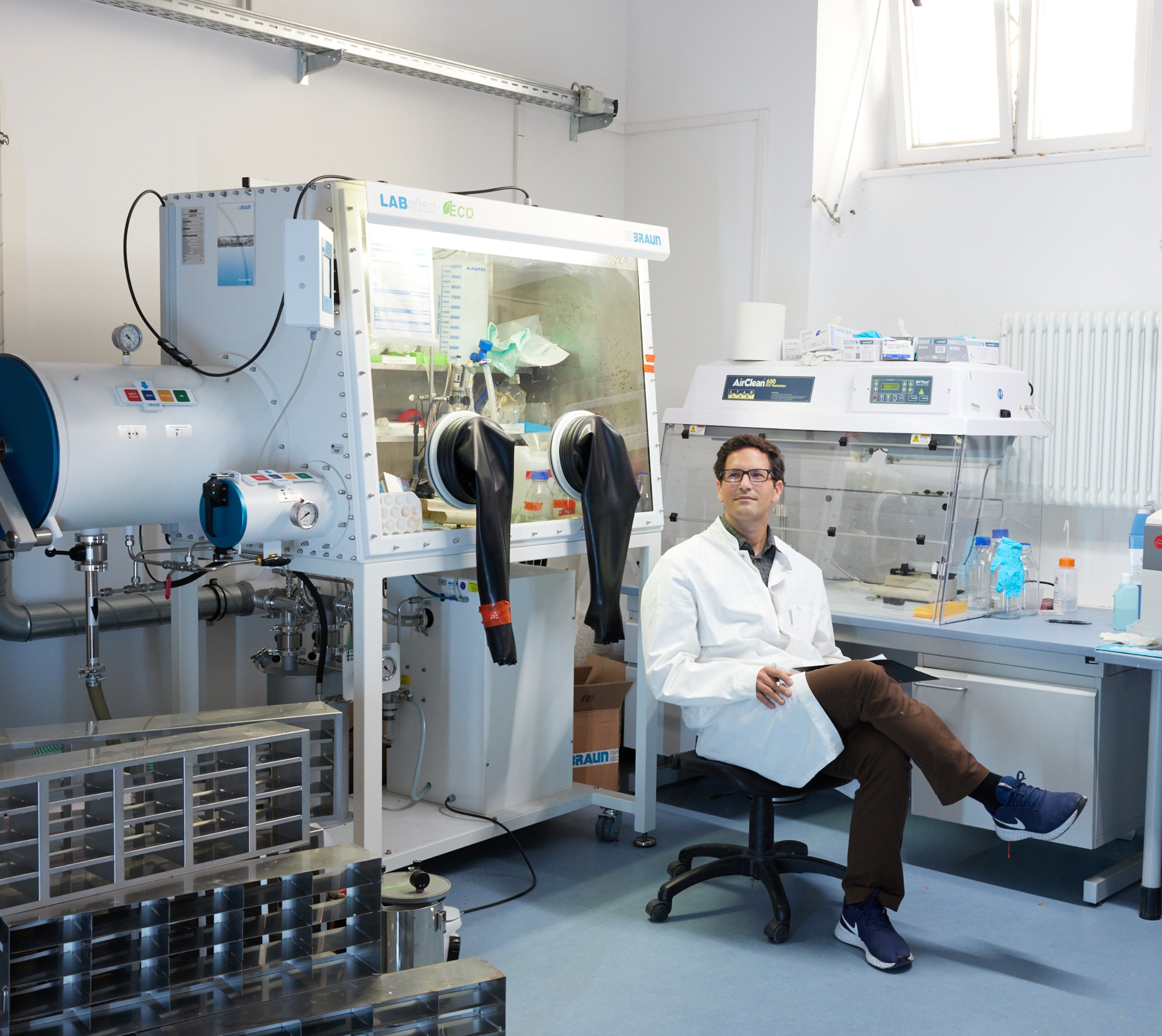
William Orsi studies microbial life under extreme conditions, usually in terrestrial environments such as the deep sea.
© Oliver Jung / LMU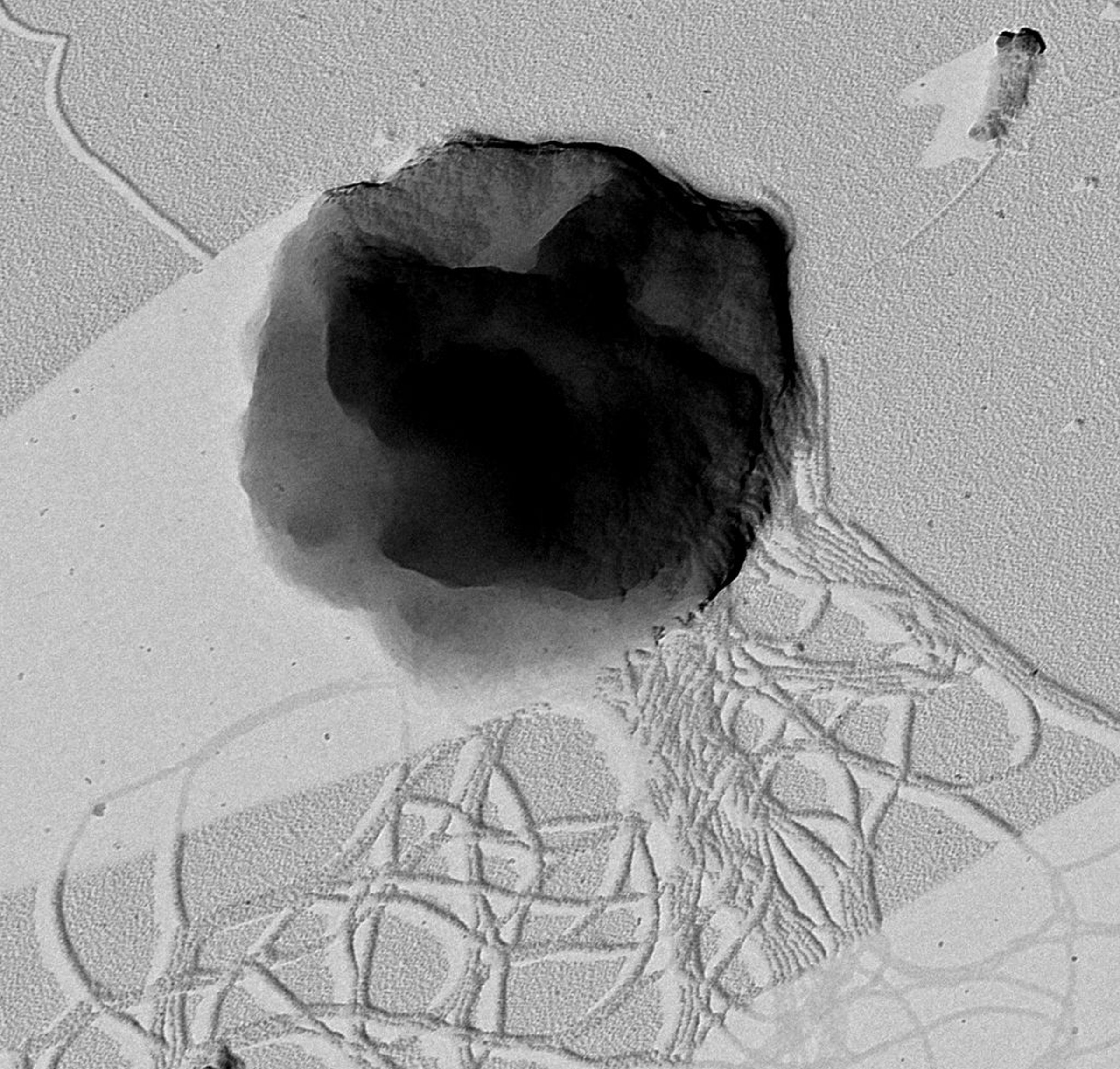
Methanothermococcus okinawensis, whose ability to survive on Saturn’s moon Enceladus was tested by researchers at LMU. The result: Yes, the microorganisms could survive under the conditions on the icy moon. It normally lives in the deep sea on Earth.
© Chiara Morawetz & Reinhard Rachel (Universität Regensburg)“Our findings suggest that the chemistry of Enceladus itself can help overcome this major barrier to life,” says William Orsi. “The interaction between the rock and water not only produces hydrogen as a source of energy, but also creates conditions that allow microbes to keep accessing carbon, even though CO2 is extremely scarce.”
The findings expand the range of conditions under which scientists consider Enceladus to be potentially able to sustain life.
“Our study doesn’t prove that life exists on Enceladus,” says Orsi,“ but it does show that key geochemical features of its environment can support one of life’s most ancient metabolisms. This strengthens the scientific case for future missions to retrieve samples from the moon’s ocean-derived plumes.”
ESA has recently announced plans to do exactly that with its next major flagship space mission “L4”, currently foreseen to launch in 2042.
Vanessa Helmbrecht, Frank Postberg, Nozair Khawaja, Robert Reichelt, Frieder Klein, Dina Grohmann & William D. Orsi: Enceladus-like geochemistry fuels methanogenesis under extreme CO2 limitation. Science Advances 2026