How can scientists inform the public about climate protection and heat adaptation without overwhelming people? How can researchers protect themselves against backlash when they appear in public? And how can we measure whether an exhibition, a workshop, or a social media campaign successfully communicates scientific information? These are the sorts of questions addressed by the Munich Science Communication Lab (MSCL), which was founded in 2021. Now, the Volkswagen Foundation has awarded the joint initiative additional funding for a new project phase. The MSCL will be receiving around 2.2 million in euros for a further three years through the Science Communication Cubed program.
Based at the Department of Media and Communication (IfKW) at LMU, the Munich Science Communication Lab combines research on science communication with practical formats for real-world implementation. Its researchers explore different forms of science communication and collaborate with experts from journalism, exhibition design, and other areas of society to develop new ways of bringing relevant research into public discourse.
In the previous funding phase, MSCL helped strategically expand successful science communication in Munich. Since its foundation, three research and teaching units focusing on crisis and risk communication, health communication, and strategic communication have been established at the Department of Media and Communication. With a strategic focus on health and science communication, the institute is laying strong foundations for outstanding research through MSCL.
“The support from the Volkswagen Foundation has set important processes in motion at LMU, in Munich, and in the international community. At our institute alone, we now have three professorships dedicated to science communication,” says Lars Guenther, Professor of Science Communication at the Department of Media and Communication and coordinator of the MSCL consortium. “The decision by the foundation’s Board of Trustees to continue funding MSCL is a strong endorsement of the work we have accomplished thus far and demonstrates their confidence in our vision for long-term engagement with science communication at one of Germany’s leading universities.”
How science communication works
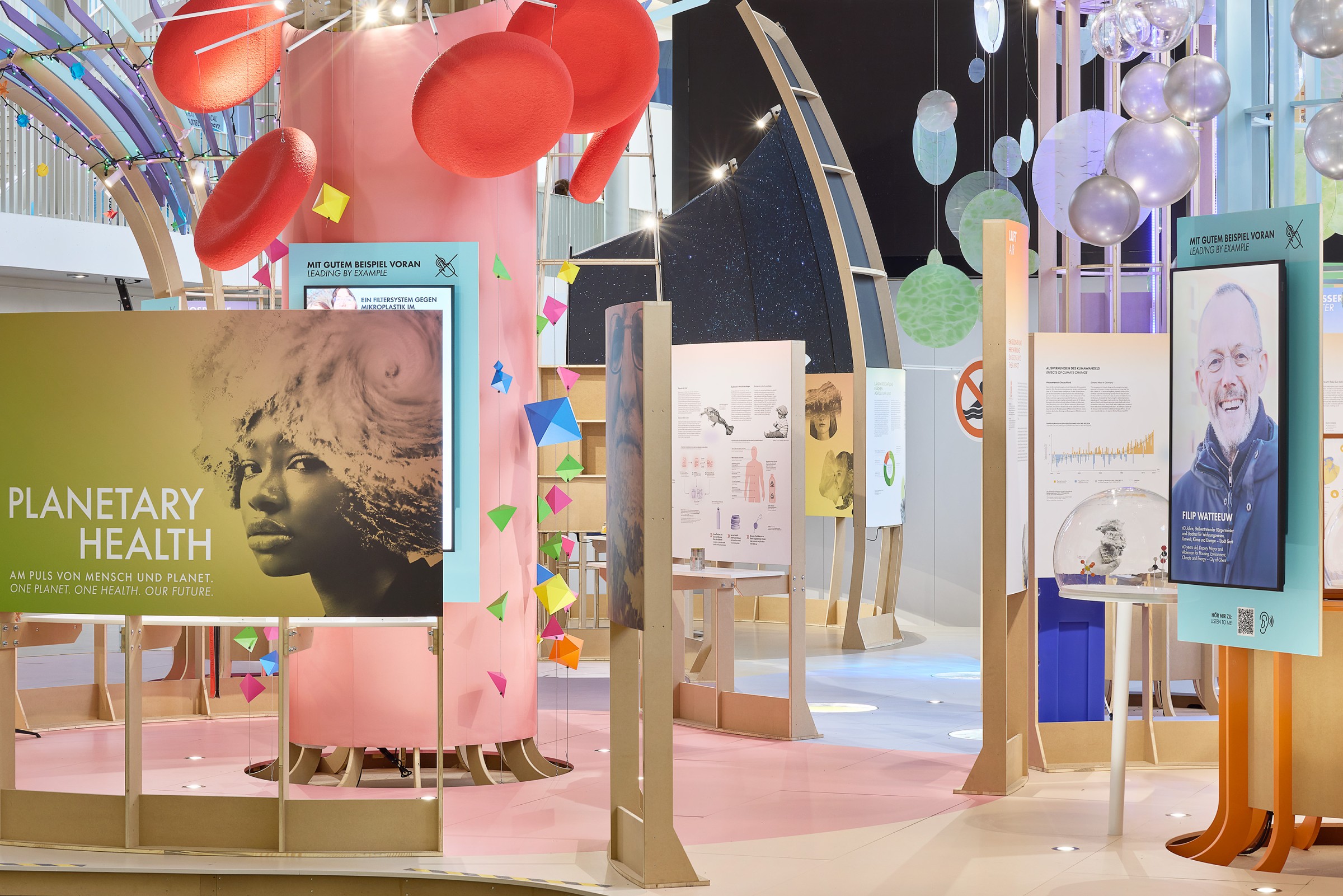
One key focus is communicating planetary health, which explores communicating the close relationships between human health and the health of ecosystems. This has led not only to research projects, conferences, and academic publications, but also to formats aimed at a wider audience. A prominent example is the special exhibition
Planetary Health – One Planet. One Health. Our Future
at the Deutsches Museum, which has had a powerful public impact. The exhibition illustrates the connections between climate change, nutrition, biodiversity, and health.
Over the past five years, moreover, MSCL has developed and provided scientific oversight for a wide variety of workshops, film screenings, exchange formats, tours, social media campaigns, and exhibitions. Evaluation has been a central concern in all these enterprises. The MSCL assesses whether formats reach their target groups, which messages are understood, and how science communication can be improved. Numerous internal and external projects were evaluated during the first funding phase, and this work will continue on an even greater scale in the next funding phase.
Equipped for future challenges
In the new funding phase, the MSCL team plans to continue, expand, and consolidate its successful work. It will further pursue all established research lines while intensifying its transfer and training efforts to translate findings into practice. Planetary health communication will remain a central focus, joined by fields that are set to shape science communication in the coming years, such as artificial intelligence and antibiotic resistance. Communicating these topics involves similar challenges to those encountered in climate change communication.
In the long term, the project intends to become a permanent interdisciplinary laboratory for science communication research at LMU. To this end, the MSCL is integrating research, evaluation, training, and transfer activities, while strengthening exchange between LMU, partner institutions in Munich, and the wider national and international science communication community. “Over time, we aim to play a leading role in shaping key debates and new research questions in the field,” says Professor Constanze Rossmann, one of the main leaders of MSCL along with Lars Guenther and Sophia Volk.
The MSCL network includes LMU, Deutsches Museum, AHA – The Science Communication Hub, and a variety of national and international partner institutions.