Using lasers to detect cancer
Detecting cancer, diabetes, and cardiac and respiratory diseases before symptoms appear: that is the goal of Ferenc Krausz, who is combining his Nobel Prize-winning laser technology with medicine and AI.

Detecting cancer, diabetes, and cardiac and respiratory diseases before symptoms appear: that is the goal of Ferenc Krausz, who is combining his Nobel Prize-winning laser technology with medicine and AI.
Light sets the rhythm for Ferenc Krausz, and it is no leisurely waltz. The flashes of light with which the physicist experiments in his Munich laboratories last no longer than a hundred billionths of a billionth of a second – or, in technical terms, less than 100 attoseconds.
It is one of those physical units that are hard to grasp intuitively – and analogies are little help. One goes like this: A single second contains as many attoseconds as there have been seconds since the Big Bang. Or bluntly: the flashes are damned short.
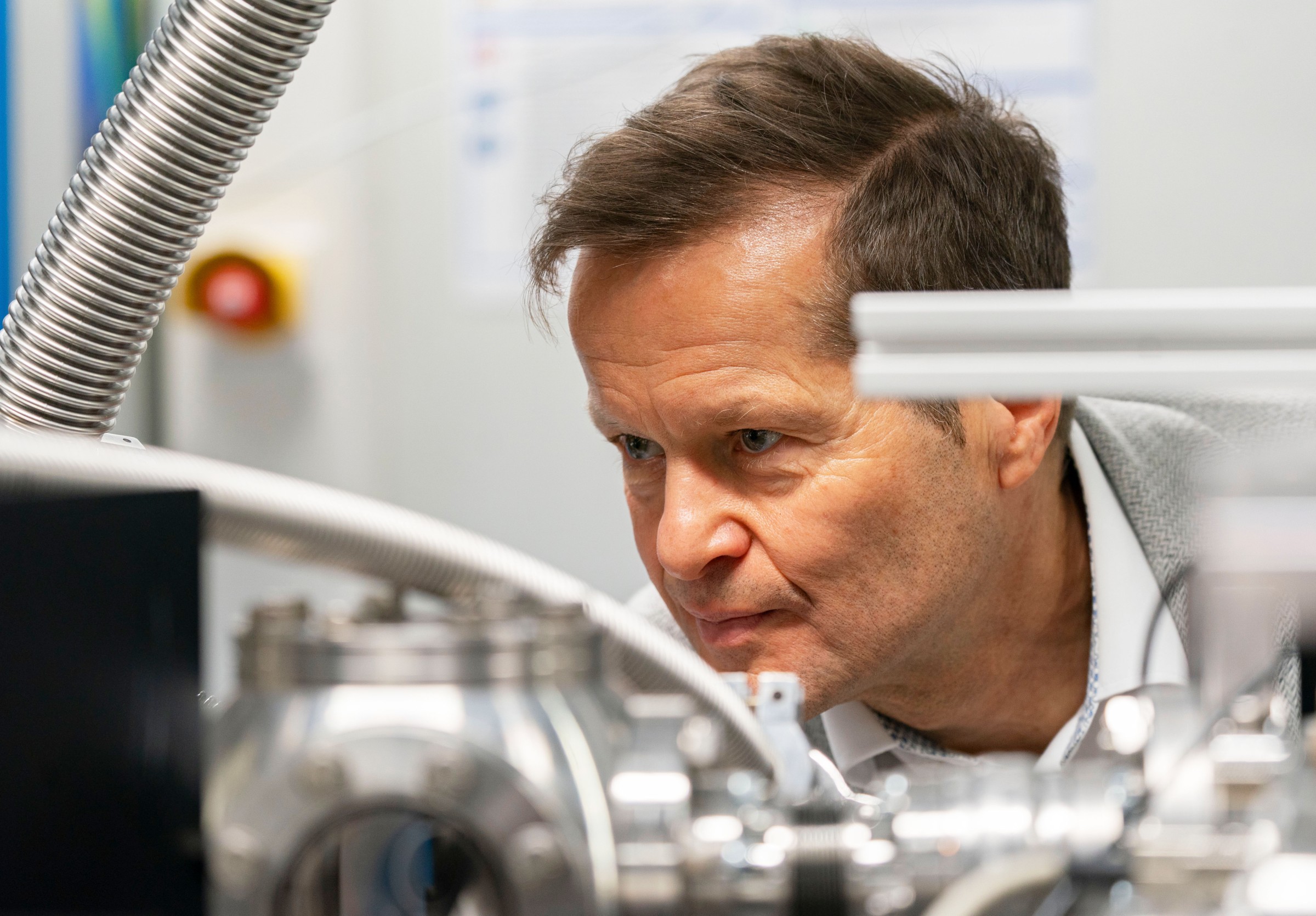
Ferenc Kraus’s attosecond technique was awarded the Nobel Prize in Physics in 2023. Now he wants to refine it for use in medicine — to detect various diseases in patients’ blood before they become apparent.
© Thorsten NäserOriginally, Krausz and his team developed these high-repetition-rate pulses to capture the motion of electrons – like an ultrafast camera. For this fundamental achievement, he was awarded the Nobel Prize in Physics in 2023 together with two researchers from Sweden and the United States. Since then, his team has embarked on a new path: Krausz wants to use attosecond techniques to detect diseases like cancer, diabetes, and cardiac and respiratory illnesses at an early stage – long before the first symptoms appear. A medical early warning system based on ultrafast light pulses.
Laser physicists who suddenly want to solve medical problems? What is that about? “Naturally, we could have continued to tackle fundamental questions in physics with our methods – in solid-state physics, for example,” says Ferenc Krausz. “But at some point I asked myself: Do I really want to do this until the end of my active life? Or might there be an application out there by which the toolset my group and I have mastered could directly contribute to the general good?”
Krausz’s idea is this: If an extremely short flash of light strikes a blood sample, it causes the molecules within the sample to vibrate. These vibrating molecules then emit radiation, which can be scanned with extreme precision using attosecond technology – similar to the original snapshots of zipping electrons. The result is a characteristic pattern: a fingerprint of the blood.
Ferenc Krausz
Now, if diseases leave their traces in the blood, then they should also show up in these fingerprints. “You just have to extract the information from this signal,” says Krausz, Chair of Experimental Physics and Laser Physics at LMU and director at the Max Planck Institute of Quantum Optics in Garching. His team calls the method “electric-field molecular fingerprinting” (EMF).
The approach is not entirely novel. Researchers are already irradiating blood samples with infrared light to analyze the characteristic vibration patterns of the molecules. In that case, however, continuous infrared radiation is used, and the noise from this process masks the measurements. This is not so for the Munich physicists, who use a short, sharp light pulse.
Krausz, the originator and driving force behind the project, uses a musical analogy to illustrate the idea: a tuning fork. If a musician wants to tune an instrument, they strike the tuning fork just once. The room falls silent; only the fork vibrates. The ultrashort infrared laser pulse works on the same principle, but at the molecular level. “After exciting the material in this manner, I can measure even the tiniest of signals, provided my measuring equipment is sensitive enough,” says Krausz. By contrast, the continuous infrared light used before now is like a musician who repeatedly strikes the tuning fork – and thus generates interference that makes precise tuning virtually impossible.

High-stability laser oscillators like they are used in the Infrasampler systems require careful adjustment of all elements and precise control over all environmental parameters. Even a single spec of dust or a rise in humidity can have fatal consequences for the performance.
© Thorsten NäserWhile the laser requires around three and a half minutes to generate the fingerprint of a blood sample, including sample changing and cleaning of the cuvette, the project itself is progressing at a much slower pace. Krausz had the idea back in 2016. Almost two years passed before the project obtained the approvals of the various ethics committees. Another two to three years elapsed before enough blood samples could be collected to begin work. Collaboration with the LMU hospital campus in Großhadern proved invaluable: The urology department supplied samples from patients with prostate cancer, the breast center provided blood from breast cancer patients, and the pulmonology department contributed blood samples from lung cancer patients. In the meantime, hospitals in Berlin, Gera, and Gauting have been added to the network.
The analysis always follows the same pattern: First, a centrifuge separates the cells from the blood, leaving behind serum or plasma containing hundreds of thousands of different molecules. Then the laser generates a fingerprint of the sample. This signal is relayed to an artificial intelligence along with information about the cancer type and how advanced the disease is. Fingerprints from healthy control subjects are also included in the algorithm’s training.
In addition, the researchers hold back a portion of the blood samples. The AI will ultimately have to analyze these withheld samples to prove it can reliably identify whether a fingerprint indicates the presence of cancer or not.
An initial major result was published last year by Mihaela Žigman, who leads the Broadband Infrared Diagnostics research group in Krausz’s team, together with other researchers. The study examined blood samples from 2,533 participants, and the results were promising: For lung cancer, the algorithm detected the disease with a success rate of over 80 percent, while for prostate, bladder, and breast cancer the accuracy was just shy of 70 percent. “In further published studies, we were able to additionally demonstrate that this concept successfully identifies a range of common diseases,” says Žigman.
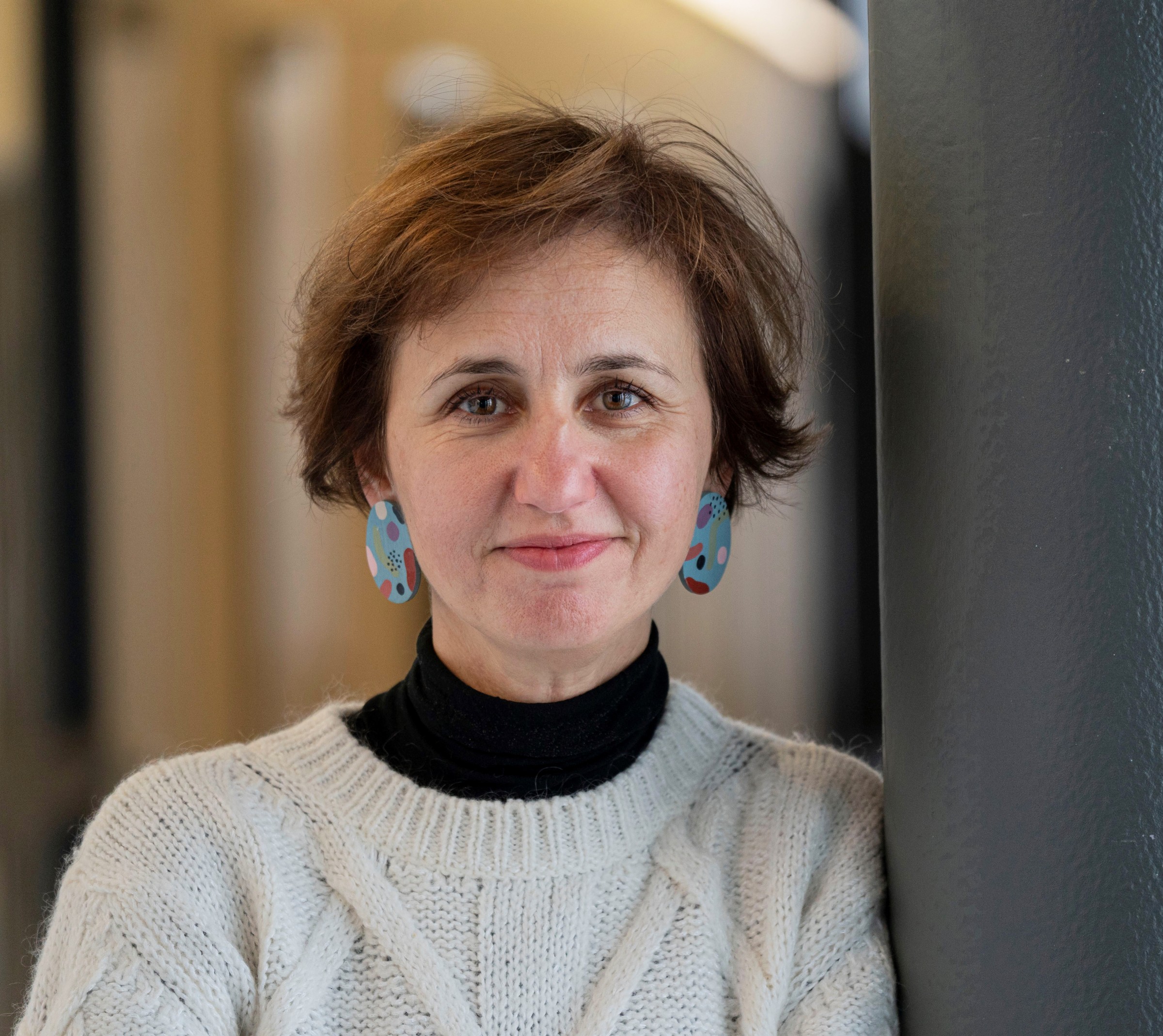
Mihaela Žigman advances spectroscopic approaches for medical testing at the interface of molecular analytics and ultrafast physics.
© Thorsten NäserThis currently places the EMF laser technique at roughly the same level as conventional infrared analyses, says Žigman – that is, the continual striking of the tuning fork. Future versions of the measurement technology, however, should be superior to the current method. Additionally, the team was able to determine from the fingerprints how far advanced a cancer was. “This gave us a lot of encouragement and motivation to continue,” says Ferenc Krausz.
The physicist has therefore stepped up the pace. He wants not only to detect individual cancer types in blood, but also common diseases such as diabetes and cardiovascular conditions – and do so long before affected individuals notice any symptoms and seek medical help. Krausz talks of an “early warning system” and “general health monitoring.”
A large-scale study has been running in Hungary for the past six years. Krausz and his team plan to monitor changes in the blood of 15,000 participants over a ten-year period. To establish an individual baseline fingerprint of their current state of health, all participants provided four blood samples at the start of the study. Subsequently, they are called on to give fresh samples once or twice a year.
The idea is as follows: During the timeframe of the study, around 100 participants per disease group are expected to contract one of the four major common diseases – cancer, cardiovascular conditions such as heart attacks and strokes, respiratory diseases, and diabetes and other metabolic disorders. Ideally, blood samples will be available for the patient from before the diagnosis. “In this way, we can check whether our infrared fingerprint contains early indications of a developing disease – long before the first symptoms appear,” says Krausz. “By the time people go to the doctor, when they feel something, it’s often too late.”
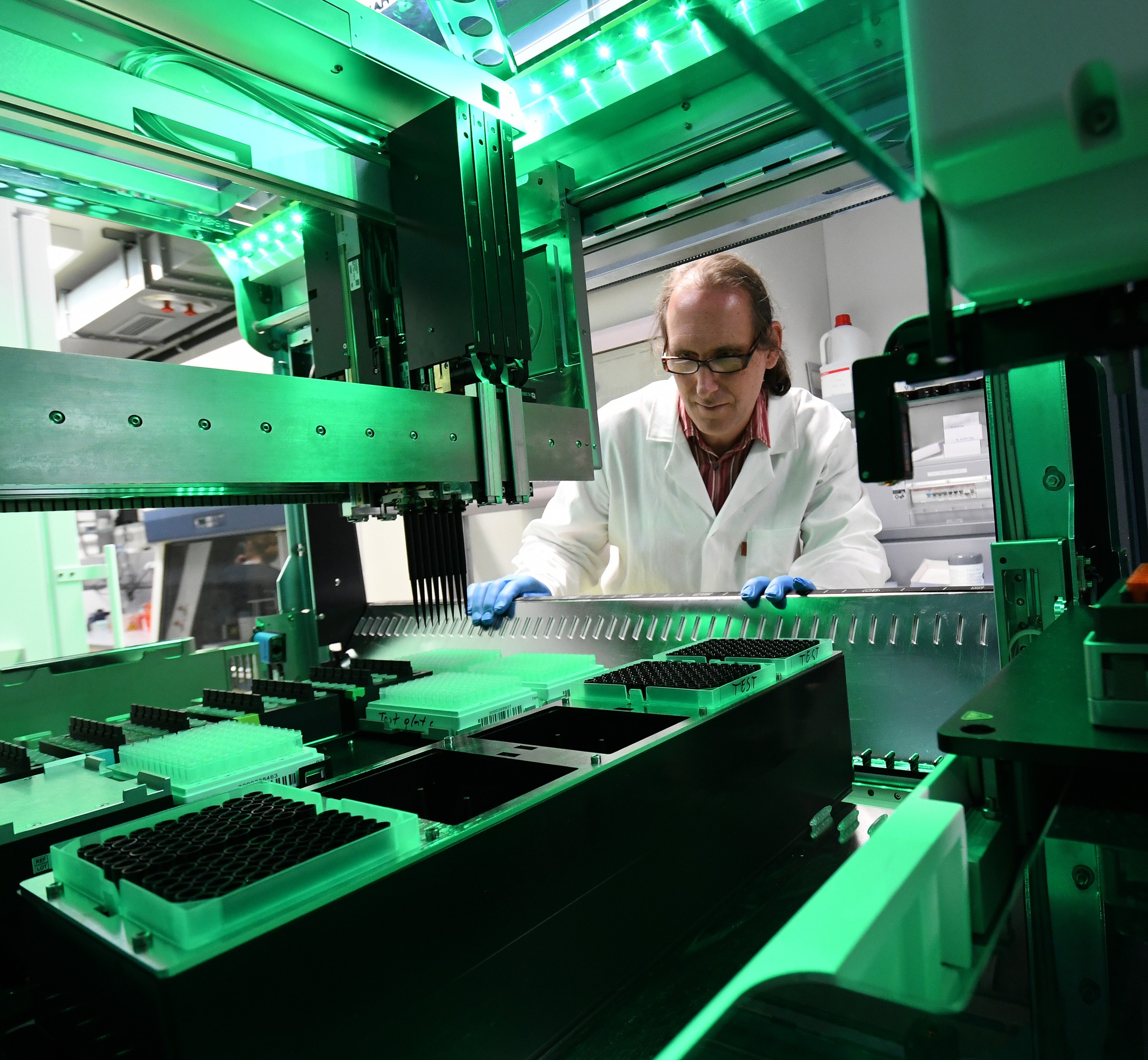
The team analyses thousands of human blood plasma samples using infrared molecular fingerprinting. In the bio-laboratory, an automated liquid handling robot prepares up to 96 samples for subsequent measurements in less than 30 minutes.
© Thorsten NäserThe long-term goal is a universal screening algorithm that can provide early warning of incipient diseases. “The study in Hungary is an important, indispensable step in this direction, but it is not sufficient,” says Krausz. Many more participants are needed: 50,000, perhaps even 100,000, preferably distributed around the globe.
To this end, Krausz wants to forge a global alliance, as the undertaking is too vast and too costly for individual universities or even individual countries. “Protecting.Health” is the name he has given to this project. The first three partners are already on board; the contracts were signed at the beginning of March. In addition to LMU and the Center for Molecular Fingerprinting in Hungary, which Krausz himself founded, the University of Hong Kong has joined the team. Each partner plans to analyze the blood of up to 15,000 participants for at least ten years – in the hope that the molecular fingerprints will one day serve as a comprehensive early warning system for human health.
Professor Ferenc Krausz is Chair of Experimental Physics – Laser Physics at LMU and Director of the Max Planck Institute of Quantum Optics in Garching. He was awarded the Nobel Prize in Physics in 2023 . Krausz was recently elected as an international member of the National Academy of Sciences in the United States.
Mihaela Žigman, professor at the faculty of medicine at LMU, heads the Broadband InfraRed Diagnostics (BIRD) team, advancing spectroscopic approaches for medical testing at the interface of molecular analytics and ultrafast physics.
Read more articles from LMU's research magazine in the online section and never miss an issue by activating the magazine alert!