From lecture hall… to the river
Fieldwork in Aotearoa New Zealand: Anthropologist Alina Berg visits riverbeds, workshops and museums to trace the history of the Māori stone pounamu.


Fieldwork in Aotearoa New Zealand: Anthropologist Alina Berg visits riverbeds, workshops and museums to trace the history of the Māori stone pounamu.
Leaving university for the first time and diving into adventure: In our series “From lecture hall... to the world!”, young LMU researchers share their stories of fieldwork in other countries and research trips to unusual places.
When I walk down to the beach in the evening, I might just come across the object of my research. If one is really lucky and takes a close look, one may spot the green shimmer of pounamu between gray stones, pebbles and shells. Pounamu is the reason I’m here in Aotearoa, which is the Te Reo Māori name for New Zealand. This stone, a special form of jade or nephrite that is manufactured in various forms and highly valued by Māori iwi (tribes), brings together questions that span a range of disciplines – from anthropology and geology to museum studies and law.
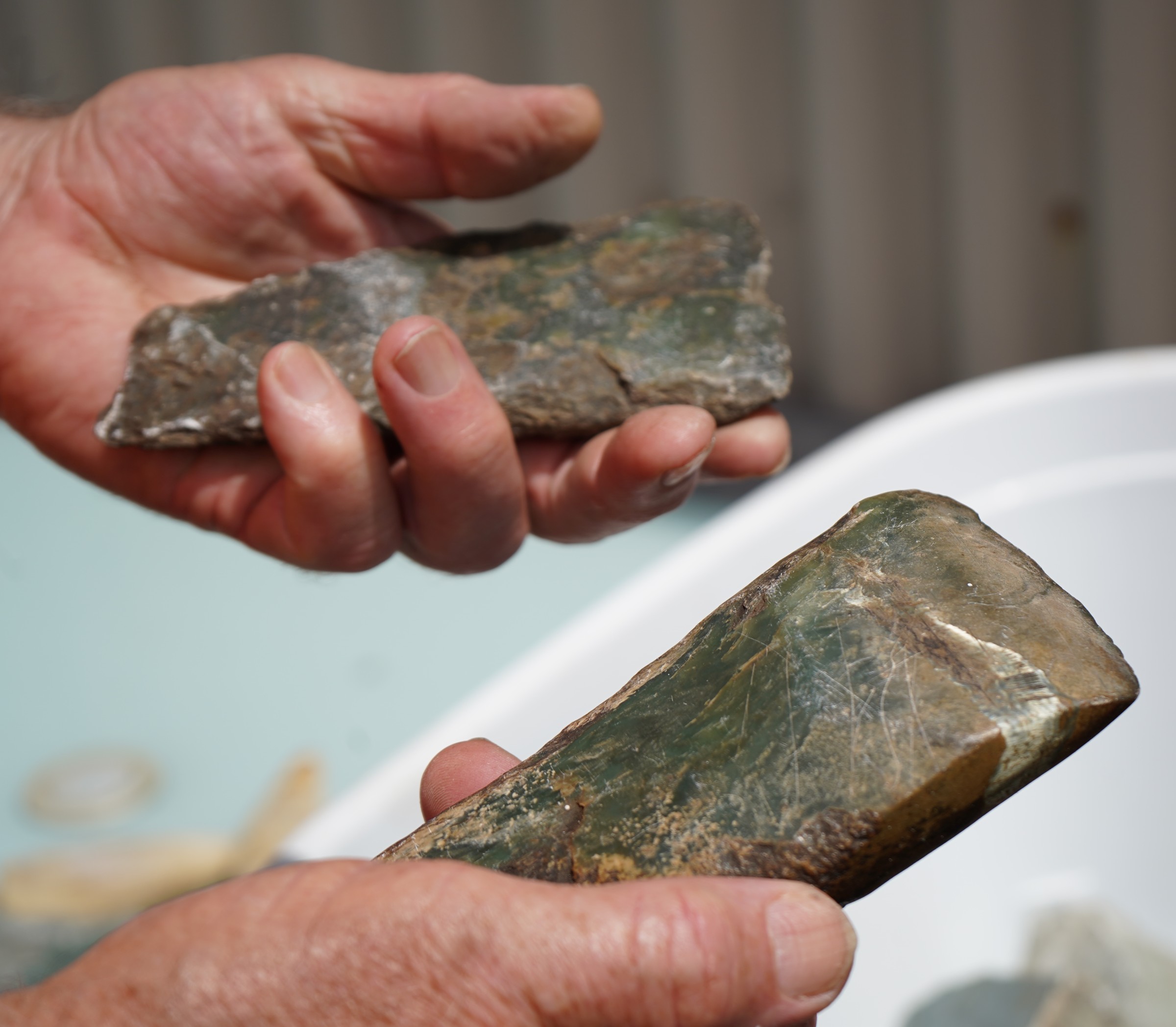
My research subject: Pounamu, a type of nephrite jade, plays an important role in Māori culture.
© Alina Berg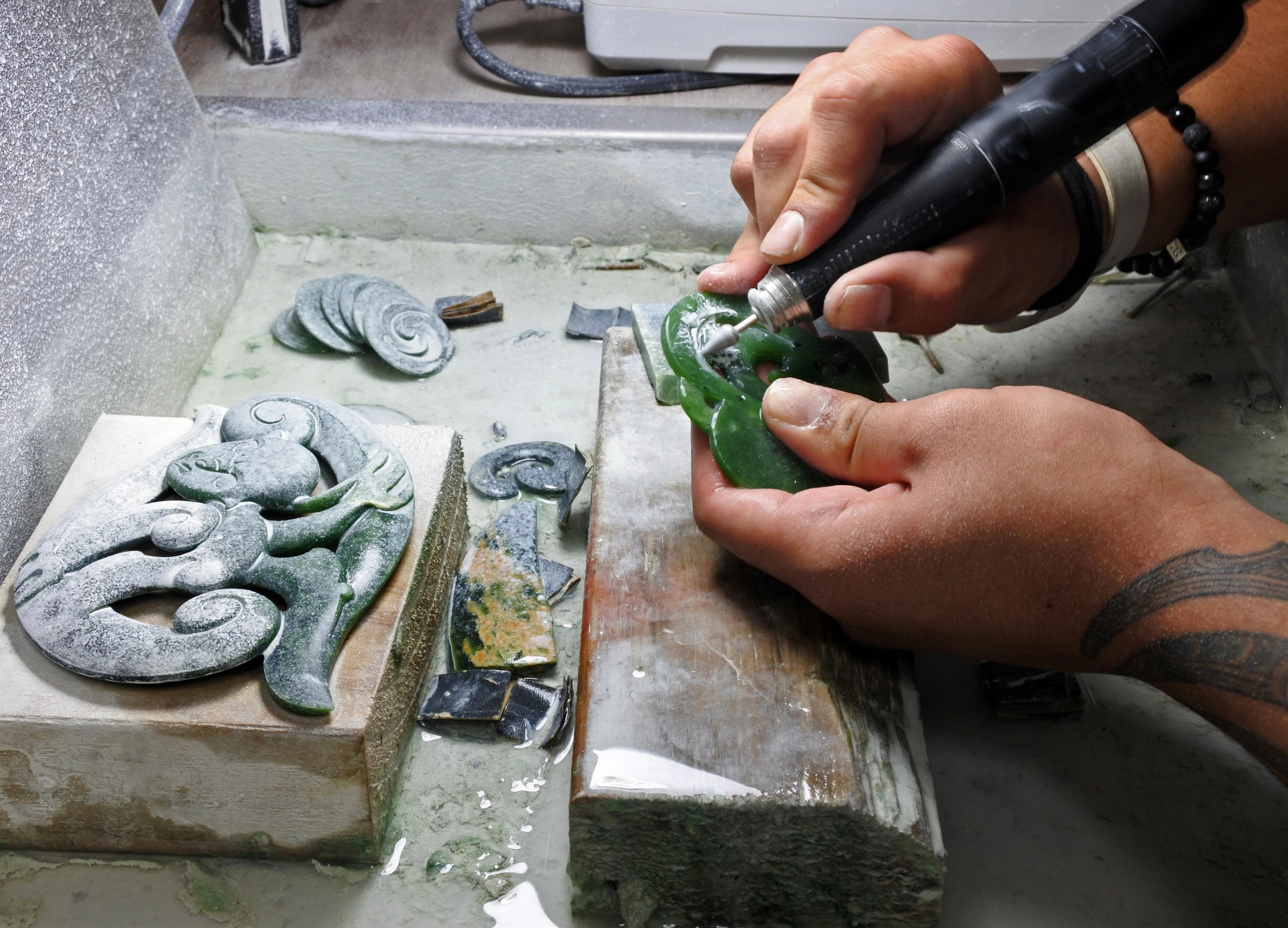
In the carving studios on the South Island, raw materials are turned into pendants, earrings, figurines, and abstract forms.
© IMAGO / DepositphotosAs a doctoral researcher in Social Anthropology at LMU, I’m spending six months in Aotearoa New Zealand, where pounamu is found mainly on the South Island. My research is part of the “Beyond the nature/culture divide: Reimagining human-environment relations in museums” research project and the Cambridge-LMU Strategic Partnership.
In my dissertation, which is funded by the Bavarian State and the German Academic Exchange Service, I try to find out how museums in Europe could curate and activate pounamu differently: not just as a museum object, but as a diverse living taonga (treasure and resource), in relation to landscapes, history and Indigenous knowledge. I also explore how and under which circumstances pounamu artifacts from the other side of the world ended up in Europe.
My fieldwork is intended to reveal the stone’s life beyond display cabinets: as part of Te Taiao (landscapes), of Pūrākau (stories), of legal hearings and of relationships people still have with pounamu today. To do this, I’m not only visiting museums and archives to carry out background research, but also going to the places where pounamu is found, processed and valued.
I’m currently in Hokitika on the West Coast of the South Island, with the latter even featuring the stone in its Te Reo Māori name, Te Wai Pounamu. This small town, which was once established as a gold mining settlement, is, in many ways, the epicenter for pounamu. When walking through the streets of Hokitika, one quickly understands why. The stone is not only present in the surrounding area but is found everywhere in town - in shop windows, logos, business names and workshops. You will even find larger pounamu pieces integrated into the town’s pavement.
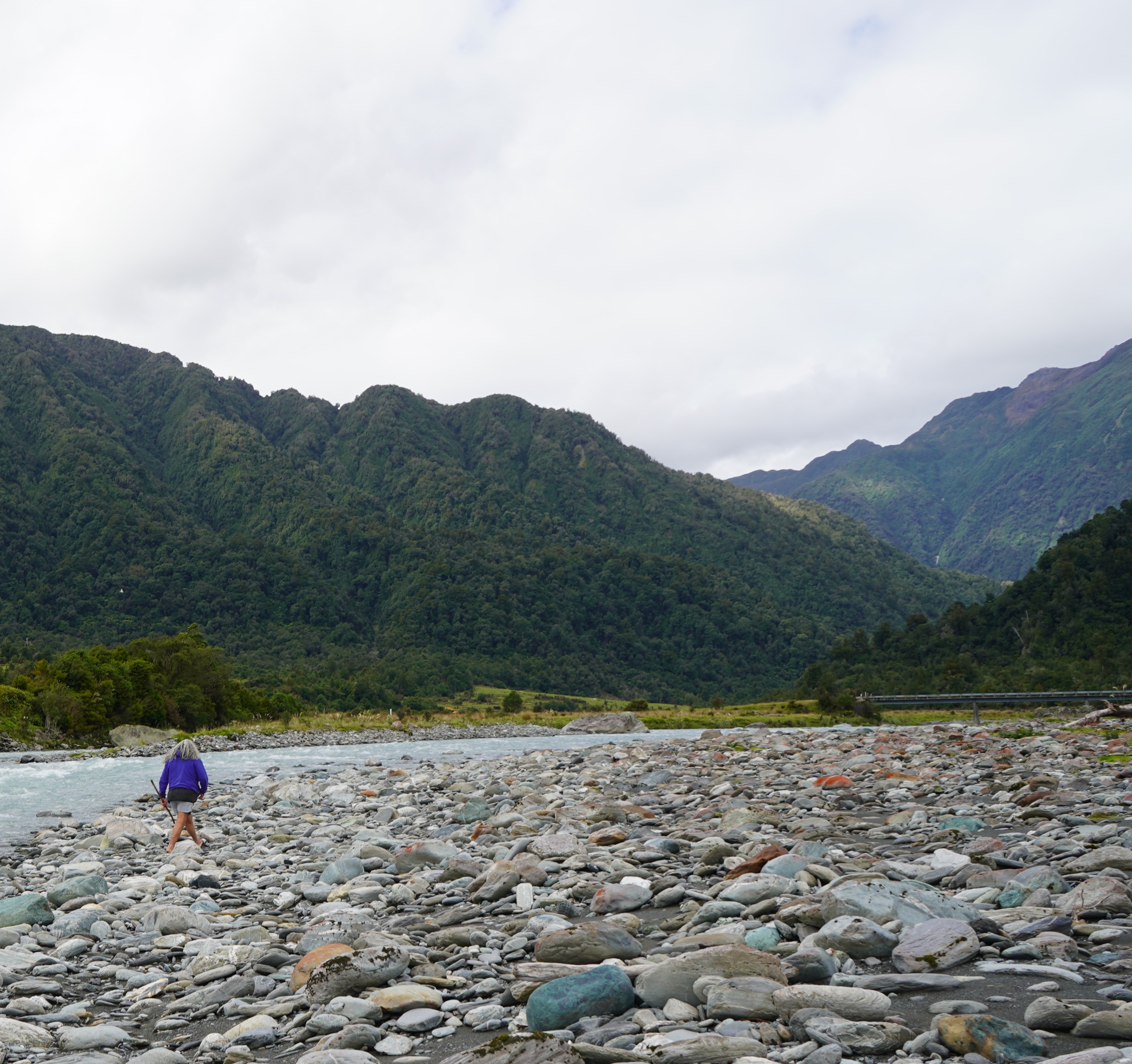
Along the riverbank: Led by my local guide, I’m searching for pounamu along the Arahura River.
© Alina Berg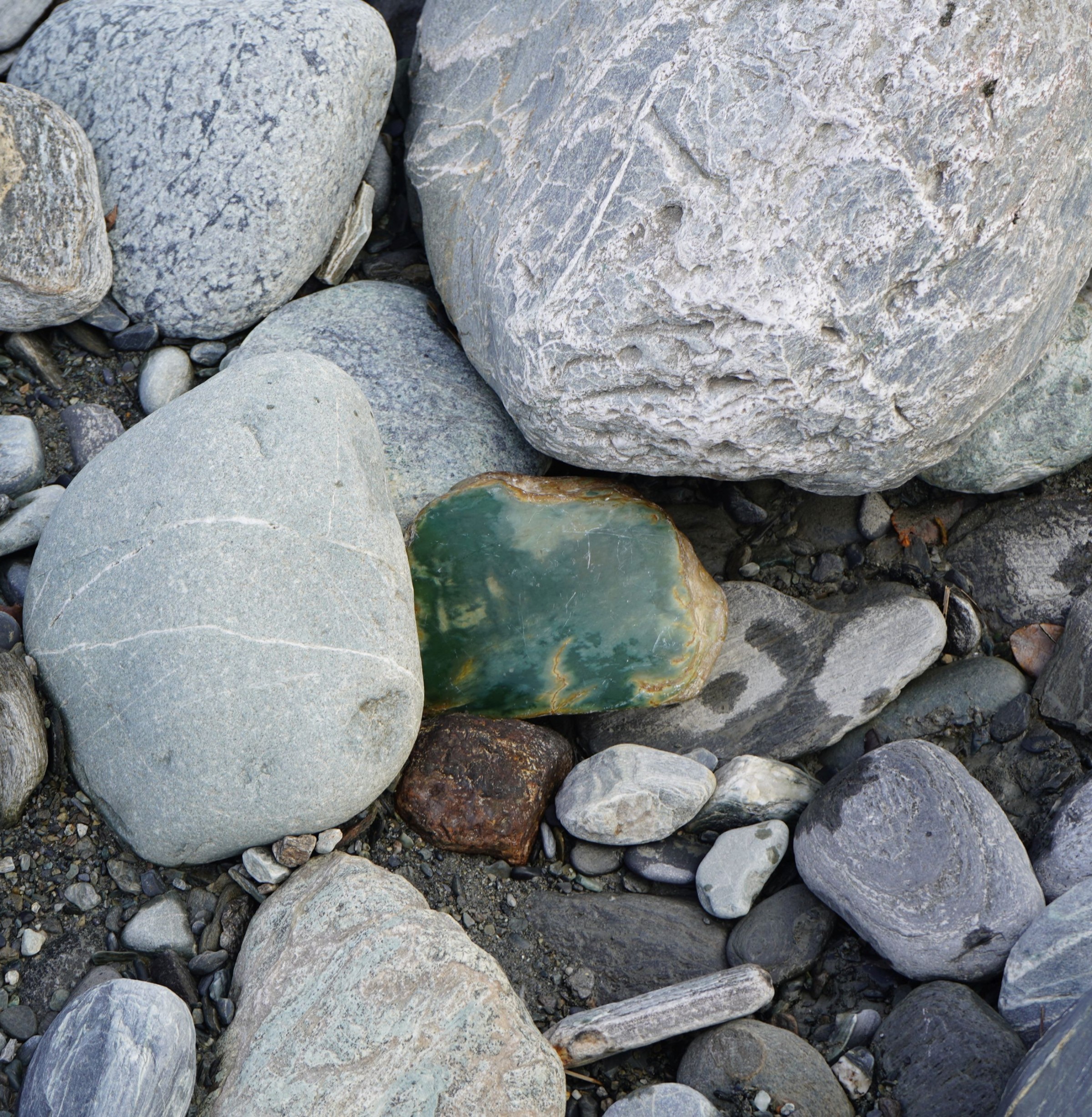
Not allowed to take: Only members of the Ngāi Tahu iwi are permitted to collect pounamu.
© Alina BergOut in nature, the stone is particularly prevalent in and around the Arahura River, which flows into the sea north of Hokitika. Exploring with a local kaitiaki (a pounamu guardian and guide) initially feels just like any regular walk. But gradually, my perception changes and I start looking at the flowing water and stones differently. I pay closer attention to surface structures, reflections of light and green colouring that suddenly shines through. When it is raining, pounamu can become more visible since its structural components are much more noticeable when wet. I find it fascinating that you can return to the same place on the river and suddenly discover things you didn’t notice the first time.
I’m not taking any of the stones from the Arahura River. They belong to Ngāi Tahu, a prominent Māori iwi (tribe) on Aotearoa New Zealand’s South Island. The rights to pounamu were returned to the iwi in 1997 as part of a compensation settlement by the British Crown. This was part of an ongoing negotiation of Māori rights after the Treaty of Waitangi was signed in 1840 during British colonization. Part of my research is trying to find out how pounamu is protected in practical terms today and how this can be reconciled with the demands of tourism, trade and economic interests.
I’m also conducting field research in the town of Hokitika itself. In a carving studio, for example, I watch how pendants, earrings, or figures and abstract shapes are carved out of raw material – some of them feature traditional Māori designs, while others are inspired by contemporary styles. The rattling of the machines, the splashing water and people’s concentration and focus then become part of the interview that I conduct. You actually end up having the best conversations when you’re not just sitting around a table but are doing something together as you talk. This is when people really open up and tell stories in a completely different way.
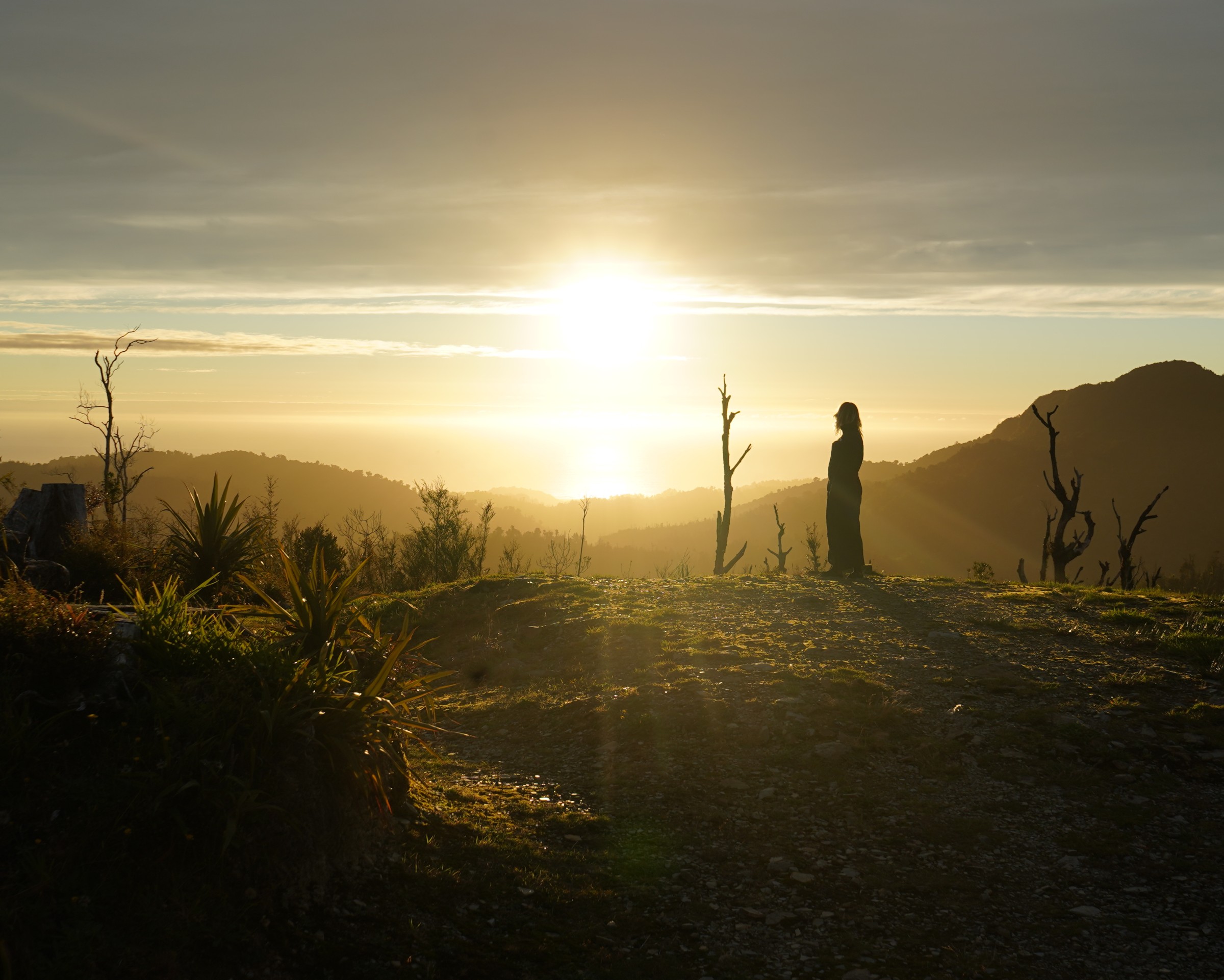
The landscape in Aotearoa New Zealand is sometimes breathtaking—especially in the light of the sunset.
© Alina BergI talk to a variety of different people, to Ngāi Tahu as well as Pākehā, a term for Aotearoa New Zealanders of European descent. Many of them are astonished to learn that somebody would travel here all the way from the other side of the world to research pounamu. But after their initial astonishment, they quickly show interest. They then start telling me about the stone and its different shades of green, about past times and about places where you should or shouldn’t go looking for it. It is through these stories that one begins to understand the importance of this taonga (treasure).
Especially on the West Coast (Te Tai o Poutini), conversations about pounamu quickly move beyond simple facts and become emotional. Many people here have a close connection to this stone, through their whānau (family) and whakapapa (ancestral genealogy), through the history of the town or simply through their life in this region. Almost everyone in Hokitika seems to have a story about their connection to pounamu.
Pounamu also plays a major role as cultural heritage and in the cosmologies of Ngāi Tahu, as well as other Māori iwi (tribes). It retains great spiritual significance today. Many historically significant objects have been made from pounamu, including jewelry, tools and weapons. They are regarded, just like the stone itself, as a taonga (treasure). Taonga are often passed down from generation to generation as relics, but also frequently ended up in European museums. The pounamu in these museums still carries this significance, even if it hasn’t been in the country for many years. I’m trying to retrace how pounamu arrived in these museums, and how to activate its cultural value as a taonga.
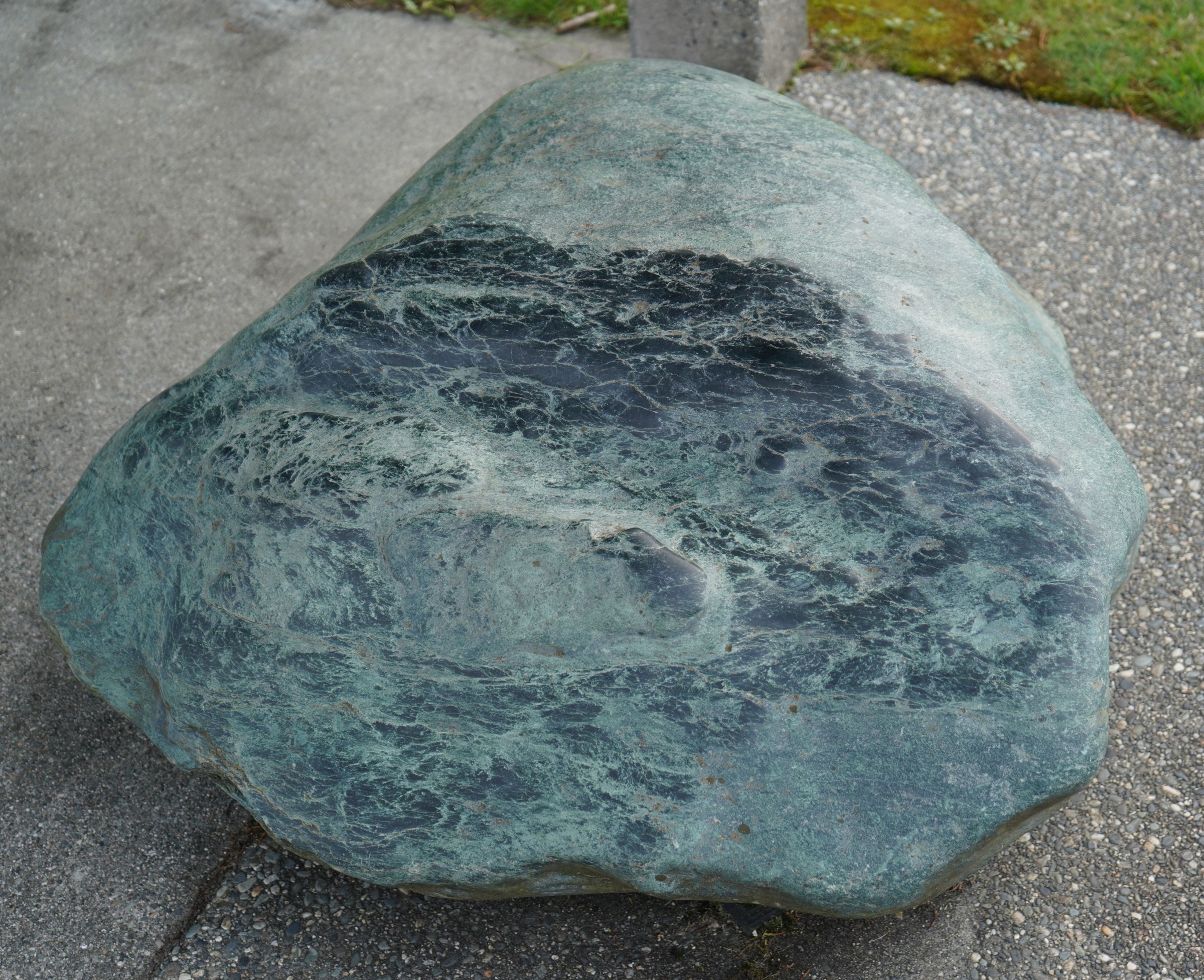
In Hokitika, on the west coast of the South Island, pounamu can be found everywhere.
© Alina BergIn my research, I also ask what role the stone plays in Pūrākau (Māori stories) and geological narratives surrounding deep time and the origin of this land. Time and again, I hear stories that are deeply entwined with pounamu. In one version of an oral story, for example, a woman named Waitaiki is abducted by a taniwha (a water spirit) named Poutini. Her husband Tamaāhua follows the two of them across the land. To conceal Waitaiki from him, Poutini ultimately transforms her into his own essence, pounamu, and lays her in the bed of the Arahura River. It’s a story that explains why the stone is found in this very spot.
When museums in Europe are handling pounamu, they should take these stories and Indigenous perspectives into consideration. This includes the history of extraction and legal disputes surrounding the stone, the special role it plays in Aotearoa New Zealand’s present-day society, and its close connection to specific landscapes and communities. My research is about more than just this stone in itself. It is also about how museums can respect the significance of materials and artifacts that hold an important role in the culture of their place of origin.

I want to understand how pounamu artifacts are displayed in museums—and how they ended up there. | © Alina Berg
As well as conducting research out in the field, visits to archives and museums form an integral part of my work. In the local Hokitika Museum, the Te Papa Museum in Wellington, the geological collection of pounamu expert Russell Beck in Dunedin as well as the National Library, I spend hours searching for names, objects and clues regarding the journeys pounamu has taken through various collections.
I like to call it detective work. One small finding often leads to the next. Somewhere I’ll find a note, then another name, then perhaps an old newspaper article or an entry in a collection database. Sometimes someone at one of the museums might say something in passing that then gives me another clue to follow. On days like this, the hours really do seem to just fly by.
Many people only pay a brief visit to Hokitika before traveling on somewhere else. But I’m staying longer and have now established my little routines. This includes eating fresh fish - and suddenly taking a real liking to “flat whites”, even though I’m not usually a big coffee drinker.
In the next few weeks, I’ll be traveling on to Wellington, where I’ll be working at Te Herenga Waka-Victoria University as a visiting researcher and delving deep into the archives again. Just like in Hokitika, I’ll probably head to the coast every evening. You’re never very far from the coast in this country. My little evening routine is to go for a walk and watch the sunset. And just like pounamu, it looks a little different each time.
Alina Berg is a research assistant and doctoral candidate at the Institute of Social and Cultural Anthropology at LMU. This text is based on conversations and project information and was written in collaboration with Alina Berg.
Read more articles from LMU's research magazine in the online section and never miss an issue by activating the magazine alert!