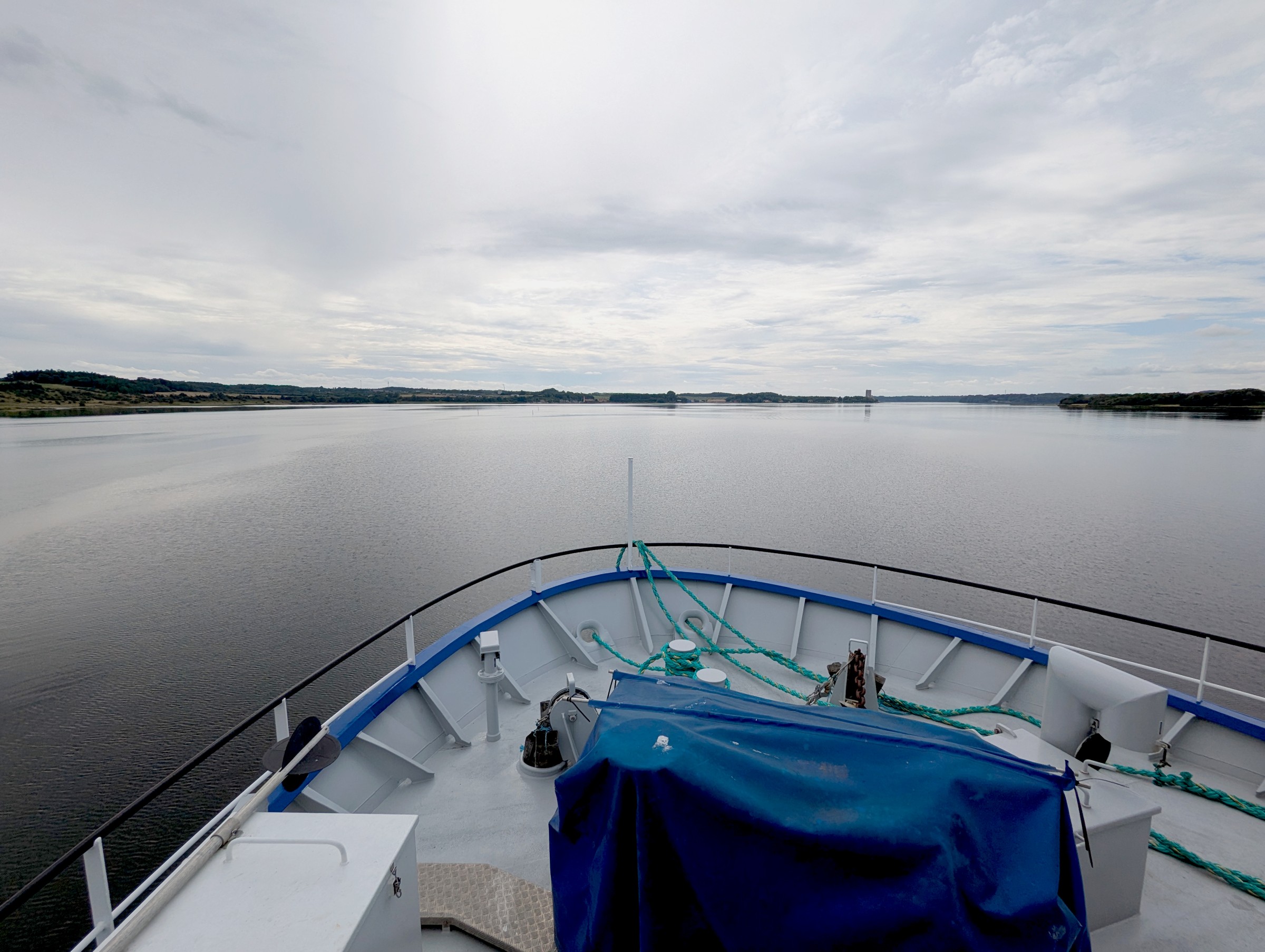
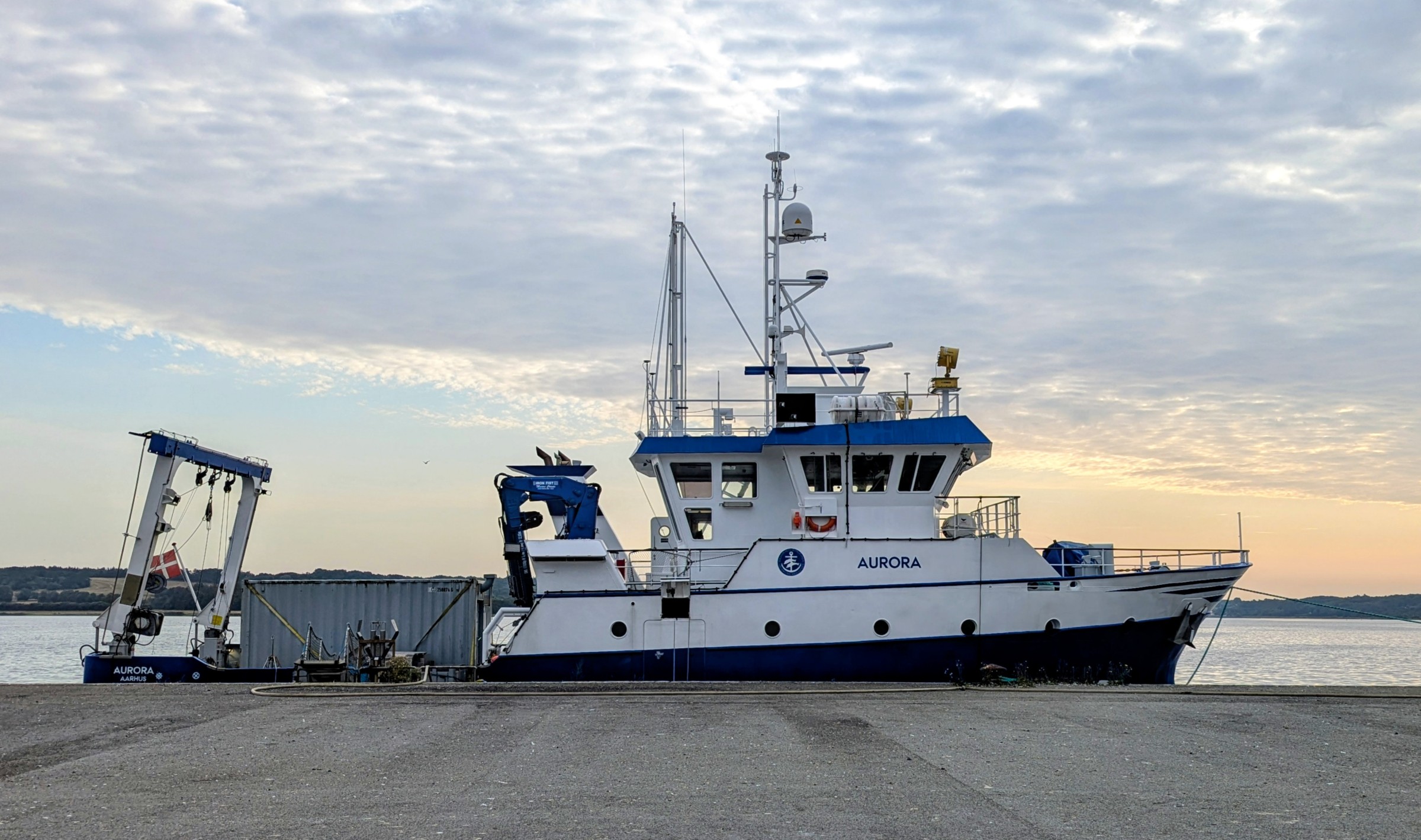
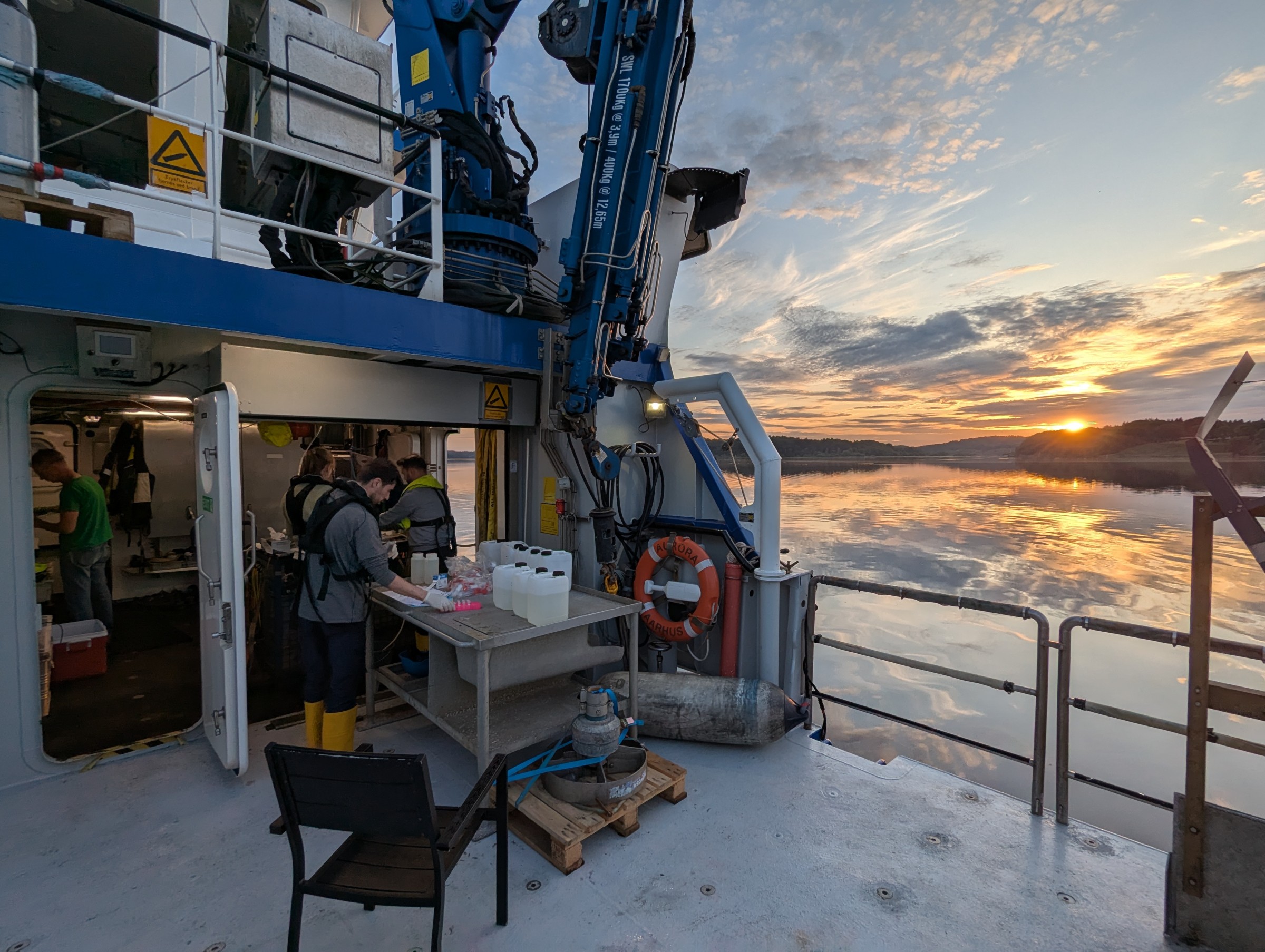
Dr. Gonzalo Gomez Saez is standing on board the Aurora. The Danish research ship, which belongs to Aarhus University, is drifting on Mariager Fjord. This morning, the glassy surface of the water beautifully reflects the clouds and the nearby shore. Despite the idyllic scenery, Gomez Saez is tense.
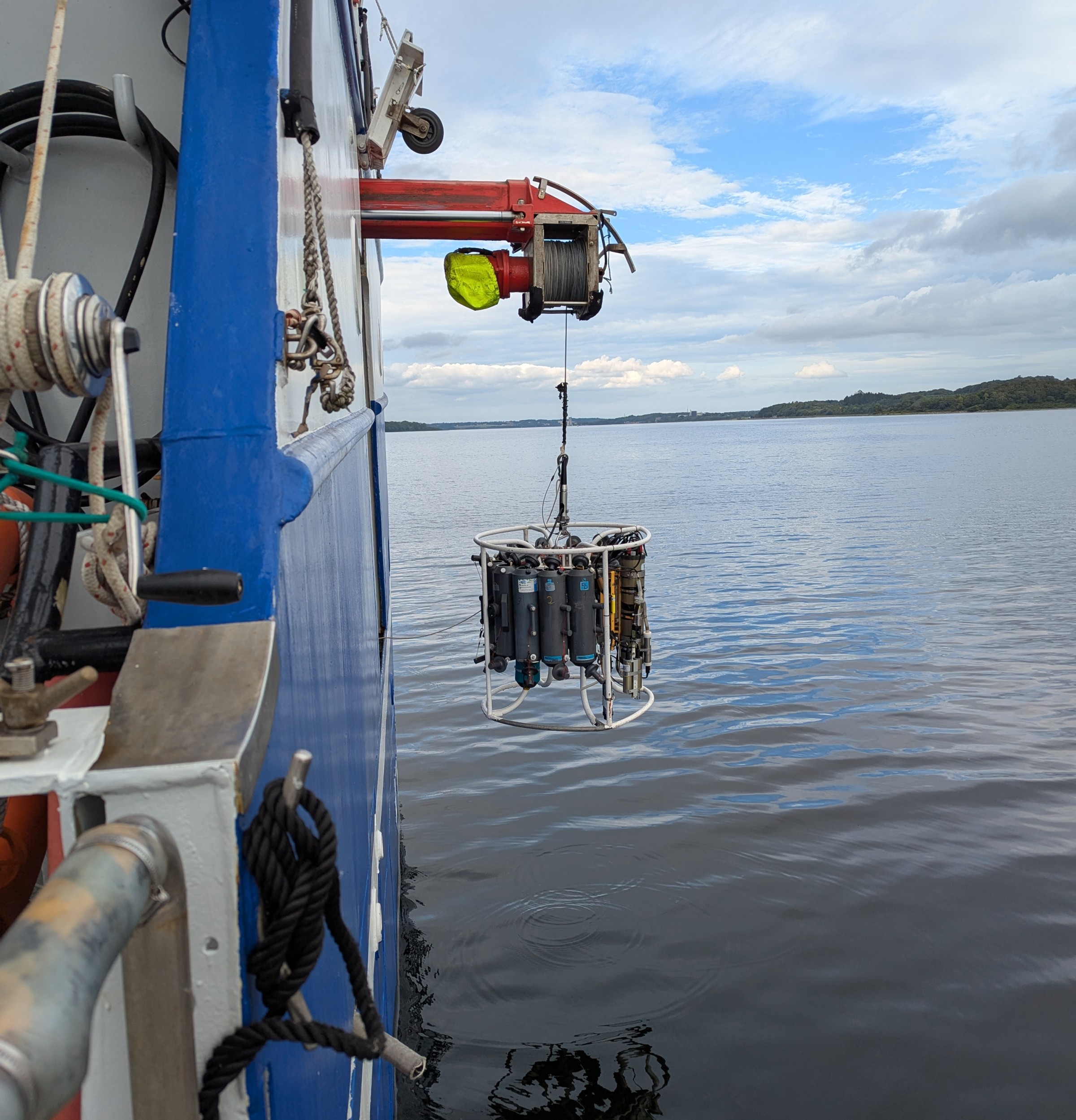
The crew has just lowered a so-called CTD rosette sampler into the water. This underwater probe is equipped with sensors for temperature, conductivity, water pressure, and oxygen concentration – and with twelve sampling bottles, which can be individually closed when retrieving the apparatus. As the scientific leader of the expedition, Gomez-Saez has to decide when. He has got only three days in total to collect suitable samples for his experiments, in which he investigates which organic compounds accumulate in the water under various conditions.
Into the depths
The CTD rosette allows researchers to collect samples from various water levels.
© Gonzalo Gomez Saez
“Now, at 14 meters!” the biogeochemist calls to his colleague from the ship’s crew over walkie-talkie – and hopes to have caught the right depth this time. He wants to sample water from the precise area where oxygen concentrations decrease abruptly, the transition zone between oxygen-rich and oxygen-poor waters. In Mariager Fjord, this is a matter of centimeters. “Within half a meter, the oxygen concentration can drop here from 20 percent to below 0.2 percent,” explains Gomez-Saez, who leads a research group that studies oxygen conditions in the ocean at LMU’s Department of Earth and Environmental Sciences. “But I want to catch water from the hypoxic zone, which still contains a bit of oxygen.”
Oxygen loss through climate change
The inlet on the Baltic coast in the northern part of Jutland is one of the places on Earth where you can find anoxic conditions – that is, the absence of oxygen in the water – at least in summer. All four of the research teams from Denmark (Center for Electromicrobiology from Aarhus University and University of Southern Denmark), Sweden (University of Gothenburg), and Germany (LMU) which have joined the DeoxyMar expedition on the Aurora with funds from the Danish Centre for Marine Research, are there to investigate a global phenomenon that has become increasingly prevalent over recent decades and could have catastrophic consequences for marine ecosystems: the deoxygenation of the oceans.
“Over the past 50 years, the world’s oceans have lost around two percent of their oxygen concentration,” explains the LMU researcher. “Over the same period, moreover, the regions that are permanently oxygen-free have quadrupled.” It is thought that a further one to seven percent of oxygen will disappear from the oceans by 2100.
The Aurora
For three days, Gonzalo Gomez-Saez and his team are on an expedition with the Danish research vessel.
© Gonzalo Gomez Saez
Large anoxic zones are found everywhere on the planet, often near the coast, such as in the Caribbean or the Black Sea. The very shallow Mariager Fjord, with a maximum depth of only 25 to 30 meters, offers several advantages for researchers of anoxic waters: “We find here at a depth of just 25 meters the same oxygen-free conditions that we find at a depth of 2,000 meters in the Black Sea,” explains Gomez-Saez.
This makes sampling a whole lot easier: “In the Black Sea, it takes more than one hour before the CTD rosette resurfaces with the samples. Here we can take them extremely fast and get right down to work.” This makes the fjord a perfect natural real-world laboratory. Furthermore, the shore is close by in case of emergency and there are few waves to contend with. “Note as well that researching off the coast of Crimea or in the waters off Venezuela is currently not without its dangers.”
Over the past 50 years, the world’s oceans have lost around two percent of their oxygen concentration. Over the same period, moreover, the regions that are permanently oxygen-free have quadrupled.
Gonzalo Gomez Saez
Floating laboratory
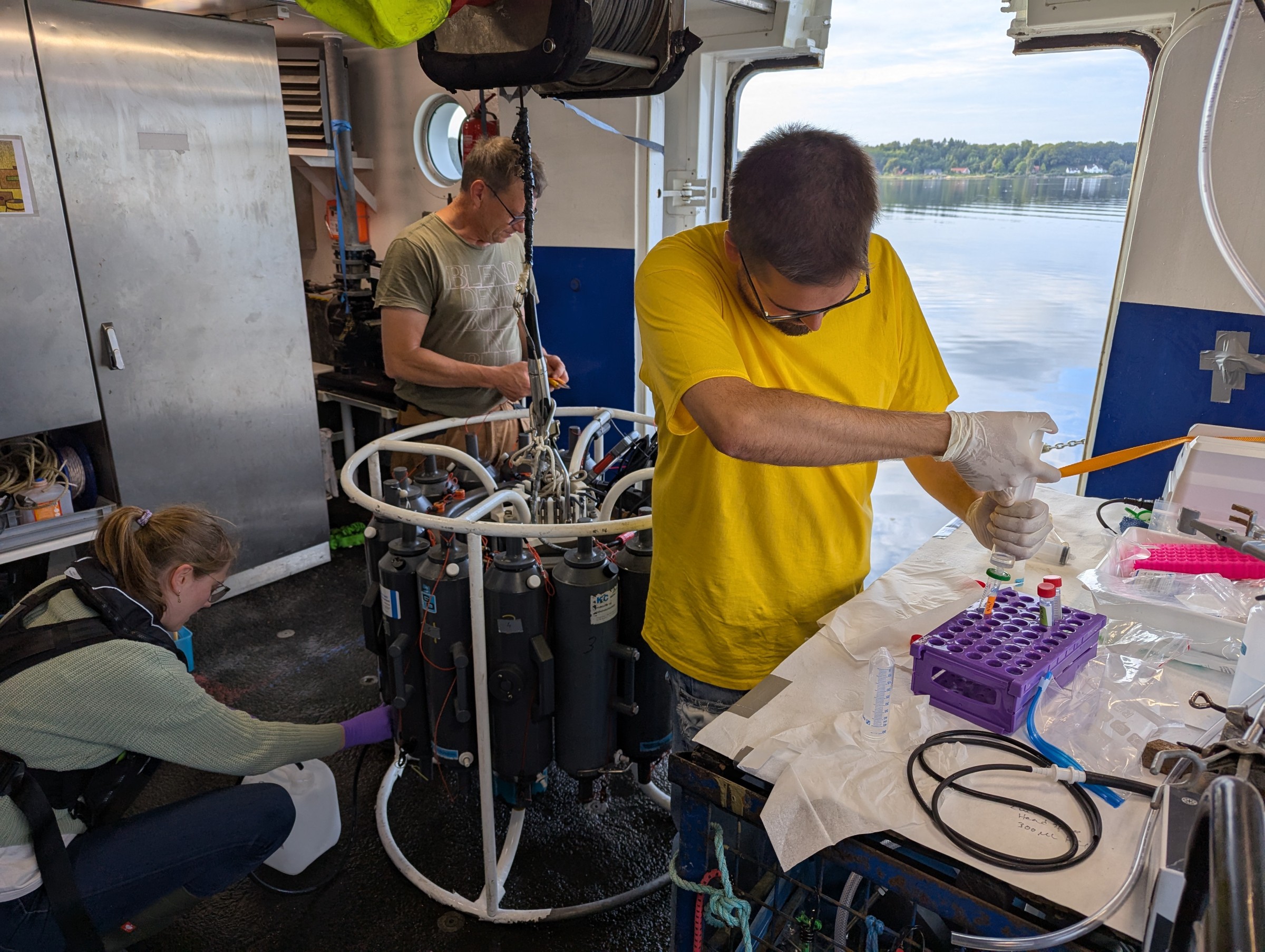
Gonzalo Gomez-Saez investigates which organic compounds accumulate in water under different conditions. Many of the samples collected are analyzed directly in the Aurora's on-board laboratory.
© Kasper Kjeldsen
Life in the dead zone
5 critical climate tipping points: What now?
Read more
Alongside rising water temperatures and ocean acidification, deoxygenation is one of the most devastating effects of climate change on the ocean. For many organisms – all that breathe in the classical sense – oxygen is necessary to their survival. The majority of multicellular organisms belong to this group. If the oxygen disappears, they die. Anoxic zones are therefore often referred to as dead zones.
Gonzalo Gomez-Saez, whose Emmy Noether research group studies ocean deoxygenation from a biogeochemical perspective, is not keen on the expression: “I don’t like this term, as anoxic zones are not dead. There are organisms that can live there perfectly well without any oxygen.” For many of these anaerobic organisms – certain sulfur bacteria for instance – oxygen is actually toxic.
And that is why the crew needs to act fast: The sampler has been retrieved, bringing twelve fresh samples from various water depths to the surface. The samples from the hypoxic and anoxic zones are immediately treated with nitrogen gas to prevent them from oxidizing on contact with air. This would kill some of the organisms within them, allowing others to grow, and thus change their microbial composition and biochemical metabolic pathways.
Oxygen stays out
Organisms from anoxic zones don't like oxygen, so the samples are treated with nitrogen right after they come out of the water.
© Kasper Kjeldsen
Sunset on the Aurora
In order to collect as many samples and as much data as possible, the team on the Aurora works long hours throughout the day.
© Gonzalo Gomez Saez
Experiments on board
Through their experiments, the researchers want to understand how the organic substances dissolved in seawater are related to the microorganisms living there and the prevailing oxygen conditions. Some of these organic compounds are broken down very rapidly by the microbes, while others accumulate over thousands of years in the oceans. “We don’t know yet why some compounds are degraded so easily and others aren’t,” says Gomez-Saez.
Scientists do know, however, that in low-oxygen regions, certain compounds accumulate to particularly high concentrations. And Gomez-Saez has devised a series of experiments to elucidate why this is. The native of Spain and his team bring the samples they’ve just collected to the laboratory on board the Aurora. They study a portion of them here on the water. In their experiments, they can do things like artificially vary the oxygen concentration in the various samples or incubate them with selected key substrates, and investigate how the organisms react.
I don’t like the term "dead zone", as anoxic zones are not dead. There are organisms that can live there perfectly well without any oxygen.
Gonzalo Gomez Saez
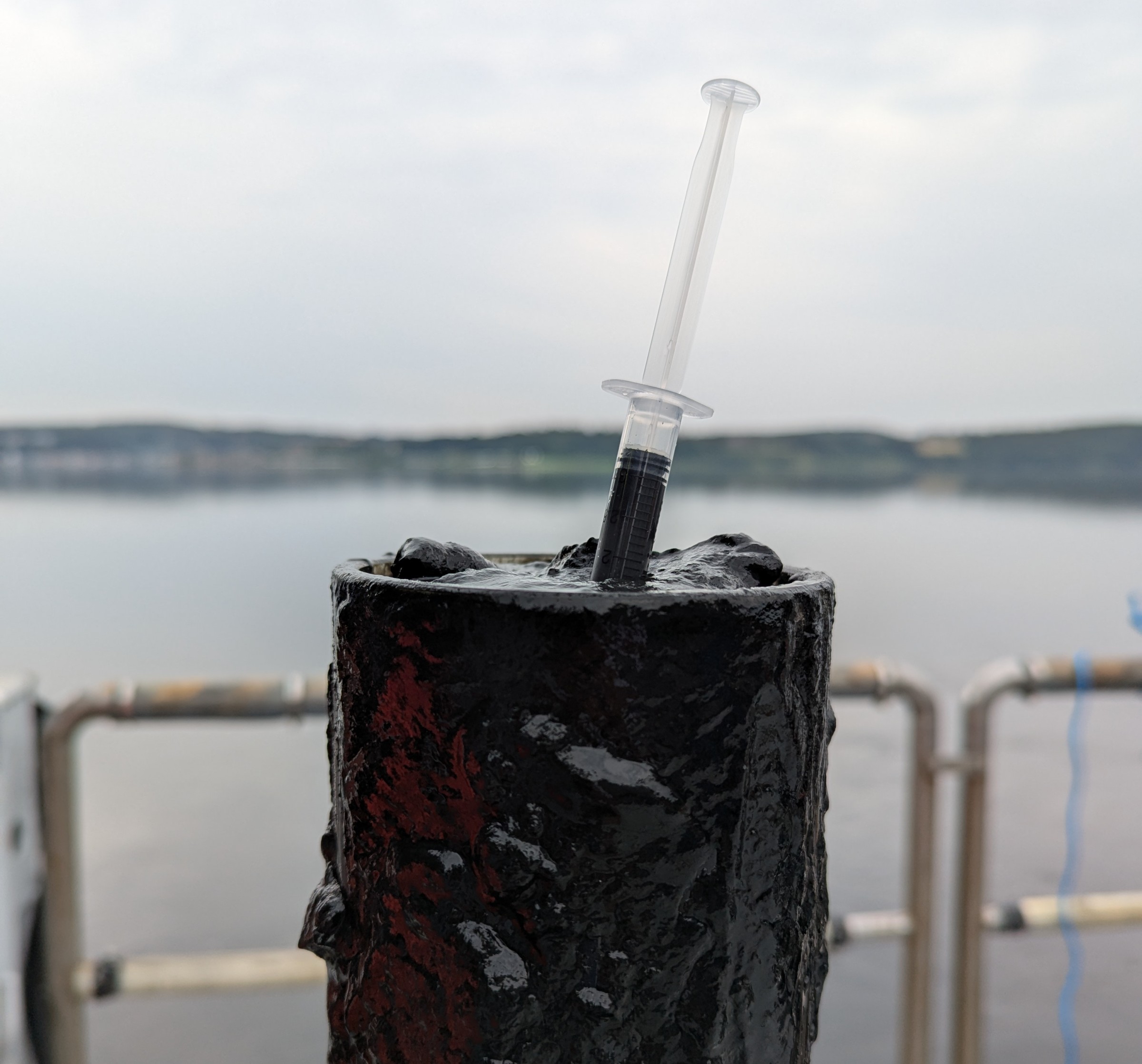
Like from another planet
The mud that the research team brings up from the anoxic bottom of Mariager Fjord is pitch black and full of methane.
© Gonzalo Gomez Saez
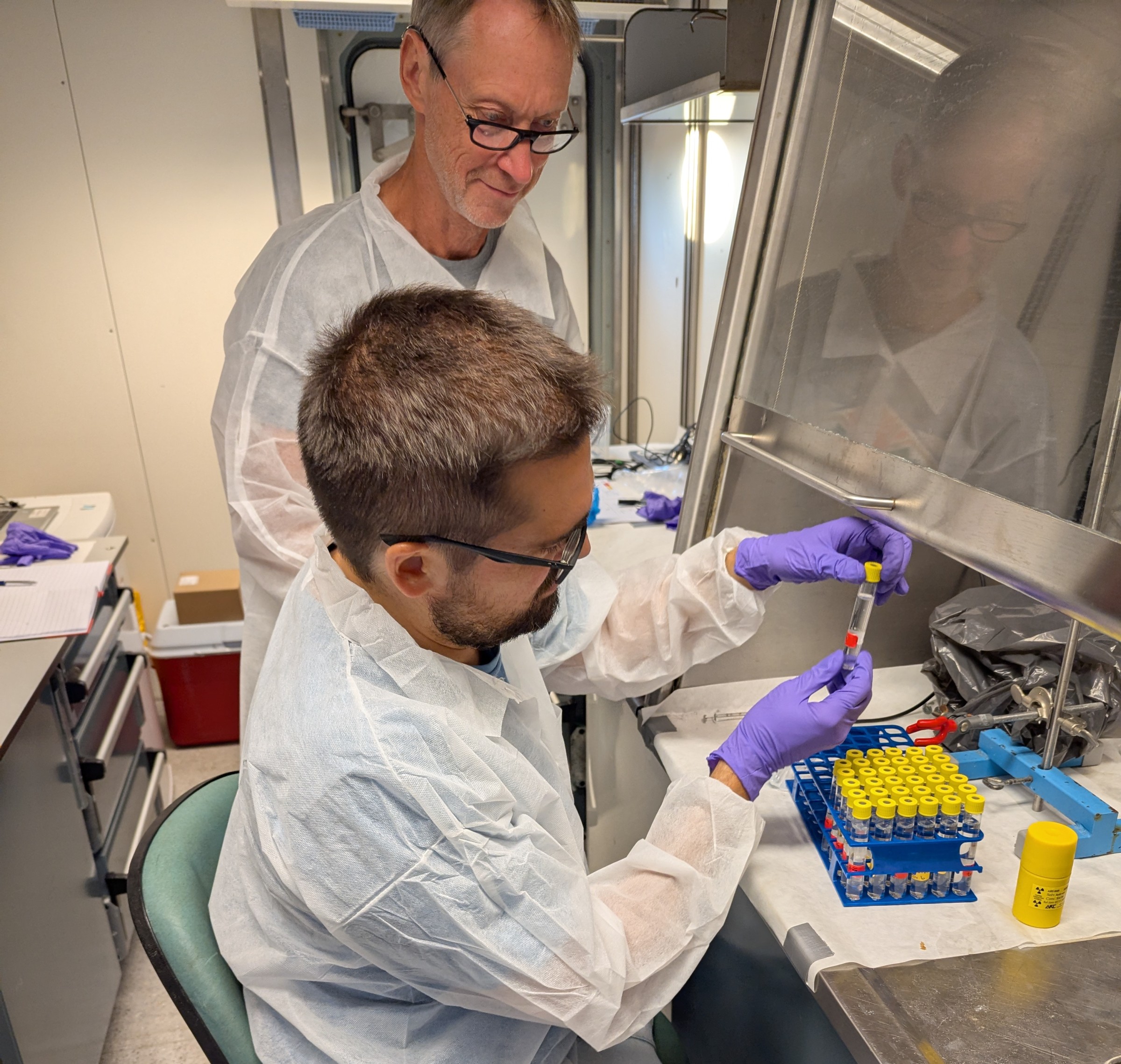
In addition to the standard equipment on the research boat, Gomez-Saez and the Danish colleagues brought an extra container on board, which houses a special laboratory for experiments with radioactive substances. “We had to fulfill all kinds of requirements,” he recalls with a weary smile. Only he and two Danish colleagues, professors Bo Thamdrup and Kasper Kjeldsen, are authorized to work there.
“In this container, we feed microbes from the samples with radioactively labeled molecules and then track where they end up.” Ideally, hopes Gomez-Saez, his research will lay the foundations for the development of a sort of biological restoration, whereby microbes could be specifically deployed to reoxygenate anoxic zones through their metabolic activity. “But that is still a long way off,” he adds.
Special laboratory in the container
For experiments with radioactively labeled molecules, Gomez-Saez and his Danish colleagues brought a laboratory equipped for this purpose on board.
© Kasper Kjeldsen
A fjord recovers
The history of the Mariager Fjord gives him hope: In the summer of 1997, the waterbody reached a tipping point and became completely anoxic – zero oxygen from the bottom to the surface. The beaches were strewn with masses of dead fish, and the whole place stank of sulfur and putrefaction. This was not just an ecological catastrophe, but also an economic one, as the Mariager is a popular resort area. Residents and tourists were not exactly thrilled about the postapocalyptic conditions.
Polar research: Warming in the cooler
Read more
Today, the water column in summer is oxygen-free only from a depth of around 15 meters. But how did the oxygen return to the Mariager? “Apart from global warming, there is another important factor that contributes to the development of anoxic zones: the excessive discharge of nutrients, mostly in the form of fertilizers,” explains Gomez-Saez.
He owes the fact that he could collect well-oxygenated and hypoxic samples today to the dramatic reduction in the use of nitrogen and phosphate fertilizers in the region in response to the summer of 1997. “This illustrates that environmental damage caused by humans, including the effects of the climate crisis, can be remediated or at least mitigated when politicians and scientists work together with a common goal.”