You can hear the medieval fair before you see it: gruff voices booming between the stalls; somewhere a drum is beating; bagpipes kick in. For a moment, we feel: Yes, this is what it must have been like. And the same goes for historical movies and fantasy series, where music works like a time machine.
But how much of this sound is really from the Middle Ages, and how much is a modern invention? Irene Holzer, Professor of Musicology at LMU, explores this question. When she encounters supposedly typical medieval music, she hears the structure first and foremost, not the atmosphere. “I always hear music analytically,” she says. This allows her to distinguish the musical patterns that appear in movies, pop culture, and medieval fairs from what was actually played in the castles, churches, and villages of the Middle Ages.
Listen and analyze
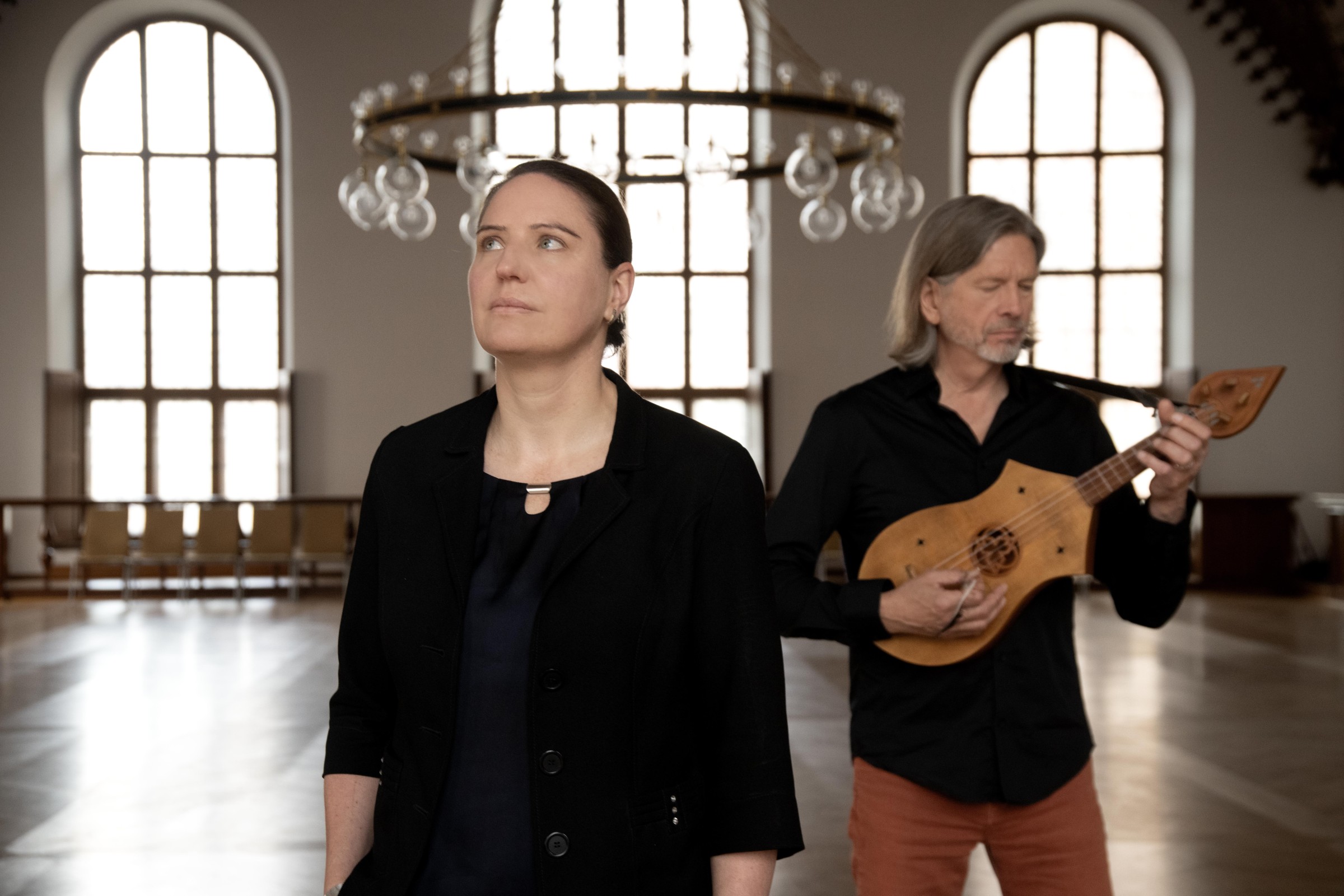
To get closer to the authentic sound of the Middle Ages, Irene Holzer works with historical sheet music as well as with musicians such as the singer and lutenist Joel Frederiksen.
© LMU / Manu Theobald
What the Middle Ages actually sounded like
If you want to know what music sounded like in the Middle Ages, you should accept one thing right from the off: There was not just one medieval sound. Music strongly depended on the location and the social context in which it was played. This is a key point, according to Holzer: “Music wasn’t merely an aural backdrop, but was tied to specific places, functions, and occasions.”
Don't miss the next issue:
Singing dominated in churches and monasteries. Plainchant was monophonic, free of fixed rhythms, and firmly integrated into the liturgy. “Music wasn’t for entertainment here, but was part of a religious ritual,” says Holzer. Many chants have only survived because as ritual, as holy music, they were deemed worthy of writing down. At the same time, they were not intended for a broad public, but solely for worship in churches and monasteries.
»Music wasn’t merely an aural backdrop, but was tied to specific places, functions, and occasions.«
Irene Holzer
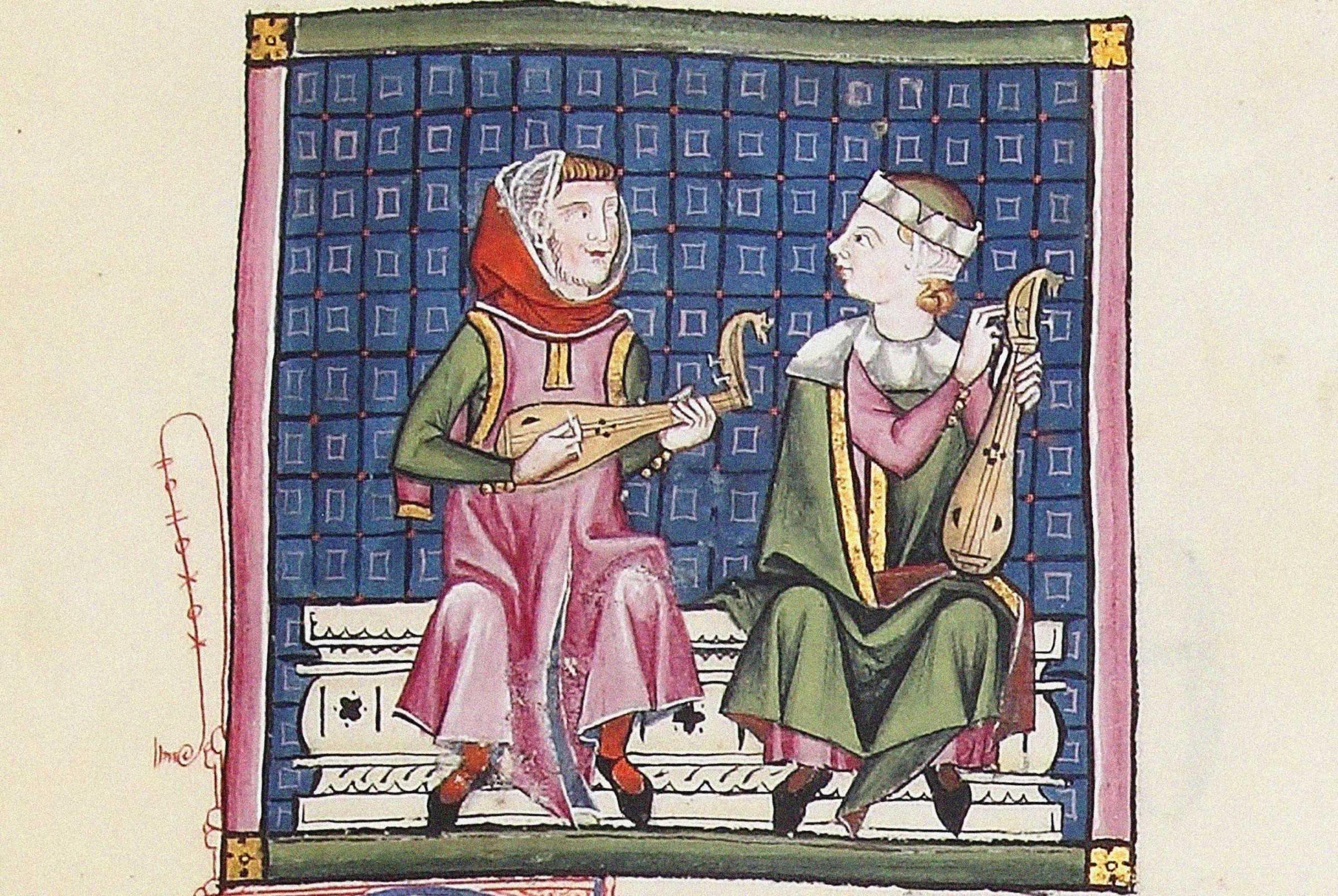
Music at Court
Illustration from the Codex of the “Cantigas de Santa Maria,” around 1280. From the collection of the Monastery of El Escorial.
© IMAGO / Heritage Images
At court, meanwhile, the music was quite different. The songs of minnesingers, troubadours, and other court performers served purposes of representation and communication by praising the deeds and virtues of the nobility. They accompanied feasts, marked social hierarchies, and rendered courtly culture audible. Equally, they formed part of a closed society. “Outside of courtly circles, most people probably never heard such music,” notes Holzer. Here, too, it becomes apparent that the acoustic worlds of the Middle Ages were clearly delimited.
In towns and villages, finally, minstrels performed with instruments such as drums, flutes, and lutes; and people made music themselves at festivals or in everyday settings. “Although much of this is less well documented, it is attested in literary and pictorial sources,” says Holzer. “In these contexts, music was part of the fabric of an everyday existence in which telling stories, singing, and listening were intimately connected.” For Holzer, music is therefore also a medium of communication, embedded in liturgy, storytelling, and the structures of court life.
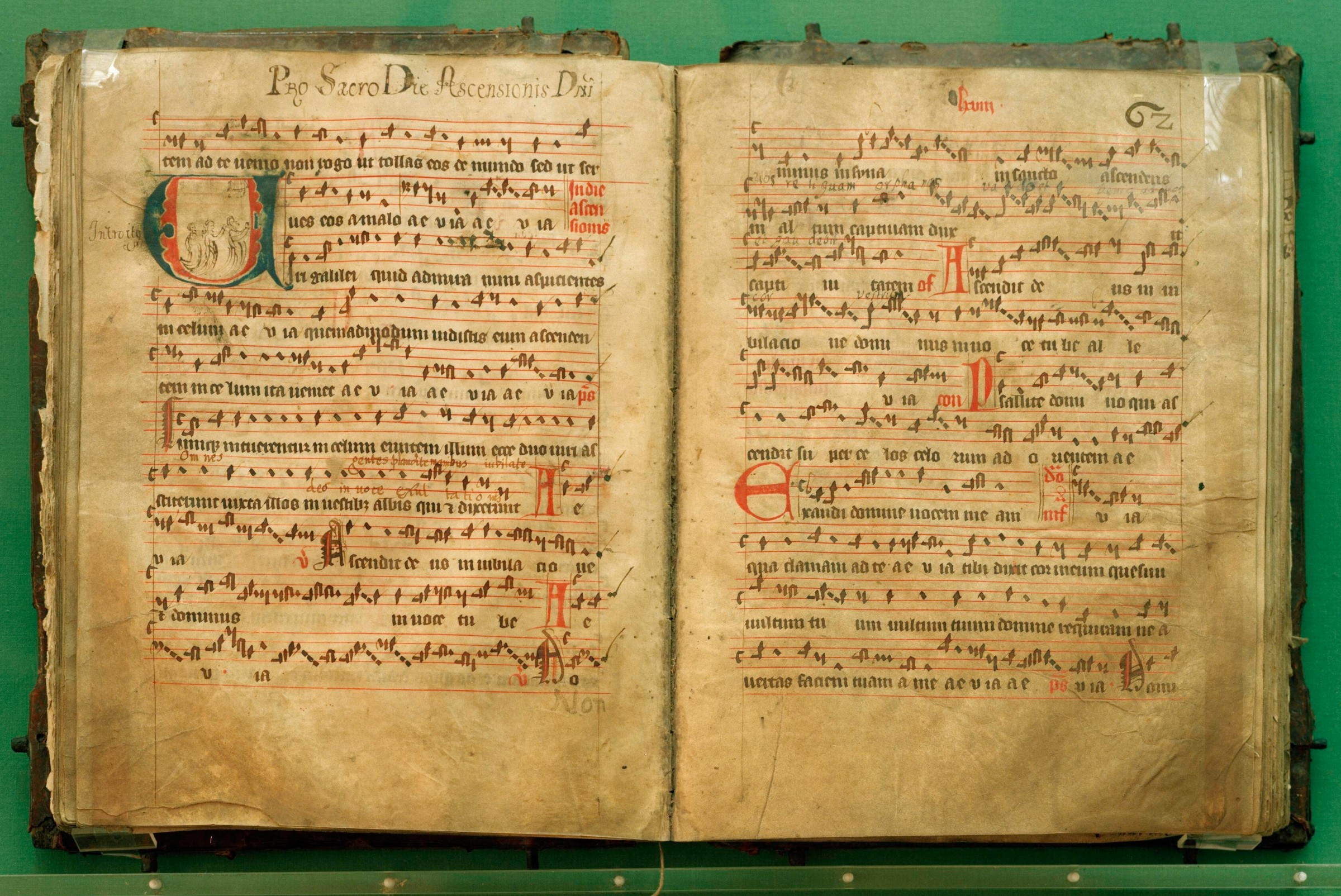
Handwritten neumes on parchment:
A liturgical register for the cantors of the Teutonic Order from the mid-15th century. Although early notations indicate the melodic contour, they do not specify an exact rhythm.
© picture alliance / akg-images
Searching for clues in sheet music
But can researchers really be sure how music actually sounded in those days? No, says Holzer. “Music is ephemeral – it disappears the moment it sounds. We don’t have the same voices as back then, the same rooms, the same instruments. Every reconstruction therefore involves interpretation.” What have survived the centuries are notations, theoretical writings, pictorial sources, and a few preserved instruments. From these relics, researchers get as close as they can to the performance practices of the past.
»Music is ephemeral – it disappears the moment it sounds. We don’t have the same voices as back then, the same rooms, the same instruments. Every reconstruction therefore involves interpretation.«
Irene Holzer
One of the main focuses of Holzer’s research is medieval notation systems. These symbols are not musical scores in the modern sense. “Music wasn’t committed to parchment in completed form,” she explains. Notations were more like memory aids for people who knew the music and made it come alive in performance. Music was less of a fixed work than a practice.
Although early notations, so-called neumes, indicate the melodic contour, they do not specify an exact rhythm. Later mensural notation became more precise through clearer indications of rhythmic durations, but it too remained open to interpretation, because the note values could often only be discerned from the form, grouping, and musical context. On top of this, many pieces were transmitted orally in the first instance. Anyone who reconstructs medieval music has to work with gaps, assumptions, and interpretations.
Experimental Musicology
“Juxtaposing new and early music, has kept my mind open and my music-making fresh,” says American musician Joel Frederiksen.
© LMU / Manu Theobald
A sound that says "medieval"
Yet today, a little auditory cue is often enough to conjure up the Middle Ages. A sustained drone, for example, immediately creates a particular tension. Equally, modal turns – that is, melodies not built according to the familiar major-minor system – quickly sound old, strange, or exotic to modern ears.
“We hear these categories and intuitively classify the music,” says Holzer. A few notes is all it takes and already we have a whole imaginary world. In addition, there is our socialization through media: movies, TV series, and video games teach us that certain instruments and timbres are to be read as medieval.
This aural coding has a long pedigree. As far back as 1800, folk-song collectors and Romantic thinkers were seeking out supposedly original melodic forms in traditional songs. Later, there was a move in Germany in particular to escape the Nazi legacy by returning to older musical forms. The medieval period became a refuge because ‘German’ music had been ideologically coopted by the Nazis. After 1945, medieval and folk sounds created a distance from this tainted proximity. Then in the 1970s and ’80s, there was the rise of the early music movement, which emphasized historical instruments and tonal authenticity.
Modern medieval sound
At medieval festivals, music also plays a major role. Many medieval bands blend historical lyrics and instruments with modern influences.
© Kaltenberger Ritterturnier 2026
At the same time, musicians were creating a popular form of medieval music that combined historical texts with folk and rock elements. Holzer cites the band Ougenweide and its setting of the Merseburg charms. “The Merseburg charms nicely illustrate how medieval sound works,” she says. The music has a floating tonality, not clearly settled in major or minor, while also simply constructed and almost songlike. It is precisely this mixture that makes it so appealing.
Since the 2000s, the sound has proliferated once more. From Lord of the Rings to series like Game of Thrones and Vikings, fantasy productions blend medieval resonances with big orchestral scores. In addition to bagpipes and frame drums, strings and brass in particular have become fixed markers of the medieval, even if they were historically more marginal than today’s aural esthetics would suggest.
Another kind of hearing
Compared with modern film music, the real music of the Middle Ages can sound alien and unwieldy. Research and reconstruction, however, are not just about recovering a lost original sound. They are also about making it visible and audible how music was organized back then, how it was performed, and in what contexts it was played.
»Instead of taking in music as background noise, we can consciously listen to it. This brings us at least a little closer to the Middle Ages.«
Irene Holzer
LMU musicologist Irene Holzer in the old town of Munich.
© LMU / Manu Theobald
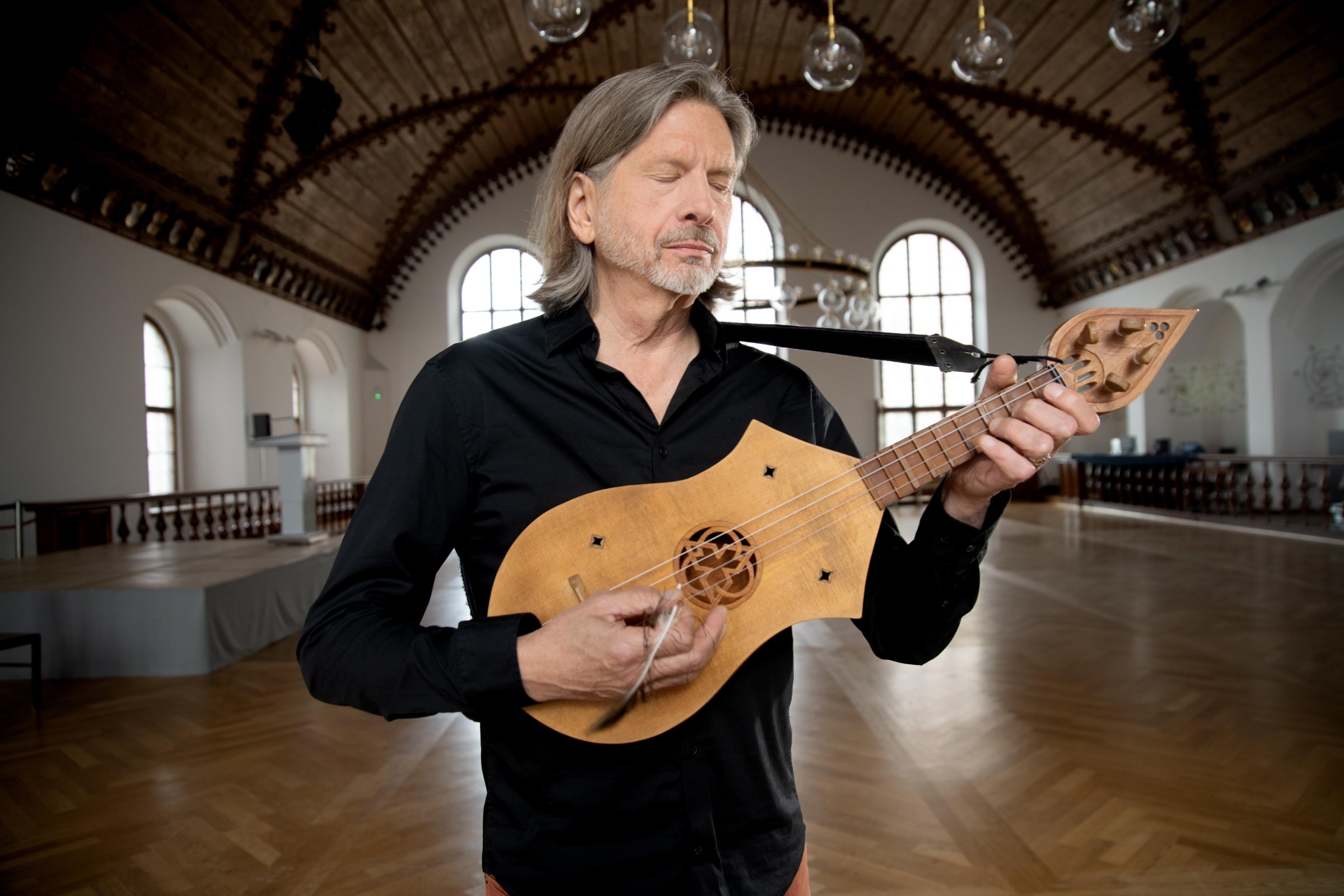
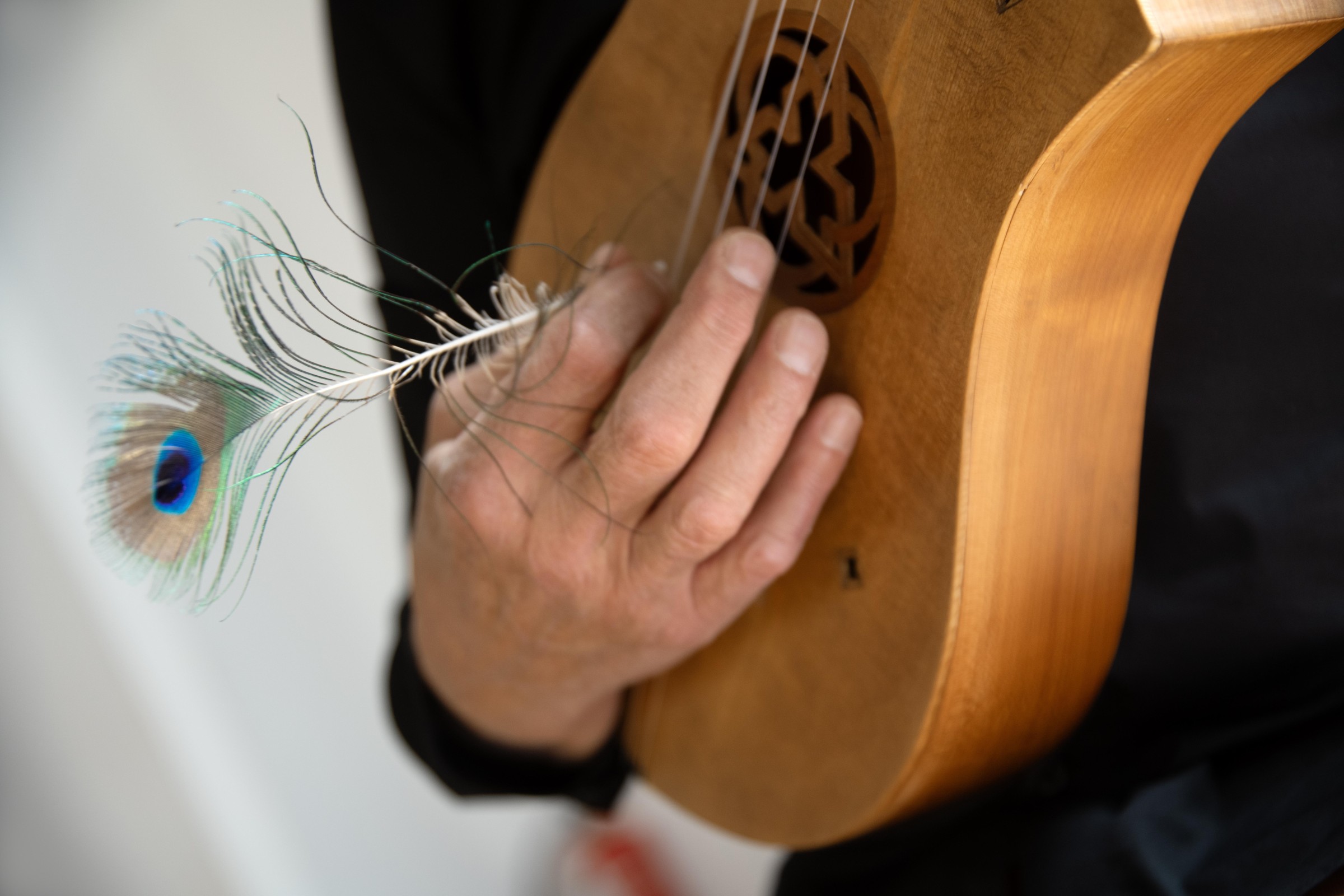
The citole is a medieval plucked lute with four (more rarely three or five) strings that was particularly common from the 13th to the mid-14th century.
© LMU / Manu Theobald
Holzer therefore emphasizes the performative character and the status music had in the Middle Ages: “Music was not ubiquitous, but was an interpersonal medium of communication deployed quite deliberately to convey stories, rituals, and social hierarchies. As such, it was perceived differently, in a more focused manner.”
And although the modern incarnation of medieval music has little in common with the original, Holzer reckons listeners today can still replicate to some extent the manner in which music was received in those days. “Instead of taking in music as background noise, we can consciously listen to it. This brings us at least a little closer to the Middle Ages.”
Irene Holzer is professor of musicology at the Department of Art Sciences at LMU.
More Research and Innovation:
Read more articles from LMU's research magazine in the online section and never miss an issue by activating the magazine alert!